

From Boardroom to LinkedIn: How Indian Leaders Use AI Video Tools
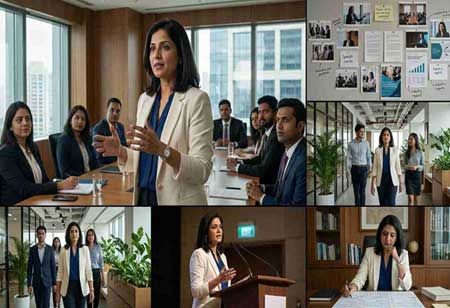 Personal brands now outperform corporate messaging by roughly ten to one on social platforms, and LinkedIn content from individual professionals gets around twice the engagement of content posted from a company page. For a business leader who already has plenty to say but very little spare time to say it on camera, an AI Video Generator available in Higgsfield is starting to close that gap, provided it's used to help a leader speak more, not to speak for them.
Why Has Personal Executive Presence Become More Valuable Than Corporate Messaging?
Companies with socially active CEOs are roughly 40 percent more likely to be seen as good places to work and 50 percent more likely to attract top talent, and a majority of consumers report trusting a company more when its senior leaders are visibly active online. That shift has moved executive visibility from a nice-to-have into something closer to a genuine business asset, one that directly affects hiring, trust, and how a company's leadership is actually perceived in its industry.
This shift reflects a broader change in how audiences evaluate credibility online. A polished corporate statement carries the built-in scepticism people naturally apply to institutional messaging, while a genuine perspective from a named individual leader, with a real point of view and a recognisable voice, earns a different, more personal kind of trust. Companies increasingly recognise that their most credible spokesperson isn't the brand account, it's the leader willing to show up as themselves.
What Does a Genuinely Effective Executive LinkedIn Video Actually Look Like?
The content that actually performs well for executives isn't polished corporate messaging, it's short, direct, opinion-led video, a clear point of view grounded in a real decision or lesson, delivered with the kind of conviction a text post struggles to convey. Short "executive memo" style videos have become a genuinely effective format precisely because they read as clearly human and specific, not generic or safe, the exact quality that makes a viewer stop scrolling and actually watch.
Why Do Time-Poor Executives Struggle to Produce This Kind of Content Consistently?
Modern executives are, almost by definition, time-poor, and the traditional content creation model, scripting, filming, editing, scheduling, doesn't fit easily around a calendar already full of meetings and decisions. Many leaders who genuinely have valuable insight to share simply don't post consistently, not because they lack a point of view, but because turning that point of view into a finished, shareable video eats into time they don't have.
This gap between having something worth saying and actually finding time to say it publicly is one of the more common, quietly frustrating patterns among senior leaders. A genuinely thoughtful perspective on a market shift or a leadership lesson can occur to an executive during a normal working day, only to be mentally filed away as "something to post about eventually" that never actually gets produced, simply because the gap between having the thought and producing a finished video felt too large to bridge in the moment.
What Happens When AI-Sounding Executive Content Gets Flagged by Audiences and Algorithms Alike?
This is a genuinely important, specific risk worth naming directly. LinkedIn's audiences and its own algorithm increasingly penalize content that reads as generic AI output, and industry guidance on executive branding is consistent that AI can be a useful thought partner but should never replace an executive's authentic voice. Reports on the 2026 LinkedIn algorithm specifically describe a shift toward prioritizing verified, clearly human content over anything that reads as synthetic, which makes getting this distinction right a genuine strategic concern, not just an ethical one, given the direct link between perceived authenticity and the trust benefits described earlier.
What Are the Traditional Options for Producing Executive Video Content?
Hiring a personal branding agency or video production specialist is the most established route, and the "Studio Day" model, batching a month's worth of high-authority content into a single, several-hour filming session, has become a genuinely popular approach among time-poor leaders. Working with an in-house communications team is the other common path, offering more day-to-day flexibility but requiring ongoing internal resourcing many organizations haven't built out specifically for executive content.
Both approaches genuinely work well for leaders who can commit to the planning and scheduling they require, and plenty of executives have built strong, consistent presences this way. The trade-off in both cases is the same, a real dependency on advance scheduling that doesn't always match how genuinely valuable ideas actually occur to a busy leader, in the moment, between meetings, rather than on a pre-booked filming day weeks in advance.
Where Does the "Studio Day" Batching Model Fall Short for Many Leaders?
The constraint isn't the quality of a well-run Studio Day, it's that batching a month of content in one sitting only works if that content stays genuinely responsive to what's actually happening in the leader's industry weeks later. A perspective recorded four weeks ago on a topic that's since moved on loses exactly the immediacy that makes executive commentary valuable in the first place, and not every leader has the schedule flexibility to book a professional session every time a genuinely timely opinion is worth sharing, which means some of the most relevant, timely commentary a leader could offer simply never gets made at all.
|
|
Personal branding agency (Studio Day model) |
In-house communications team |
AI Video Generator |
|
Cost |
A real, ongoing retainer or project fee |
Requires dedicated internal resourcing |
Included in one subscription |
|
Fits a spontaneous, timely opinion |
Poorly, requires scheduling a session |
Better, but still requires coordination |
Well, from footage recorded in the moment |
|
Turnaround |
Days to weeks per batch |
Days |
Minutes to hours |
|
Preserves the leader's authentic voice |
Yes, if the leader is genuinely involved |
Yes, if properly briefed |
Yes, if built from real recorded footage |
|
Best suited for |
A planned monthly content cadence |
Larger organizations with dedicated staff |
Turning a quick, real recording into a shareable clip fast |
How Does an AI Video Generator Fit Into an Executive's Actual Schedule?
Higgsfield's AI Video Generator works from a leader's own recorded footage, whether that's a phone recording after a board meeting or a clip from an internal talk, letting them describe the edits needed, trimming, pacing, formatting for LinkedIn, without needing to book a studio session or wait on an external agency's turnaround. A genuine, timely reaction to something happening in the leader's industry can go from a rough phone recording to a polished, shareable clip within the same day it was actually relevant.
This matters most for exactly the scenario described earlier, an executive with a genuinely timely, valuable opinion who would otherwise let the moment pass simply because producing a proper video felt like too much overhead to justify for one post. Being able to record a quick reaction between meetings and turn it into something shareable within the hour keeps that immediacy intact, which is precisely what separates commentary that feels current from commentary that reads as stale by the time it's finally published.
What Should Every Business Leader Understand Before Using AI on Their Personal Video Content?
This is the single most important point in this entire article. Never use an AI tool to generate a video presenting words, opinions, or a persona that isn't genuinely the leader's own. The entire value of executive personal branding rests on authenticity, audiences and platforms alike are increasingly good at detecting and penalizing content that doesn't feel like a real person's genuine voice. Every generated or edited clip should start from something the leader actually said, in their own words, on camera, with no exceptions made for the sake of convenience.
What Can a Leader Actually Produce Beyond a Single LinkedIn Post?
Beyond one LinkedIn clip, the same real recording can be reformatted into a shorter teaser, a longer version for YouTube, and a still image for a written post, all from a single recording session rather than separate production efforts for each format. This kind of consistent, genuinely personal presence is exactly the sort of leadership story worth telling properly, a real leader's real experience and perspective, not a generic corporate summary, told across every platform where that leader's audience actually spends time. This is worth stating plainly, since Higgsfield is sometimes assumed to be a single-purpose video tool. Higgsfield AI is a native AI creative suite, which offers advanced AI image, video, and voice generation, editing, and upscaling tools, meaning a leader's team can also produce supporting graphics from the same real content.
Does This Replace the Authentic Voice That Actually Builds Executive Trust?
No, and this matters more here than almost anywhere else in business content. What actually makes an executive's presence trustworthy is the substance behind it, a real decision explained honestly, a genuine lesson learned, a specific point of view grounded in actual experience. An AI Video Generator, whether Higgsfield or a comparable platform, speeds up turning that real content into something polished and shareable. It does not generate the insight, write the opinion, or decide what's actually worth saying. That substance, and the trust it builds, stays entirely the leader's own.
What Should a Business Leader Look for in an AI Video Generator?
A few things matter more here than for general marketing content. Working exclusively from real, recorded footage of the leader matters more than anything else, since that's the entire foundation of authentic executive branding. Fast turnaround matters given how much value comes from responding to genuinely timely industry moments rather than a delayed, batched schedule. And simplicity matters practically, since most executives have no time to learn a new production tool on top of everything else on their calendar.
It's also worth considering how well a platform fits into a busy leader's actual daily rhythm, whether edits can be requested and reviewed from a phone between meetings, rather than requiring dedicated desk time that competes directly with everything else demanding an executive's attention on a given day.
What Are the Key Takeaways for Leaders Building a Personal Video Presence?
- Personal executive presence now measurably outperforms corporate messaging, directly affecting talent attraction and stakeholder trust.
- The batched "Studio Day" production model works well for planned content but struggles with timely, spontaneous commentary that loses relevance if delayed by scheduling.
- An AI Video Generator like Higgsfield can turn a real, quickly recorded clip into something polished and shareable fast, provided every video starts from the leader's own genuine words.
- Never generate video presenting opinions or a persona that isn't authentically the leader's own. Audiences and algorithms alike increasingly penalize content that doesn't feel genuinely human.
What Are Some Frequently Asked Questions About AI Video Tools for Executive Branding?
Will using an AI Video Generator make my executive content look artificial to my audience?
Not if every video is built from something you genuinely said on camera, in your own words. The tool speeds up editing and formatting real content, which is entirely different from generating synthetic commentary that never actually happened, and that distinction is exactly what audiences and platforms are increasingly good at telling apart.
Do I need video production experience to use this as a busy executive?
No. Recording a quick, genuine reaction on a phone and describing the edits needed in plain language is enough to produce a shareable result, without needing a studio session or a dedicated production team, which matters given how little time most senior leaders genuinely have for learning a new skill outside their actual job.
Is this a replacement for a personal branding agency's Studio Day sessions?
Not necessarily a replacement, more a complement. A planned Studio Day still works well for a consistent monthly cadence, while an AI Video Generator fills the gap for timely, spontaneous commentary that can't wait for the next scheduled session. Many leaders end up using both, one for a planned baseline of content and the other for reacting quickly when something genuinely worth commenting on happens between sessions.
How does this actually affect whether people trust an executive's content?
Trust comes from the substance and authenticity of what's actually said, not the production polish. Fast, genuine, slightly rougher content from a leader's own real voice generally builds more trust than delayed, over-produced content that feels distant from who they actually are, regardless of whether Higgsfield or a comparable platform is doing the editing behind the scenes.