

Creating A Pathway To Digital Financial Inclusion, Is The Now And The Future
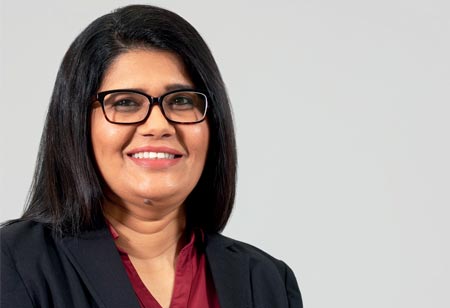
Sohini Rajola, Head of Network – Middle East and Asia Pacific, Western Union, 0
The COVID pandemic has cast in stark relief, the divide between the world’s digital ‘haves’ and ‘have-nots’ stands out. There is no question that people able to conduct their work, shopping and other business online have been far better positioned to cope with the disruption and dislocation of the past few months than those who remain unconnected.
The area of financial services, sadly, is no exception. In times of crisis, money transfer service providers play a critical role in getting money to places where it is most needed in a lawful manner. As we have seen the world over, however, even money sent from loved ones to help with basic necessities such as food and medicine has met with challenges to obtain in the lockdown era. With people shut in at home, and businesses closed or operating on limited hours, money often can’t reach the people it’s intended for-unless it can be deposited directly into a bank account or digital wallet, to which countless millions still lack access.
The past few years have brought us no shortage of startups and new financial players promising to bridge this financial divide, touting “financial inclusion” in the form of low-fee electronic money transfers, phone wallets and other all-digital solutions. Unfortunately, these options are still inadequate for the 1.7 billion people the World Bank says remain unbanked. In much of the world, cash is still the preferred, if not the only, method of payment. Moving money digitally from one account or geographic location to another is well and good, but what use is it if the person who needs it can’t have it in the only form it is useful to them?
My company, Western Union, serves hundreds of millions of people, all over the world, on the full spectrum of financial and technological connection and sophistication (depending on the local limitations). Whether it is cash, account, mobile phone or website, kiosk or a clerk at an agent location, we are offering ever-proliferating options to meet our customers’ needs.
We believe that where inclusion truly happens—and the COVID pandemic has only borne this out—is the place where “digital” money becomes “useful” money. For the
globally connected, with credit cards or other means of purchasing goods online, that usefulness happens as soon as the money appears in a bank account or digital wallet. But for many others, “digital” money may as well not exist unless and until it becomes cash in the hand.
Any legitimate solution to the challenge of global financial inclusion must serve both of these customers—the banked and unbanked, those who never need cash as well as those who need it exclusively—as well as every combination in between. It is only by bridging the digital and physical worlds of money that financial service providers can offer the unbanked not just the services they need today, but the path to a more connected future tomorrow.
That “bridge” is what pure digital players miss: For all their good intentions and faith in the power of technology to solve problems of global inequality, no solely technological solution exists that runs where the wires (or radio waves) don’t. In order to take advantage of the solutions these providers offer, their would be customers must meet them more than halfway—by having not just a bank account or a digital wallet, but the ‘connected’ local merchants where they can use either one to buy food, medicine, housing, and the countless other necessities of life. In the huge swaths of the world still lacking such wired or wireless service, these digital services may as well not exist.
Serving these underserved parts of the world is definitely expensive. Setting up either a globe-spanning retail network, such as Western Union’s, or a digital network of similar reach to serve both merchants and customers, is simply beyond the capability of most companies or the financial means of their stakeholders. Nevertheless, it is exactly what will be necessary to bring the benefits of full participation in the global economy to everyone.
We believe that when money moves, good things happen for everyone. Money sent from one part of the world to another to buy local goods and services ‘ripples’ through that local economy, in the form of commerce and taxes— building businesses, roads and schools. All of this activity helps form the economic infrastructure that makes an area attractive to further investment—in, among other things, the technology that will connect it to the wider economic world. Local merchants, large and small global companies, and governments all have their roles to play.
Only by cooperation—among established firms, aggressive startups, and far-sighted local and national regulators—can we offer the world’s unbanked the cash they need today, the digital services they will use tomorrow, and a path to get from here to there.
Any legitimate solution to the challenge of global financial inclusion must serve both of these customers—the banked and unbanked, those who never need cash as well as those who need it exclusively—as well as every combination in between. It is only by bridging the digital and physical worlds of money that financial service providers can offer the unbanked not just the services they need today, but the path to a more connected future tomorrow.
That “bridge” is what pure digital players miss: For all their good intentions and faith in the power of technology to solve problems of global inequality, no solely technological solution exists that runs where the wires (or radio waves) don’t. In order to take advantage of the solutions these providers offer, their would be customers must meet them more than halfway—by having not just a bank account or a digital wallet, but the ‘connected’ local merchants where they can use either one to buy food, medicine, housing, and the countless other necessities of life. In the huge swaths of the world still lacking such wired or wireless service, these digital services may as well not exist.
We believe that where inclusion truly happens- and the covid pandemic has only borne this out-is the place where “digital” money becomes “useful” money
Serving these underserved parts of the world is definitely expensive. Setting up either a globe-spanning retail network, such as Western Union’s, or a digital network of similar reach to serve both merchants and customers, is simply beyond the capability of most companies or the financial means of their stakeholders. Nevertheless, it is exactly what will be necessary to bring the benefits of full participation in the global economy to everyone.
We believe that when money moves, good things happen for everyone. Money sent from one part of the world to another to buy local goods and services ‘ripples’ through that local economy, in the form of commerce and taxes— building businesses, roads and schools. All of this activity helps form the economic infrastructure that makes an area attractive to further investment—in, among other things, the technology that will connect it to the wider economic world. Local merchants, large and small global companies, and governments all have their roles to play.
Only by cooperation—among established firms, aggressive startups, and far-sighted local and national regulators—can we offer the world’s unbanked the cash they need today, the digital services they will use tomorrow, and a path to get from here to there.