

Trends And Developments In The Indian FMCG Industry
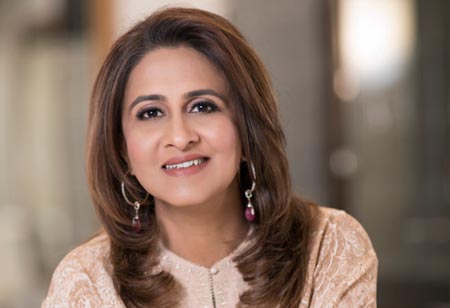
Dolly Kumar, Cosmetic Engineer, Founder & Director, Cosmic Nutracos Solutions (Parent Company to FMCG brands Gaia and Skinella), 0
India’s fast-moving consumer goods (FMCG) story has been hunky-dory. The fourth-largest sector of the nation comprises three segments - household and personal care, healthcare, and food & beverages constituting 50%, 31%, and 19% share of the sector. The market projected a fair 8-9% growth in 2020. And then, COVID-19 struck.
The outbreak can be seen as a major technological and learning event. As much as it increased our dependence on technology and digital systems to continue with life, as usual, it also imparted some lessons for all sectors. Learning that FMCGs must reflect agility and resilience amidst adversities, moving away from the traditional approaches that have worked until now. It summarizes adopting an omnichannel approach and maneuvering as per post-COVID preferences.Here are a few trends and developments that will govern the FMCG sector.
1. Health & Wellness will be a growing domain
There is a growing awareness amongst people regarding their wellbeing. As people realize that good health needs proactive attention, they are rapidly growing closer to healthy eating habits. A lot has been said and written about the immunity boosting foods and supplements during this time. In fact, the online search on ‘immunity boosting’ topped amongst Indian users in April. People are becoming more watchful of what they buy and what goes into their bodies, internally and topically. Organic, superfood-based, nutritious, natural products are going to be a hit amongst the masses, no matter what the category. There is a clear need for embracing healthy ingredients in the product DNA, for FMCG companies to stand out, make an impact.
2. Personal care industry will take off with a spotlight on sanitizers and handwashes
By now, it is no rocket science to draw that the personal care industry is inclining towards articles endorsing hygiene. The market saw it all, from an uptick in sales and prices of hand sanitizers and handwashes to a supply deficit in both offline and online stores. Google searches for face masks and hand wash swelled up during the outbreak. The industry, valued at USD 2.7 billion in 2019, is pegged to excel at a CAGR of 22.6% from 2020 to 2027.
3. Online and Digital Marketing will lead the way
Social media has 3.81 billion users worldwide. The OTT sector in India saw a 30% rise in paid subscriptions from 22.2 million to 29 million between March and July 2020. Needless to say, you cannot turn a blind eye towards the reach and opportunities that the new-age socializing and entertainment platforms offer. Today, uploading an engaging post on Instagram, a tweet on Twitter, or
sharing user testimony on skincare products, unboxing an assortment of healthy foods, etc. on Youtube can create a larger impact for FMCG brands than the traditional me-too marketing tools. When customer experience is the epitome, customer patience is too low, and time is money, FMCG players may not want to stick to newspapers, radio, and television to change their world.
With an average monthly data usage surpassing 11GBs and deep smartphone penetration, online and digital marketing will be the frontrunners in converting passive consumers into active ones. After all, a motivated user is much better than a hundred others who just know about the brand or the product.
4. Emphasis on eCommerce and a connected supply chain management
eCommerce players can help the brands with lastmile deliveries, covering the nook and corner of the country and helping extend the brand's reach to rural areas - one of the biggest contributors to the overall revenue generated by FMCG in India. DTC brands are having a gala time getting direct insight into consumer preferences, more importantly under the current COVID scenario, as every article sold allows FMCG brands to interact with an engaged audience. Feedbacks are quick, which used to take months earlier, if not years. Moreover, this eliminates the need for distributors, reducing product distribution cost from the business ecosystem.
Talking about distribution, the supply chain is expected to change its course from a linear to a connected one. Brands have until now relied upon distributors and stockists to sufficiently dispense the product at the retailer's end. With retailers automating their inventory journey with intuitive apps and intelligent PoS, it would become cost- and time-effective for brands to directly connect with former for stock ups, ensuring uninterrupted supply.
5. Products designed and targeted at Millennials and Gen Zs
Gen Y and Z display unique sets of demands. For them, the product itself must be a key differentiator. Clear brand identity and what it stands for attracts these two generations the most. Additionally, with a handsome disposable income and a good exposure to the digital world, these generations have access to possibly the best in the world. The most sure-shot way of their inclusion is offering customization and personalization, which comes with the deployment of new-age technologies. Artificial intelligence and Machine Learning-powered hyper-marketing can extract and combine crucial data on a customer from various sources to understand their requirements, preferences, spending potential, and so on for a highly personalized experience.
As we move forward, FMCG players will have to create a niche in their segments. The sector which was mostly defined by political, cultural, and social factors, is currently being driven by the healthcare condition of the nation. Hence, it would be only advisable to swivel along the lines of health and technology for smooth sailing amidst choppy waters.
With an average monthly data usage surpassing 11GBs and deep smartphone penetration, online and digital marketing will be the frontrunners in converting passive consumers into active ones. After all, a motivated user is much better than a hundred others who just know about the brand or the product.
4. Emphasis on eCommerce and a connected supply chain management
eCommerce players can help the brands with lastmile deliveries, covering the nook and corner of the country and helping extend the brand's reach to rural areas - one of the biggest contributors to the overall revenue generated by FMCG in India. DTC brands are having a gala time getting direct insight into consumer preferences, more importantly under the current COVID scenario, as every article sold allows FMCG brands to interact with an engaged audience. Feedbacks are quick, which used to take months earlier, if not years. Moreover, this eliminates the need for distributors, reducing product distribution cost from the business ecosystem.
Learning that FMCGs must reflect agility and resilience amidst adversities, moving away from the traditional approaches that have worked until now
Talking about distribution, the supply chain is expected to change its course from a linear to a connected one. Brands have until now relied upon distributors and stockists to sufficiently dispense the product at the retailer's end. With retailers automating their inventory journey with intuitive apps and intelligent PoS, it would become cost- and time-effective for brands to directly connect with former for stock ups, ensuring uninterrupted supply.
5. Products designed and targeted at Millennials and Gen Zs
Gen Y and Z display unique sets of demands. For them, the product itself must be a key differentiator. Clear brand identity and what it stands for attracts these two generations the most. Additionally, with a handsome disposable income and a good exposure to the digital world, these generations have access to possibly the best in the world. The most sure-shot way of their inclusion is offering customization and personalization, which comes with the deployment of new-age technologies. Artificial intelligence and Machine Learning-powered hyper-marketing can extract and combine crucial data on a customer from various sources to understand their requirements, preferences, spending potential, and so on for a highly personalized experience.
As we move forward, FMCG players will have to create a niche in their segments. The sector which was mostly defined by political, cultural, and social factors, is currently being driven by the healthcare condition of the nation. Hence, it would be only advisable to swivel along the lines of health and technology for smooth sailing amidst choppy waters.