


Sushil Chaudhary: Marching Forward To Break The Monopoly In The Indian Film Industry
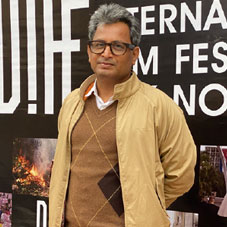
Sushil Chaudhary
Founder & CEO
Acknowledging NIT’s contribution to his personal life and professional endeavors, Sushil admits that his tenure at the technology institute transformed him as an individual. CEO Insights engages in an exclusive interaction with him to explore his expedition. We sincerely hope that our endeavor will be able to motivate several youngsters to promote entrepreneurship.
What factors influenced you to establish Picture time Digiplex?
Despite being a cinema-crazy country, India doesn’t have enough cinema screens. Our country needs more than 60,000 screens while we today have 9000 odd cinema screens available here. It was in 2014 and I began working on a prototype to address the problem statement.
With Picture Time, we are trying to solve this by building a product that is independent of real estate.
while being portable, low on
regulatory requirements, and offering a great return on investment. Our KRA was to launch a solution under a crore and make it scalable. Today, we are one of the few cinema theatre companies having patents in India. We have three more patents pending. During the peak of the pandemic we turned 37 theatres into hospitals across India. And now, we are back to the business of cinema theatre.
Tell us about your professional experiences before founding Picture Time Digiplex. Highlight the milestones through the journey till then.
After graduating from NIT in 1997, I started my career as a trainee. Within a few years, I left the corporate job and established Mann-India Technologies and e-cards along with my friends. Later, we moved to Panama and pioneered mobile banking implementation in 2001. This implementation was both cabled and wireless executed by one of the leading telecom companies.
Subsequently, we established our software company in Panama and soon launched branches in Venezuela and Colombia as well. We became the first IT setup near Shore Deployment Center in Cuba, Dominican Republic, and Puerto Rico. The near shore center and software factory in the Dominican Republic was built in collaboration between India and South America. We also were involved in training Cuban IT professionals on a large scale.
In 2010-11, we signed an agreement with SAP and built a Center of Excellence for credit union solutions. In the same period, we implemented Tepago the largest digital payment platform in the Caribbean region. It has been a long rewarding journey of new learnings and experiences. Post which, I moved back to India and concep
Through Picture Time, our mission is to set up 3000 cinema screens across India and ensure that all the units are ROI positive
Tell us about your professional experiences before founding Picture Time Digiplex. Highlight the milestones through the journey till then.
After graduating from NIT in 1997, I started my career as a trainee. Within a few years, I left the corporate job and established Mann-India Technologies and e-cards along with my friends. Later, we moved to Panama and pioneered mobile banking implementation in 2001. This implementation was both cabled and wireless executed by one of the leading telecom companies.
Subsequently, we established our software company in Panama and soon launched branches in Venezuela and Colombia as well. We became the first IT setup near Shore Deployment Center in Cuba, Dominican Republic, and Puerto Rico. The near shore center and software factory in the Dominican Republic was built in collaboration between India and South America. We also were involved in training Cuban IT professionals on a large scale.
In 2010-11, we signed an agreement with SAP and built a Center of Excellence for credit union solutions. In the same period, we implemented Tepago the largest digital payment platform in the Caribbean region. It has been a long rewarding journey of new learnings and experiences. Post which, I moved back to India and concep
tualized Picture time Digiplex.
What are some of the unforgettable challenges you have experienced in your professional journey so far? How did you over come them and what did you learn from them?
Stepping into the business ecosystem as first-generation entrepreneurs who are just about 23 or 24 years old was difficult, indeed! Despite studying at one of the top colleges, we didn’t have a huge network, financial support, and business knowledge. However, we were technically strong and handled everything with a systematic approach. We were fearless and focused. Fortunately, we could onboard good projects and deliver the best service possible. Beyond hard work and sincerity, I dedicate my success to consistency and regularity.
Moving to South America was again a challenge. New city, new people, new language, different food, and different culture; everything was strange. Rather than cribbing about it, we learned things by hiring professionals. Entering the cinema industry also came with its own hurdles. Firstly we neither knew anything about the industry nor anyone from the industry. As outsiders, it was tough to build a network and in still confidence. Today, we have immensely grown in our ability to partner with leading film stars.
Could you talk about the learnings and experiences that you acquired from the National Institute of Technology?
The institution has taught me that discipline, routine, and consistency are the key to success. Unfortunately, I wasn’t the most disciplined student in college but it is a lesson learned. The college gave me the best peer group of the smartest people, and I think that’s a great gift that NIT has given me.
Sushil Chaudhary, Founder & CEO, Picture time Digiplex
Sushil believes in having a stringent daily routine and consistently working towards achieving his goals. While he was able to make a mark in the Indian film theatre space, he looks forward to scaling the brand to be positioned among the top three theatre groups.
What are some of the unforgettable challenges you have experienced in your professional journey so far? How did you over come them and what did you learn from them?
Stepping into the business ecosystem as first-generation entrepreneurs who are just about 23 or 24 years old was difficult, indeed! Despite studying at one of the top colleges, we didn’t have a huge network, financial support, and business knowledge. However, we were technically strong and handled everything with a systematic approach. We were fearless and focused. Fortunately, we could onboard good projects and deliver the best service possible. Beyond hard work and sincerity, I dedicate my success to consistency and regularity.
Moving to South America was again a challenge. New city, new people, new language, different food, and different culture; everything was strange. Rather than cribbing about it, we learned things by hiring professionals. Entering the cinema industry also came with its own hurdles. Firstly we neither knew anything about the industry nor anyone from the industry. As outsiders, it was tough to build a network and in still confidence. Today, we have immensely grown in our ability to partner with leading film stars.
Could you talk about the learnings and experiences that you acquired from the National Institute of Technology?
The institution has taught me that discipline, routine, and consistency are the key to success. Unfortunately, I wasn’t the most disciplined student in college but it is a lesson learned. The college gave me the best peer group of the smartest people, and I think that’s a great gift that NIT has given me.
Sushil Chaudhary, Founder & CEO, Picture time Digiplex
Sushil believes in having a stringent daily routine and consistently working towards achieving his goals. While he was able to make a mark in the Indian film theatre space, he looks forward to scaling the brand to be positioned among the top three theatre groups.