

A BUNCH-Tech to Tech-Zenith; Lessons from Satya Nadella's Leadership Journey
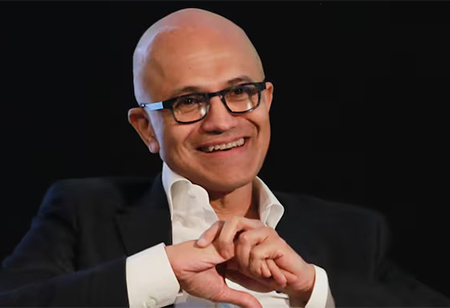
In this digital era, businesses that wish to succeed must include technology in their organizational framework. Traditionally, companies would employ IT or tech chiefs to supervise the computer-related facets of their operations. Today, it might be more complex to separate the primary duty of steering the ship from the unavoidable requirement that the appointed captain of the ship is tech-savvy. Therefore, a technology leader needs to control the development and effective operation of a technology-driven workflow in addition to the smooth and successful delivery of the company's product or service. Let us know more about a successful and popular tech leader from India.
Satya Nadella, an Indian-American business executive, is Microsoft's executive chairman and CEO, succeeding Steve Ballmer in 2014 as CEO and John W. Thompson in 2021 as chairman.
Early Life and Career of Tech Leader
Satya Narayana Nadella was born in Hyderabad, India, on August 19, 1967. Nadella completed his undergraduate studies in electrical engineering at Mangalore University in 1988 after growing up in the metropolis of Hyderabad in southern India. He finished his master's degree in computer science at the University of Wisconsin at Milwaukee in 1990 and then joined the technology team of Sun Microsystems, Inc. He left Sun in 1992 to work for Microsoft, where he initially contributed to creating Windows NT, a powerful operating system largely geared toward business customers. Nadella obtained a master's degree in business administration from the University of Chicago in 1997 while working full-time at Microsoft.
Nadella steadily advanced through the Microsoft management ranks. He had been given the title of vice president of the Microsoft bCentral small-business service by 1999. Two years later, he was promoted to corporate vice president of Microsoft Business Solutions. He was promoted to senior vice president of research and development for the company's online services division in 2007. From 2011 to 2013, he served as president of Microsoft's server and tools division, which had annual revenue of almost $19 billion. In addition, Nadella served as executive vice president in charge of Microsoft's cloud computing platform, which served as the foundation for products including the Office 365 subscription-based services, the Xbox Live broadband gaming network, and the online search engine Bing.
After business co-founders Bill Gates and Steve Ballmer, Nadella assumed the role of CEO of Microsoft on February 4, 2014. He is the third person to occupy the position in the company's almost 40-year existence. According to reports, one of Nadella's first major responsibilities was managing the $7.2 billion acquisition of Nokia Corp.'s mobile device division by Microsoft. This deal had been announced in 2013 despite the objections of several Microsoft executives, including Nadella. He announced the greatest layoff in Microsoft history shortly after the transaction concluded in April 2014; 18,000 employees were cut, with Nokia accounting for the majority of them. In 2016, Nadella oversaw the purchase of LinkedIn, a social networking website geared toward business.
Leadership and Service
Additionally, Nadella has demonstrated his capacity to spark energy throughout the company. Although providing clarity and precision is very beneficial, it was insufficient to produce the success Nadella had envisioned for the business. In order to further infuse the organization with energy, Nadella made sure that all of the workers, especially the senior executives, were really excited and passionate about the work that the organization was about to do (Agnihotri & Bhattacharya, 2021). Upon taking over as CEO, Nadella started some significant, broad reorganizations that put the corporation on the right track for success in the cloud industry. Initially, the marketing and development teams of the business were in competition with one another, which led to a lethargic mindset and complacency within the business (Allio, 2015). By bringing teams and individuals together and making sure that everyone was motivated and united in pursuing the new route, such a move was intended to build energy. The business would have lost money if the leaders didn't get along and the departments didn't work together. In order to spark enthusiasm and bring various departments together into ones that are customer-focused and collaborative, Nadella used his team leadership and people abilities.
Furthermore, Nadella has transformed the company's culture from one characterized by regular, intense outbursts to one customer-centered. Nadella developed a new culture that addresses consumers' difficulties, possibilities, issues, aspirations, dreams, and requirements rather than maintaining his predecessors' practice of asking precise questions (Ancona, Williams & Gerlach, 2020). Nadella constantly altered organizational structures to encourage other executives to emphasize consumer engagements and use creative language to communicate the company's aims and values in order to achieve this extreme concentration on the customer (Ancona, Williams & Gerlach, 2020).
He urged people to be tech-intensive, for instance, by encouraging them to create their own software in addition to using Microsoft's services and products. The business formed successful alliances with its clients and other stakeholders outside of the corporation, increasing its global sales.
In addition to having empathy, Nadella is a leader who values relationships and is modest. He makes use of his humility for Microsoft's success. Nadella starts by encouraging staff members to highlight their accomplishments in meetings with senior leadership. Senior executives are inspired when employees join leadership team meetings via video to exhibit their advancements. Nadella exhibits leadership humility by sharing his colleagues' successes rather than concentrating on himself or the top executives. Such a strategy can energize senior leaders while encouraging staff to put in extra effort to advance or receive recognition.
Such behavior suggests that managing a major firm shouldn't be accompanied by an inflated ego. A large ego could be harmful to the company's performance because other people might perceive the leader as being domineering, unapproachable, unappreciative of their efforts, or unappreciative of their ideas. A CEO of such a large firm should put people before ego in order to promote diversity of thought and make everyone feel like they are a part of the greater picture (Prakash, Bisla, & Rastogi, 2021). Microsoft now has a collaborative and innovative culture because of Nadella's humble approach of appreciating each employee's ideas and encouraging them to give it their all (Ancona, Backman & Isaacs, 2019). Since he took over, the company's turnaround has largely been attributed to this culture. As Microsoft's CEO, Satya Nadella has benefited greatly from having a growth mentality, courage, and important leadership qualities like empathy and humility.
Such leadership qualities have assisted Nadella in transforming the business, which was once seen to be in a downward spiral, into a market capitalization leader in the technology sector. It is anticipated that Nadella's big investment in cloud computing and the company's ambition will continue to drive growth and make the company a household name long after he retires. From Nadella, other leaders can learn that a company's success depends on having a strong vision, communicating it to every person, and fostering harmony and teamwork.
Nadella formally received the Padma Bhushan -- the third-highest civilian award in India -- from India's consul general T.V Nagendra Prasad in San Fransisco, US.