

Indian Army Inducts First Indigenous Chip-Based 4G Base Stations from Signaltron
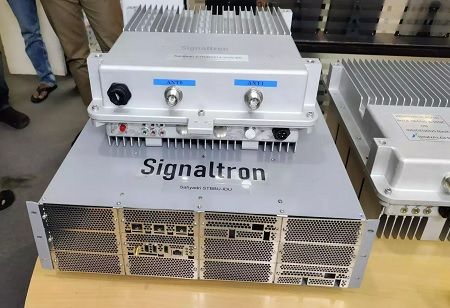 In a pioneering move for India's defense technology, the Indian Army has inducted its first-ever indigenous chip-based 4G mobile base station. Procured from the Bangalore-based firm Signaltron, the Sahyadri LTE base stations are developed with India's first 4G and 5G chips from Signalchip, marking a significant milestone in domestic technological capability.
Signaltron's Founder, Himamshu Khasnis, shared the development with PTI, emphasizing the strategic importance of using indigenous technology. "This is the first time an Indian system running on an Indian chip for complex communication technology has been inducted into the army," Khasnis noted. The chip, crucial to modern communication technology, enhances security and operational control.
Founded in 2010, Signalchip has been dedicated to creating chips for advanced communication networks. The Sahyadri LTE base station, the result of this decade-long effort, represents India's leap in self-reliance in high-tech defense communication.
The Indian Army sourced the 4G LTE Network In a Box (NIB) solution from Signaltron via the Government e-Marketplace (GeM) portal. "Signaltron proposed the Sahyadri NIB solution and successfully passed stringent technical trials," Khasnis said. The Sahyadri NIB, weighing just 7 kg, offers secure wireless communication for audio, video, and data applications, providing flexibility with its light and mobile design.
Capable of functioning in both standalone and cellular modes, the Sahyadri NIB ensures seamless inter-operation with legacy analogue and IP telephony systems. This adaptability positions it as a versatile asset for the Indian Army's communication needs.
Signaltron has supplied 20 units to the army, with deployment depending on strategic requirements. "The Army takes its own call on when and where to deploy base stations. Since they are light and mobile, they offer the flexibility to change locations as needed," Khasnis added.
This induction marks a shift in the Indian base station market, which has been dominated by systems not made in India, and even fewer with indigenous chips. The Signalchip-designed chips, though fabricated externally, represent a crucial step toward self-reliance in semiconductor technology.
Currently, India lacks fabrication facilities for modern semiconductor chips, prompting companies like Signalchip to follow a model similar to industry giants Nvidia and Qualcomm, where designs are produced by third-party wafer fabs.
Looking ahead, Khasnis projected the Indian base station market to reach USD 24 billion by 2029. "With the use of indigenous systems, there could be significant savings in forex and a boost to GDP. Modernization targets in sectors like defense and railways offer excellent opportunities for indigenous solutions," he said. He also highlighted the global potential, with the captive network-private network (CNPN) 4G/5G market expected to exceed USD 30 billion by 2030, providing a fertile ground for the growth of local chip-based base stations.
This move by the Indian Army not only marks a technological advancement but also reflects a broader trend towards self-reliance in critical technology sectors, with significant implications for India's economic and strategic landscape.