

Into the Fast & Furious 10-Minute Delivery Craze
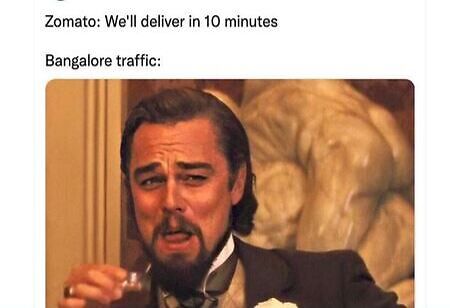
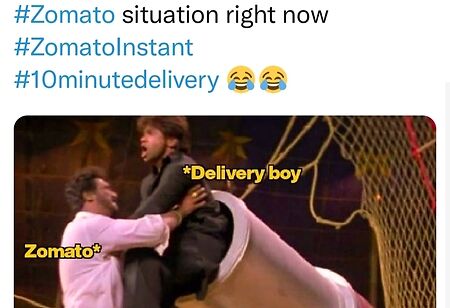
 Maggie’s ‘2-minute noodles’ isn’t always the case, but hey, give it eight more minutes and a full-course meal, dessert or food of any kind can be put on the table in just 10-minutes. That’s right! the newly emerging 10-minute delivery service is trending among Indian pallets as well as sparking a meme-fest. But what tickled the tickle bones of social media was when Zomato announced its 10-minute food delivery. Since then images, GIFs, videos and tweets, with one twitter user tweeting, “10 minutes is too long for delivery. I want my food before I order it”. The troll scroll is long on this one.
 Q-commerce is becoming quite popular today and RedSeer says that this segment could reach $3.1 billion by 2025 in gross merchandise value and 2021 clocked about $ 300 million at that. Over a 1000 dark stores have popped up in cities across the country for the past six months alone. This 10-minute delivery trend was first flagged off by Blinkit (earlier known as Grofers) and now, both new and old companies are stepping their game in the fast-moving segment. This includes Zepto, Swiggy Instamart, Bigbasket’s BBNow, Reliance-backed Dunzo and Ola Dash. Below are types of firms ruling the 10-minute delivery game.
Zomato Instant
Named Zomato Instant, the food tech firm says that it will neither pressure nor penalize its delivery partners into ensuring deliveries in 10 minutes. Even as perplexing as it sounds, delivery partners won’t even know that those deliveries are to be shipped in 10 minutes.
“We do not put any pressure on delivery partners to deliver food faster. Nor do we penalize delivery partners for late deliveries. The delivery partners are not informed of the promised time of delivery. Time optimization does not happen on the road and does not put any lives at risk”, tweeted Deepinder Goyal, founder, Zomato.
The food tech platform explained that the delivery will rely on a dense network of ‘finishing counters’, located in near high-demand customer neighborhoods. Yet it remains questionable about how it will work without pressuring delivery partners, let alone the existing traffic that poses delay as well as safety concerns. From next month, Zomato Instant will launch four stations in Gurugram. As yet, no information concerning the deployment timeframe has been released by the company.
Explaining the thinking behind the instant food delivery, Goyal said, "Sorting restaurants by fastest delivery time is one of the most used features on the Zomato app."
He said he also "started feeling that the 30-minute average delivery time by Zomato is too slow, and will soon have to become obsolete."
"If we don't make it obsolete, someone else will," Mr Goyal said.
Zepto
This Mumbai-based grocery delivery app initially delivered groceries to specific neighbourhoods in Bangalore, Mumbai, and Delhi, but it is now extending to other parts of India. In addition to Delhi, Chennai, Gurgaon, Bangalore, Mumbai, Hyderabad, Pune, and Noida, their service is now available in Delhi, Chennai, Gurgaon, Bangalore, Mumbai, Hyderabad, Pune, and Noida. The app will soon be available in Kolkata. Founded by two 19-year-old Stanford University dropouts, this grocery delivery app provides options for customers to choose from thousands of delivery items including farm fresh vegetables and fruits claims that its average delivery time is around eight minutes 40 seconds. It operates using an inventory model that delivers groceries from their own micro-warehouses in the neighbourhood.
Blinkit
Blinkit (formerly Grofers) is a Gurgaon-based firm started by Albinder Dhindsa that delivers groceries and other vital things within a 10-minute time frame. The app set the precedent for these ten-minute deliveries. Blinkit, a rapid commerce company, just received a $150 million loan from Zomato. Genuine products and a 100% replacement warranty are also promised by the company.
Cracking-down the Process Behind 10-Minute Delivery Service
The procedure begins even before the customer clicks the check-out button, with a delivery partner waiting to pick the order. Then a ‘picker’ inside the ‘dark store’ receives an alert on a smartphone. The picker, who is holding a bucket, is guided through a maze of shelves by the app. A two-person crew scans, bills, and packs the selected items. All of this takes only two minutes, leaving the delivery partner about eight minutes to arrive at the customer's door. Now the time and how these items are actually delivered by delivery executives is both impressive as well as concerning, especially considering the road safety aspect of it.
 Safety Concerns
Well, traffic is one element that poses safety concerns, but others such as the inevitable amount of potholes, open-garbage deposits, stray animals wandering on the streets, rash riders and drivers, people not abiding traffic rules, roads under construction or road blocks etc.
Meanwhile, delivery partners claim that the deadline and competition from rival companies drive them to take such a large risk. In fact, a lot of them come forward revealing the kind of risks they experience when doing 10-minute or instant deliveries in general, with cases as worse as losing a life.
According to the World Bank, India has a traffic death every four minutes. Every year, over 150,000 people are killed in crashes.
What the companies have said on their stance is that they are optimizing for speed at their ‘dark stores’ instead of asking delivery partners to drive faster. They added that if they are sufficient such dark stores placed within 2km of a platform’s most active locations, delivery partners would be able to deliver with time to spare. It’s also noted that companies seem to reject the idea that injuries are common and medical insurance is lacking.
However, some delivery partners had revealed that they were unable to receive the insurance money after their accidents, added with the complicated process that these insurance claims come with.
Although dark stores are always near destination sites, Blinkit's CEO remarked on Twitter that riders were not penalized and could deliver "at their own pace and rhythm."
Delivery partners revolted back saying that they mark orders as having been delivered even before they get to the destination. Customers who complained about the practice were subject to a fine of 300 Indian rupees ($4.03). The worries reflect the shadow side of India's burgeoning gig economy, in which workers frequently complain about being shortchanged or facing difficult working circumstances.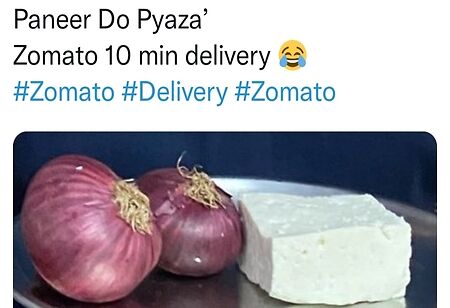
Customers Head Over Heels with the Delivery
Currently, it appears that civilians are hooked on the fast-moving delivery service. A Blinkit investor tweeted that deliveries on New Year's Eve included more than 43,000 cans of fizzy drinks.
Zepto has a market capitalization of $570 million and a goal of becoming a $20 billion firm.
Reliance, India's largest offline retailer, claimed this month that the rapid delivery industry represents a $50 billion opportunity when it invested in Dunzo, another Indian startup that offers a 19-minute delivery service.
"With free delivery, the business is unlikely to be viable," said T.N. Hari, who heads human resources at online grocery BigBasket, which delivers most orders within five hours.