


Alok Nigam: Powering The Future With Sustainable Innovation
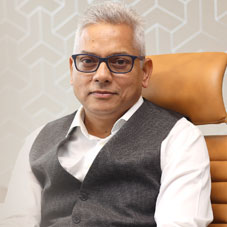
Alok Nigam
CEO
Across boardrooms and policy corridors, a new generation of visionaries is shaping the next phase of global energy transition, not only by delivering megawatts but by re-imagining how nations can grow responsibly, competitively and equitably.
Their decisions sit at the intersection of climate ambition, technology and investment, and their leadership determines the pace at which countries move from intent to impact.
A transformative leader in the industry is Alok Nigam, a figure whose career mirrors the evolution of India’s renewable energy journey. With three decades of experience spanning advisory, regulatory frameworks and large-scale renewable power development, he brings a rare blend of technical command and strategic clarity.
As CEO of UPC Renewables India, he leads a multi gigawatt portfolio defined by scale and innovation, re-inforcing India’s position on the global clean energy map.
His trajectory, from Big Four advisory rooms to the helm of multi-national independent power producers, reflects a career shaped by the pursuit of knowledge, resilience, re-invention and an unwavering commitment to meaningful outcomes.
Alok’s professional path is rooted in impact. He has steered renewable energy businesses at regional and national levels, shaping utility scale projects, transmission solutions and industrial de-carbonization initiatives for leading multi-national IPPs.
His leadership journey includes pivotal roles at Serentica Renewables, Sterlite Power, SunEdison and Lanco Renewables, where he drove strategic growth, built teams and led business transformation during periods of industry flux.
Before becoming an RE IPP leader, he spent a decade in advisory and transaction services across big-four consulting, credit rating and multi-lateral institutions. This allowed him deep insights into policy, regulatory structures, financial modelling, futures and utility behaviour.
This rare confluence of engineering depth and financial sophistication, built on his degrees from NIT Durgapur and Delhi University, defines his leadership ethos. Honored across organizations for excel -lence in leadership and transformation, Alok Nigam is a driving force in India’s clean energy transition.
You have led from the front across several respected organizations. What core lessons emerged from those experiences, and how are you drawing on them today to shape UPC Renewables India’s strategy for growth and long term sustainability?
My leadership journey across the energy, infrastructure, and advisory landscape has shaped a set of principles that now guide UPC Renewables India’s growth strategy and organizational philosophy.
I have consistently learned that people build companies, while processes enable them to scale. Empowered teams, supported by
clarity of purpose, ownership, and trust, deliver exceptional outcomes, and at UPC, I focus on fostering a culture that balances accountability with entre -preneurial agility in a rapidly evolving renewable energy sector.
The power industry has also reinforced for me the belief that resilience and adapt ability are leadership essentials, given constant policy shifts, technological change, highly matrixed stake holders and market volatility.
We embrace this mindset by diversifying our portfolio, adopting flexible business models, and continually re-setting our capabilities.
I firmly believe sustainability must sit at the heart of business strategy. Strong ESG practices drive investor confidence, operational credibility, and longterm competitiveness. Equally, partnerships amplify impact and I prioritize colla -borative ecosystems across government, finance, technology, and communities.
Ultimately, vision only matters when matched with disciplined, data-driven execution, a balance that defines both my leadership approach and UPC’s journey toward delivering sustainable and scalable energy outcomes for India.
How would you define your style of leadership?
My leadership style blends the technical discipline I gained as an engineer, the financial realism shaped in advisory, and the human focus built through years of leading teams. I believe people perform best when they understand the purpose behind decisions and are free to choose how they execute.
I emphasise rigorous attention to detail, expecting leaders to be hands-on, data-driven and solution oriented. I value strategic thinking grounded in operational reality, supported by clear goals, trans -parency and timely feedback.
I stay connected across levels, encouraging open dialogue and diverse perspectives. Above all, I rely on humility and uncompromised ethics, which create trust, resilience and a culture that endures.
What guidance would you offer to the emerging leaders of this industry?
The energy sector is an exciting and demanding space, and leading it requires purpose, constant learning, curiosity and character. I believe future leaders should anchor themselves in intent rather than hierarchy, commit to continuous learning and remain adaptable in a landscape that shifts every quarter.
They must cultivate the courage to take informed risks, balancing boldness with sound judgment. Integrity should remain non-negotiable. Humility is essential for building trust, inspiring teams and sustaining the high performance cultures needed to deliver transformative projects.
Having seen the industry evolve from its early stages to the scale it commands today, how would you characterise this trans - formation, and how do you connect this profound shift with India’s long term national aspirations?
The transformation of India’s renewable energy sector has been nothing short of an industrial miracle, and I have witnessed it from its earliest days. I recall when a 1 MW solar project was contracted at nearly INR 18 per kWh and a 20 MW plant was considered large.
The power industry has also reinforced for me the belief that resilience and adapt ability are leadership essentials, given constant policy shifts, technological change, highly matrixed stake holders and market volatility.
We embrace this mindset by diversifying our portfolio, adopting flexible business models, and continually re-setting our capabilities.
I firmly believe sustainability must sit at the heart of business strategy. Strong ESG practices drive investor confidence, operational credibility, and longterm competitiveness. Equally, partnerships amplify impact and I prioritize colla -borative ecosystems across government, finance, technology, and communities.
Ultimately, vision only matters when matched with disciplined, data-driven execution, a balance that defines both my leadership approach and UPC’s journey toward delivering sustainable and scalable energy outcomes for India.
My leadership journey across the energy, infrastructure, and advisory landscape has shaped a set of principles that now guide UPC Renewables India’s growth strategy and organizational philo -sophy
How would you define your style of leadership?
My leadership style blends the technical discipline I gained as an engineer, the financial realism shaped in advisory, and the human focus built through years of leading teams. I believe people perform best when they understand the purpose behind decisions and are free to choose how they execute.
I emphasise rigorous attention to detail, expecting leaders to be hands-on, data-driven and solution oriented. I value strategic thinking grounded in operational reality, supported by clear goals, trans -parency and timely feedback.
I stay connected across levels, encouraging open dialogue and diverse perspectives. Above all, I rely on humility and uncompromised ethics, which create trust, resilience and a culture that endures.
What guidance would you offer to the emerging leaders of this industry?
The energy sector is an exciting and demanding space, and leading it requires purpose, constant learning, curiosity and character. I believe future leaders should anchor themselves in intent rather than hierarchy, commit to continuous learning and remain adaptable in a landscape that shifts every quarter.
They must cultivate the courage to take informed risks, balancing boldness with sound judgment. Integrity should remain non-negotiable. Humility is essential for building trust, inspiring teams and sustaining the high performance cultures needed to deliver transformative projects.
Having seen the industry evolve from its early stages to the scale it commands today, how would you characterise this trans - formation, and how do you connect this profound shift with India’s long term national aspirations?
The transformation of India’s renewable energy sector has been nothing short of an industrial miracle, and I have witnessed it from its earliest days. I recall when a 1 MW solar project was contracted at nearly INR 18 per kWh and a 20 MW plant was considered large.
Today, tariffs have fallen to around INR 2.6 per kWh, and 300 MW projects are routinely developed, making renewable energy both economical and ecological. Installed renewable capacity has grown from about 7 GW in 2005 to nearly 250 GW in 2025, with wind leading the early phase and solar emerging as the dominant driver over the past decade.
As of October 2025, non fossil capacity exceeds 50 percent of India’s total installed power base, marking a significant step toward the 2030 target of 500 GW. With annual additions exceeding 50 GW, India is on track, even as transmission and storage must scale in-parallel.
Beyond capacity, we are building engines of growth, powering EVs, AI-driven data centres, and industry processes, besides proving that sustainability and economic prosperity can advance together.
What does your future roadmap look like, and which emerging opportunities do you intend to harness?
Our roadmap focuses on responsible scale, disciplined diversification and continuous innovation. We are evolving from a pure solar operator to a multi technology platform by adding wind projects and developing large hybrid assets.
Our project pipeline is expanding across high resource sites as we work toward a five gigawatt portfolio by 2030, supported by transmission connectivity and strategic land acquisition. We are also broadening our customer mix by serving commercial and industrial consumers seeking reliable green power.
Alongside this, we are exploring storage solutions to deliver round the-clock renewable energy and investing in digital tools for smarter asset management. Strengthening leadership, collaboration and an innovation led culture remains central to building a future ready organization.
How do you view India’s current macro -economic landscape and the commercial challenges confronting the sector?
The current landscape in India presents immense opportunity and significant commercial challenges. Economic growth of around 8.2 percent is driving rising power demand, with renewables offering a cost competitive, sustainable solution to fuel new anchors like EVs, AI datacentres, and industrial electrification.
Simultaneously, the sector faces regulatory and structural headwinds, including stalled projects due to unsigned PPAs, tighter DSM regulations increasing forecasting risks, and domestic content requirements creating supply constraints.
By combining rigorous financial and regulatory discipline with careful risk management, developers can harness growth while ensuring projects remain bankable, resilient and aligned with India’s long-term energy ambitions.
Alok Nigam, CEO, UPC Renewables India
With nearly three decades of experience across advisory, regulatory and renewable energy leadership, Alok Nigam has consistently bridged technical expertise with strategic vision.
As CEO of UPC Renewables India, he is steering a multiGW portfolio that reflects both scale and innovation. His journey - from Big Four advisory to leading multinational IPPs - under scores a career built on resilience, trans -formation, and impact.
Recognized for leadership excellence across organizations, Alok continues to champion India’s clean energy transition while staying grounded in personal passions that reflect his curiosity and balance.
As of October 2025, non fossil capacity exceeds 50 percent of India’s total installed power base, marking a significant step toward the 2030 target of 500 GW. With annual additions exceeding 50 GW, India is on track, even as transmission and storage must scale in-parallel.
Beyond capacity, we are building engines of growth, powering EVs, AI-driven data centres, and industry processes, besides proving that sustainability and economic prosperity can advance together.
What does your future roadmap look like, and which emerging opportunities do you intend to harness?
Our roadmap focuses on responsible scale, disciplined diversification and continuous innovation. We are evolving from a pure solar operator to a multi technology platform by adding wind projects and developing large hybrid assets.
Our project pipeline is expanding across high resource sites as we work toward a five gigawatt portfolio by 2030, supported by transmission connectivity and strategic land acquisition. We are also broadening our customer mix by serving commercial and industrial consumers seeking reliable green power.
Alongside this, we are exploring storage solutions to deliver round the-clock renewable energy and investing in digital tools for smarter asset management. Strengthening leadership, collaboration and an innovation led culture remains central to building a future ready organization.
How do you view India’s current macro -economic landscape and the commercial challenges confronting the sector?
The current landscape in India presents immense opportunity and significant commercial challenges. Economic growth of around 8.2 percent is driving rising power demand, with renewables offering a cost competitive, sustainable solution to fuel new anchors like EVs, AI datacentres, and industrial electrification.
Simultaneously, the sector faces regulatory and structural headwinds, including stalled projects due to unsigned PPAs, tighter DSM regulations increasing forecasting risks, and domestic content requirements creating supply constraints.
By combining rigorous financial and regulatory discipline with careful risk management, developers can harness growth while ensuring projects remain bankable, resilient and aligned with India’s long-term energy ambitions.
Alok Nigam, CEO, UPC Renewables India
With nearly three decades of experience across advisory, regulatory and renewable energy leadership, Alok Nigam has consistently bridged technical expertise with strategic vision.
As CEO of UPC Renewables India, he is steering a multiGW portfolio that reflects both scale and innovation. His journey - from Big Four advisory to leading multinational IPPs - under scores a career built on resilience, trans -formation, and impact.
Recognized for leadership excellence across organizations, Alok continues to champion India’s clean energy transition while staying grounded in personal passions that reflect his curiosity and balance.