


Dr Ayush Chawla : Innovating Vertigo Management With An Vertically Integrated Patient Care Model
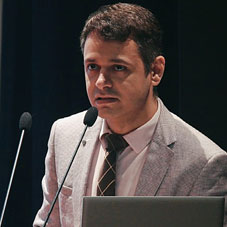
Dr Ayush Chawla
Co-Founder
Dr Ayush Chawla is a patient care surgeon with a robust clinical background and growing expertise in healthcare management. After completing his undergraduate education in 2013, he pursued his postgraduation at Apollo Hospitals, Chennai, finishing in 2017.
His experience across Delhi government hospitals and corporate institutions sparked a deep interest in the managerial side of healthcare leading him to pursue a course from the Indian Institute of Management Tiruchirappalli.
Recognizing that clinical skills alone are no longer sufficient, Dr Ayush has focused on integrating knowledge of operations, finance, digital health, and leadership to build sustainable healthcare models, positioning himself as a doctor-entrepreneur driving meaningful change in the sector.
In a recent interaction with CEO Insights, Dr Ayush shared more insights on his career and many other interesting aspects. Below are a few key excerpts from the exclusive interview.
What key lessons did you gain during your time at the Indian Institute of Management Tiruchirappalli?
IIM Tiruchirappalli expanded my vision to see healthcare as an integrated experience, one that includes clinical care, but also strategy, finance, innovation, and technology. It helped me bridge the gap between clinical practice and healthcare management.
I began to understand the operational and systemic challenges that influence
decisions at the organizational level. The course gave me a holistic view of healthcare delivery and equipped me to contribute meaningfully beyond the clinical role.
What is your most memorable experience from your time at the Indian Institute of Management Tiruchirappalli?
My most memorable experience at the Indian Institute of Management Tiruchirappalli was the real-time, case-based discussions during our strategy and operations courses. The faculty brought in incredibly relevant and practical case studies that resonated deeply with my day-to-day experiences as a doctor.
These discussions felt highly personalized and grounded, almost as if we were dissecting live issues from my workplace. That blend of academic rigor with real-world relevance created an eye-opening learning environment and left a lasting impression on me.
How do you currently utilize health information techno- logies for decision-making and investigations in healthcare, and what are the latest tools you have implemented?
As an patient care surgeon, I chose to focus on a relatively unexplored but highly prevalent issue, vertigo and balance disorders, which many patients suffer from, yet remain underdiagnosed and misunderstood in India. To address this, I established a dedicated vertigo clinic, similar in concept to specialized diabetes clinics, where patients receive focused, end-to-end care.
Technology has played a pivotal role in making this possible. Unlike conditions like diabetes or hypertension, vertigo is subjective and difficult to quantify. This is where advanced tools like Video Nystagmography (VNG), Video Head Impulse Test (vHIT), and Dynamic Visual Acuity (DVA) testing come in.
These tools allow us to objectively measure and visualize a patient’s condition, turning a once invisible symptom into clear data through graphs and recordings. This not only aids diagnosis but also reassures patients that their symptoms are real and treatable.
We aim to build a national level, disease-specific treatment network that integrates diagnostics, therapeutics, telemedicine, and techno-logy into one seamless care system
What is your most memorable experience from your time at the Indian Institute of Management Tiruchirappalli?
My most memorable experience at the Indian Institute of Management Tiruchirappalli was the real-time, case-based discussions during our strategy and operations courses. The faculty brought in incredibly relevant and practical case studies that resonated deeply with my day-to-day experiences as a doctor.
These discussions felt highly personalized and grounded, almost as if we were dissecting live issues from my workplace. That blend of academic rigor with real-world relevance created an eye-opening learning environment and left a lasting impression on me.
How do you currently utilize health information techno- logies for decision-making and investigations in healthcare, and what are the latest tools you have implemented?
As an patient care surgeon, I chose to focus on a relatively unexplored but highly prevalent issue, vertigo and balance disorders, which many patients suffer from, yet remain underdiagnosed and misunderstood in India. To address this, I established a dedicated vertigo clinic, similar in concept to specialized diabetes clinics, where patients receive focused, end-to-end care.
Technology has played a pivotal role in making this possible. Unlike conditions like diabetes or hypertension, vertigo is subjective and difficult to quantify. This is where advanced tools like Video Nystagmography (VNG), Video Head Impulse Test (vHIT), and Dynamic Visual Acuity (DVA) testing come in.
These tools allow us to objectively measure and visualize a patient’s condition, turning a once invisible symptom into clear data through graphs and recordings. This not only aids diagnosis but also reassures patients that their symptoms are real and treatable.
We have also integrated Electronic Medical Records (EMR) into our practice, which is crucial for documentation, legal compliance, data analysis, and long-term monitoring of patient outcomes. In essence, technology has helped bring legitimacy, clarity, and precision to a highly subjective field, making our clinic a pioneer in this niche area.
What is your leadership style, and which principles guide you as a leader?
My leadership style is primarily coaching-oriented, shaped by the incredible mentors I had during the early stages of my clinical and managerial career. I aim to create an environment where freedom of thought, innovation, and continuous learning are encouraged. Just as my mentors empowered me to explore and develop my working style, I now pass on that same opportunity to my team.
What long-term goal are you working toward?
My long-term goal is to transform our current setup, Synapse Vertigo & Hearing Care, into a Vertically Integrated Micro Provider (VIMPRO), a concept introduced in the UK in 2022.
This model delivers end-to-end, personalized care for a specific patient group through a mix of physical and digital platforms. Vertigo, being a subjective and often misunderstood condition, demands a focused, long-term approach.
Our aim is to build a national-level, disease-specific treatment network that integrates diagnostics, therapeutics, telemedicine, and technology into one seamless care system.
Dr Ayush Chawla, Co-Founder, Synapse Vertigo & Hearing Care
Dr Ayush Chawla, Co-Founder of Synapse Vertigo & Hearing Care, completed his MBBS in 2013, followed by post-graduation in Otorhinolaryngology from Apollo Hospitals, Chennai in 2017, along with MRCS (England) and a Diploma in Otolaryngology, Head & Neck surgery from the UK. As the founder of Synapse Vertigo and Hearing Care, he blends his robust clinical expertise with formal management training from IIM Trichy to lead India’s one of the first symptom specific, tech-driven center of excellence for balance and hearing disorders.
•Hobbies: Travelling
•Favorite Book: The Checklist Manifesto by Atul Gawande
•Favorite Travel Destination: Goa, Manali, London
What is your leadership style, and which principles guide you as a leader?
My leadership style is primarily coaching-oriented, shaped by the incredible mentors I had during the early stages of my clinical and managerial career. I aim to create an environment where freedom of thought, innovation, and continuous learning are encouraged. Just as my mentors empowered me to explore and develop my working style, I now pass on that same opportunity to my team.
What long-term goal are you working toward?
My long-term goal is to transform our current setup, Synapse Vertigo & Hearing Care, into a Vertically Integrated Micro Provider (VIMPRO), a concept introduced in the UK in 2022.
This model delivers end-to-end, personalized care for a specific patient group through a mix of physical and digital platforms. Vertigo, being a subjective and often misunderstood condition, demands a focused, long-term approach.
Our aim is to build a national-level, disease-specific treatment network that integrates diagnostics, therapeutics, telemedicine, and technology into one seamless care system.
Dr Ayush Chawla, Co-Founder, Synapse Vertigo & Hearing Care
Dr Ayush Chawla, Co-Founder of Synapse Vertigo & Hearing Care, completed his MBBS in 2013, followed by post-graduation in Otorhinolaryngology from Apollo Hospitals, Chennai in 2017, along with MRCS (England) and a Diploma in Otolaryngology, Head & Neck surgery from the UK. As the founder of Synapse Vertigo and Hearing Care, he blends his robust clinical expertise with formal management training from IIM Trichy to lead India’s one of the first symptom specific, tech-driven center of excellence for balance and hearing disorders.
•Hobbies: Travelling
•Favorite Book: The Checklist Manifesto by Atul Gawande
•Favorite Travel Destination: Goa, Manali, London