


Senthil Nathan : Shaping The Future Of Mainframe Developer Experience
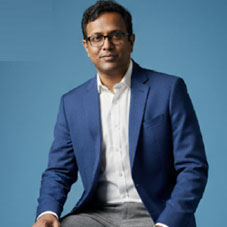
Senthil Nathan
Head of Product
He believes that software products are ‘a dime a million’, but real innovation comes from those closest to the problem. This philosophy has held him in great stead, from his days as a rookie developer to today, as a global leader.
Starting his career as a developer in the post-Y2K era, Senthil was excited by opportunity and driven by curiosity. Even in his first job, he pushed himself to be among the first to learn to build DB2 to transform one tier architectures to two-tier with the business logic written in stored procedures. This was over two decades ago!
Since then, he has taken the scenic route around performance engineering, solution archi-tecture, warroom fire - fighting, Mainframe DevOps before he landed on product management at HCL and then at IBM.
With a carefully-cultivated mix of technical depth and business acumen, he became a natural bridge between engineering and customers. He also wanted to be more involved with the mainframe community.
So, he founded a Slack-based community for Mainframers in India, organizing educational sessions and fostering meaningful collaboration.
Making time from his packed schedule, Senthil talks to CEO Insights magazine, about his work, future plans and approach.
What, in your opinion, is a product manager’s non-negotiable skill?
Customer empathy. Unlike consumer products, where you can roll out features, A/B test them, and quickly gather behavioral data, feedback cycle in B2B software is much longer. Think of it this way. If you add an extra button on a food delivery app and your orders decline, you can respond to it within hours, if not minutes. An enterprise application built for a specific purpose with complex workflows and integration doesn’t work this way. As a result, B2B product managers need to be all the more customer-centric.
Here’s what I do. First, I put myself in the customer's shoes. I walk through the customer journey myself to check whether a feature would make sense in real world scenarios. While empathetic, this is a highly biased approach. So, I actively engage with customers early in the process.
I listen carefully, make notes, ask questions, and observe customers in their work environment. As we begin building the product, we share demos, alpha or beta builds and encourage users to experiment and provide feedback. We also collaborate extensively with the design team, leveraging user research to validate ideas, prioritize technical features based on customer needs and usability.
What is your leadership approach to fostering a culture of innovation within your product team?
For me, fostering innovation starts with creating psychological safety and trust within the team. I encourage developers, designers, and cross functional partners to share their perspectives freely.
I see my role less as the idea generator and more as the facilitator who connects dots, removes friction, and helps refine ideas into actionable solutions.
How do you see Gen Z shaping the future of the
As a product leader, I see my role less as the idea generator and more as the facilitator who connects dots, removes friction, and refines ideas into actionable solutions
Here’s what I do. First, I put myself in the customer's shoes. I walk through the customer journey myself to check whether a feature would make sense in real world scenarios. While empathetic, this is a highly biased approach. So, I actively engage with customers early in the process.
I listen carefully, make notes, ask questions, and observe customers in their work environment. As we begin building the product, we share demos, alpha or beta builds and encourage users to experiment and provide feedback. We also collaborate extensively with the design team, leveraging user research to validate ideas, prioritize technical features based on customer needs and usability.
What is your leadership approach to fostering a culture of innovation within your product team?
For me, fostering innovation starts with creating psychological safety and trust within the team. I encourage developers, designers, and cross functional partners to share their perspectives freely.
I see my role less as the idea generator and more as the facilitator who connects dots, removes friction, and helps refine ideas into actionable solutions.
How do you see Gen Z shaping the future of the
workforce and product development?
Many of our end users are Gen Z developers and testers.They bring fresh perspectives. More importantly, they challenge us not to get stuck in the thought processes we grew up with. Their exposure to vast amounts of information from an early age makes their outlook more global, which is invaluable when building products for international markets.
How do you stay up to date with industry trends?
Ever since my first job of managing people, I have found it easier to influence them when I can speak their language. So I make it a point to stay close to technology. While I may not code like I did a decade ago, I still experiment, learn, and stay current enough to have meaningful conversations with engineers. This gives me the confidence to ask the right questions and understand where technology is heading.
What future destination are you striving toward?
As a career, I strive to lead a large product organization where the focus is not just on managing more products, but on creating greater impact for our customers. I see my growth as a function of helping my teams to make a measurable difference in how customers build and innovate. Naturally, AI will be a part of that future.
Senthil Nathan, Head of Product, IBM
Senthil Nathan, Head of Product at IBM for the IBM Z DevX portfolio, is a seasoned product leader in the Mainframe Developer Experience space. After 17 years of development and solution architecting stints at Infosys, Cognizant and HCL, he transitioned to product management in 2021. He regularly volunteers at Main framer India, a developer community he founded, bringing together education, engagement and exchange of ideas related to Mainframe technologies.
•Favorite Hobbies: Reading
•Favorite Cuisine: Chettinad
•Favorite Book: How Google Works by Eric Schmidt
•Favorite Travel Destination: Munnar in Kerala
Many of our end users are Gen Z developers and testers.They bring fresh perspectives. More importantly, they challenge us not to get stuck in the thought processes we grew up with. Their exposure to vast amounts of information from an early age makes their outlook more global, which is invaluable when building products for international markets.
How do you stay up to date with industry trends?
Ever since my first job of managing people, I have found it easier to influence them when I can speak their language. So I make it a point to stay close to technology. While I may not code like I did a decade ago, I still experiment, learn, and stay current enough to have meaningful conversations with engineers. This gives me the confidence to ask the right questions and understand where technology is heading.
What future destination are you striving toward?
As a career, I strive to lead a large product organization where the focus is not just on managing more products, but on creating greater impact for our customers. I see my growth as a function of helping my teams to make a measurable difference in how customers build and innovate. Naturally, AI will be a part of that future.
Senthil Nathan, Head of Product, IBM
Senthil Nathan, Head of Product at IBM for the IBM Z DevX portfolio, is a seasoned product leader in the Mainframe Developer Experience space. After 17 years of development and solution architecting stints at Infosys, Cognizant and HCL, he transitioned to product management in 2021. He regularly volunteers at Main framer India, a developer community he founded, bringing together education, engagement and exchange of ideas related to Mainframe technologies.
•Favorite Hobbies: Reading
•Favorite Cuisine: Chettinad
•Favorite Book: How Google Works by Eric Schmidt
•Favorite Travel Destination: Munnar in Kerala