We Communicate Your Leadership Thoughts
We Communicate Your Leadership Thoughts
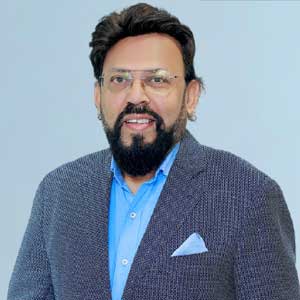
Imtiaz Farooqi , Founder & Managing Director, United Rail Road Consultants
The logistics industry has evolved far beyond the movement of goods from one point to another. Today, it is an interconnected ecosystem where manufacturers, ports, industrial facilities and supply chains depend on reliable infrastructure and seamless movement to maintain operational continuity. Within this landscape, rail logistics plays a particularly important role, enabling the large-scale movement of bulk commodities and industrial freight while demanding precision, safety, asset reliability and disciplined execution. As industries increasingly seek integrated solutions rather than fragmented services, the role of experienced rail logistics leaders has become even more significant. Imtiaz Farooqi, Founder & Managing Director, United Rail Road Consultants Pvt. Ltd. (Unirail) is one such leader whose entrepreneurial journey reflects the evolution of a company built from the ground up through operational experience and customer trust.
.jpg "Imtiaz Farooqi : Turning Operational Discipline Into Sustainable Growth")
India's Logistics Sector: Building for the Next Phase of Growth
By: Rachita Sharma, Managing Editor
India’s logistics sector has undergone a significant transformation over the past few years, driven by infrastructure development, policy reforms and changing business needs. The market grew
Reinventing Facility & Asset Management for Business Growth
By: Bhupendra Jha, CEO, ICM & Nibble Food Services
Facility and asset management is evolving from being a support function to emerging as a strategic contributor to business performance. Effective asset management enables organizations
By: Vamsidharr Setty, Managing Director - India, The Senator Group
Vamsidharr Setty is the Managing Director India, The Senator Group, one of the world’s largest office furniture manufacturers. He has more than 21 years
By: Amit Srivastava, Founder & Chief Catalyst, Nutrify Today
Amit Srivastava has over 25 years of experience in nutraceuticals and medical foods. He pioneered the world's first 'Curated Intelligence' platform
By: Trissa Joseph, Vice President R&D, Everest Industries
Trissa Joseph, an accomplished R&D and technology leader with deep expertise in chemistry, product innovation, and sustainability. With global experience
By: Ankit Gupta, President, ASPA
A visionary leader with a passion for innovation and excellence, Ankit is committed to enhancing ASPA's market presence while fostering long-term
Business Leader Of The Year In Transportation & Logistics - 2026
India’s logistics sector has been growing rapidly. The market expanded at roughly 11% a year between fiscal 2019 and 2024, and one estimate puts it at around $240 billion in 2025.
A majority of that momentum comes from policy. The National Logistics Policy, launched in 2022, aims to get India into the top 25 on the World Bank’s Logistics Performance Index by 2030. India has already moved from 44th place in 2018 to 38th in 2023. The policy also brought in the Unified Logistics Interface Platform, which puts transport-related digital services in one place, and it works alongside PM Gati Shakti, which gets 16 ministries planning infrastructure together instead of separately.
Physical infrastructure has played its part too. The Eastern and Western Dedicated Freight Corridors are designed to move heavy cargo by rail, and government infrastructure spending climbed from 2.1% of GDP in 2021 to 3.1% in 2025.
On the demand side, e-commerce has been a big push, and GST changed how companies plan their supply chains. Firms no longer need warehouses in every state, so larger logistics parks have taken over. Organised players now hold about 80% of the market.
One caveat: the cost numbers don’t agree. NCAER put logistics costs at 7.8% to 8.9% of GDP for 2021-22, while other reports say 13-14%, or 10- 10.7% for FY2026. The gap probably comes down to how costs are defined, and I couldn’t confirm which figure is the standard one. Last-mile delivery, especially in cities, also remains a challenge.
India’s logistics sector is entering its next phase on firmer ground than before, thanks to better infrastructure, clearer policy and strong demand from e-commerce and manufacturing. What happens next will depend on how well the sector handles a few shifts: moving more freight from road to rail, adopting cleaner fleets and warehouses, meeting the demand for faster delivery, and bringing in automation. Many of these are still early or only partly proven, and most projections come from industry reports rather than firm outcomes. If the multimodal and green pieces scale as planned, they could help narrow the cost gap with developed economies.
Our subscribers play a decisive role in finalization of our annual list of "Business Leader Of The Year In Transportation & Logistics - 2026" by nominating those which have served them with excellence and are praiseworthy. If you feel there is a company that deserves to be on our annual list, do write to us about them mentioning their value proposition.
| Company Logo | Company Management | Company Name | Company Description |
|---|---|---|---|
 |
Imtiaz Farooqi, Founder & Managing Director | United Rail Road Consultants | We are also adopting technology selectively, particularly for locomotive condition monitoring, digital movement records and asset management. From a sustainability perspective, moving more cargo from road to rail itself creates significant environmental benefits. |
 |
Vidyasagar Chikkala, Chief Information Officer | FlexiVan | My vision is for FlexiVan’s technology ecosystem to evolve from systems that primarily record and display information into an intelligent environment that can predict, recommend and increasingly act. |
Other Issues


.jpg "Lalit Kumar Golchha : Navigating Business Success With Industry Excellence")


.jpg "Reekrit Serai: Inspiring a Generation of Educators & Leaders")
.jpg "Aditya Vikram Birla : Driving Innovation and Industry Expansion through Optimized Supply Chains and Sustainability")


We use cookies to ensure you get the best experience. Read more…