


Imtiaz Farooqi: Turning Operational Discipline Into Sustainable Growth
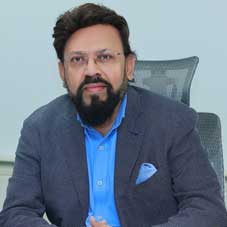
Imtiaz Farooqi
Founder & Managing Director
Within this landscape, rail logistics plays a particularly important role, enabling the large-scale movement of bulk commodities and industrial freight while demanding precision, safety, asset reliability and disciplined execution.
As industries increasingly seek integrated solutions rather than fragmented services, the role of experienced rail logistics leaders has become even more significant.
Imtiaz Farooqi, Founder & Managing Director, United Rail Road Consultants Pvt. Ltd. (Unirail) is one such leader whose entrepreneurial journey reflects the evolution of a company built from the ground up through operational experience and customer trust. Farooqi began his journey over 25 years ago with a single railway track-maintenance contract valued at ₹5 lakh.
With no office, established track record or significant capital, he borrowed ₹50,000 from his brother-in-law to undertake the assignment.
That modest beginning eventually laid the foundation for Unirail, which has today grown into a ₹175+crore enterprise offering capabilities across railway infrastructure, operations, rolling stock, maintenance and port-related services.
A commerce graduate from Osmania University, Hyderabad, Farooqi is not an engineer by training and has never worked for another organisation.
Instead, he learnt the intricacies of the railway business by being directly involved at sites, understanding railway regulations, managing operations and taking responsibility when challenges arose.
This hands-on approach shaped Unirail’s expansion from track maintenance into private railway siding development and commissioning, locomotive and wagon maintenance, yard operations and port railway operations.
At the heart of his leadership philosophy are three principles: never undertake work the organisation cannot genuinely deliver, never compromise on safety, and build people before chasing growth.
Farooqi believes that sustainable scale is ultimately determined by the quality of people managing operations on the ground.
This people-first, execution-led approach has helped Unirail evolve from a small track-maintenance contractor into an integrated rail solutions provider.
Let’s delve deeper into his entrepreneurial journey, leader- ship philosophy and vision for Unirail.
Unirail has grown from a railway maintenance company into a Complete Rail Solution Provider. What were the key milestones in this journey, and what strategic decisions enabled this evolution?
Honestly, our customers pushed us to grow. They did not want railway services in separate pieces; they wanted one partner who could get a railway line approved, build it, commission it and operate it. We first moved from track maintenance into
building private railway lines and handling approvals, which led to consultancy. We then entered railway operations, including train operations for Mundra and Dhamra Ports. Building our own locomotive and wagon maintenance capabilities completed the integrated model. The real turning point was 2020, when Adani awarded us our first port O&M contract at Krishnapatnam. We executed it well, and that relationship grew substantially.
Unirail operates across infrastructure, rolling stock, locomotive operations, maintenance, signalling, rake management and yard operations. How do you identify new opportunities and decide which capa- bilities to add?
I believe new business is discovered by standing in the customer’s yard, not by simply watching tender websites. When we work closely with customers, we identify where they are losing time, money or efficiency. Many of our services began with problems we noticed on-site. Before entering a new area, I ask four questions: Is it close to what we already do well?
Will it make us more valuable to the customer? Can we train our people to deliver it properly? And can we be held fairly accountable for the outcome? If the answer is yes, we build the capability; otherwise, we do not pursue it.
How do you build a management culture at Unirail that combines technical competence, safety, accountability and customer focus as the organisation grows?
For me, culture is demonstrated by what people do when something goes wrong, especially at two in the morning. We invest heavily in training, with our locomotive pilots, shunting staff, track supervisors, signalling technicians and wagon fitters receiving formal training through Indian Railways institutes, followed by practical development at our sites.
Safety is non-negotiable; any supervisor can stop an unsafe movement without fear of being blamed. We also ensure every site has clear accountability. Most importantly, I tell our teams that customers should hear about a problem from us before discovering it themselves. I believe strong supervisors are the foundation of sustainable growth.
How is the shift towards integrated, efficient and sustainable freight networks influencing Unirail’s strategy and business model?
Customers increasingly want one accountable partner rather than several agencies managing different parts of their railway operations. That is exactly where our integrated model creates value. Our own journey reflects this shift: our first port contract was manpower-based, while our subsequent contracts with the same customer are linked to the actual tonnes of cargo moved.
This places greater responsibility on us to deliver outcomes. We are also adopting technology selectively, particularly for locomotive condition monitoring, digital movement records and asset management. From a sustainability perspective, moving more cargo from road to rail itself creates significant environmental benefits. We are also closely watching battery and hydrogen-based shunting locomotives.
What has been one of the most challenging phases of your entrepreneurial journey, and how did you protect Unirail’s operations and customer relationships during that period?
The Covid period was undoubtedly our toughest phase.
Unirail operates across infrastructure, rolling stock, locomotive operations, maintenance, signalling, rake management and yard operations. How do you identify new opportunities and decide which capa- bilities to add?
I believe new business is discovered by standing in the customer’s yard, not by simply watching tender websites. When we work closely with customers, we identify where they are losing time, money or efficiency. Many of our services began with problems we noticed on-site. Before entering a new area, I ask four questions: Is it close to what we already do well?
Will it make us more valuable to the customer? Can we train our people to deliver it properly? And can we be held fairly accountable for the outcome? If the answer is yes, we build the capability; otherwise, we do not pursue it.
Imtiaz Farooqi’s journey proves that customer trust, operational discipline, and people-first leadership can transform humble beginnings into lasting success
How do you build a management culture at Unirail that combines technical competence, safety, accountability and customer focus as the organisation grows?
For me, culture is demonstrated by what people do when something goes wrong, especially at two in the morning. We invest heavily in training, with our locomotive pilots, shunting staff, track supervisors, signalling technicians and wagon fitters receiving formal training through Indian Railways institutes, followed by practical development at our sites.
Safety is non-negotiable; any supervisor can stop an unsafe movement without fear of being blamed. We also ensure every site has clear accountability. Most importantly, I tell our teams that customers should hear about a problem from us before discovering it themselves. I believe strong supervisors are the foundation of sustainable growth.
How is the shift towards integrated, efficient and sustainable freight networks influencing Unirail’s strategy and business model?
Customers increasingly want one accountable partner rather than several agencies managing different parts of their railway operations. That is exactly where our integrated model creates value. Our own journey reflects this shift: our first port contract was manpower-based, while our subsequent contracts with the same customer are linked to the actual tonnes of cargo moved.
This places greater responsibility on us to deliver outcomes. We are also adopting technology selectively, particularly for locomotive condition monitoring, digital movement records and asset management. From a sustainability perspective, moving more cargo from road to rail itself creates significant environmental benefits. We are also closely watching battery and hydrogen-based shunting locomotives.
What has been one of the most challenging phases of your entrepreneurial journey, and how did you protect Unirail’s operations and customer relationships during that period?
The Covid period was undoubtedly our toughest phase.
Ports and railway operations had to continue, even when travel was restricted, workers wanted to return home and spare parts were difficult to obtain. We decided that our employees would not bear the burden.
We arranged accommodation, food, medical support and salaries while reorganising shifts and deploying available people across operations. We also maintained transparent communication with customers about what we could and could not manage. Interestingly, 2020 was also the year Adani awarded us our first port O&M contract. That experience reinforced my belief that reputation is a company’s most valuable asset.
What developments do you believe will have the greatest impact on India’s rail logistics sector, and where do you see the strongest opportunities for Unirail?
I see four major developments shaping the sector. Dedicated freight corridors will improve the speed, reliability and capacity of goods movement and create opportunities around new sidings and terminals.
The growing participation of private companies in railway infrastructure will also create demand for specialised expertise. Ports are another major opportunity because efficient rail operations directly influence cargo throughput, and many are increasingly looking for professional railway operators.
Finally, data-driven maintenance will become increasingly important as companies move from calendar-based servicing to condition-based interventions. For Unirail, the strongest opportunities are in railway operations, sidings, terminals, locomotive and wagon maintenance, and port logistics.
As Unirail looks to expand into Rail Freight, Passenger Rail and Mass Rapid Transit, what is your vision for the company’s next phase of growth?
We are already strong in freight movement, and our next objective is to take that experience into passenger railways and metro systems. While the equipment differs, the fundamentals of safety, maintenance, operations and discipline remain similar.
We also want to deepen our locomotive and wagon overhaul capabilities rather than remain focused only on routine maintenance. Geographically, we intend to expand across more ports and industrial locations in India.
Technology will play a greater role in equipment monitoring, documentation and predictive maintenance. Above all, I want Unirail to become a company known for developing some of India’s best railway operations and maintenance professionals.
Imtiaz Farooqi, Founder & Managing Director, United Rail Road Consultants
Imtiaz Farooqi is the Founder & Managing Director of United Rail Road Consultants Pvt. Ltd. (Unirail), a Complete Rail Solution Provider. A commerce graduate from Osmania University, he has built Unirail over 25 years from a modest track-maintenance contract into a ₹175+ crore organisation spanning railway infrastructure, operations, rolling stock and maintenance.
Quick Facts
Educational Background: Commerce Graduate, Osmania University, Hyderabad, 1988.
Professional Background: Over 25 years of experience across track maintenance, private railway siding development and commissioning, railway operations, port operations and maintenance and locomotive and wagon maintenance.
Career Journey: Unirail has been his only professional venture; he has never been employed elsewhere and is not an engineer by training.