

Vidyasagar Chikkala: Driving Digital Intelligence Across The Logistics Value Chain
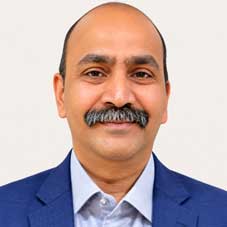
Vidyasagar Chikkala
Chief Information Officer
For CIOs, the mandate now extends beyond managing IT infrastructure to building digital capabilities that can understand physical operations, predict what comes next and increasingly automate decisions.
It is this intersection of technology and physical logistics that defines the leadership journey of Vidyasagar 'Sagar' Chikkala, Chief Information Officer at FlexiVan.
With more than 30 years of experience in transportation technology, his career has spanned global transportation systems, terminal automation, rail and truck operations, chassis technology, enterprise architecture, data and analytics.
Prior to his intermodal leadership roles, Sagar spent 22 years at APL, culminating as Chief Architect, playing a key role in building and modernizing global transportation platforms, terminal automation, and enterprise systems spanning rail, truck and logistics operations across a global network. This experience shaped his belief that meaningful transformation requires deep domain expertise, strong technology architecture and disciplined execution.
Artificial intelligence has also been a long-standing passion. Sagar earned a Master’s degree in Artificial Intelligence nearly three decades ago, when AI was primarily an academic discipline. Today, he has the opportunity to apply concepts he studied decades ago to real-world logistics challenges at enterprise scale.
How do you align technology with Flexi Van’s business goals?
At FlexiVan, our technology priorities are closely linked to asset utilization, chassis availability, customer visibility, depot efficiency, automation and better decision-making.
Chassis leasing has traditionally been a relatively transactional, commodity-oriented business. We are using technology to create differentiated value on top of the physical asset.
With more than 120,000 chassis, the opportunity is not simply to know where an asset is, but to understand its status, availability, movement and likely future demand.
That is where technology moves from providing information to providing intelligence. I believe every major technology initiative should ultimately answer a simple
question: what measurable difference will it make to our customers, employees or business?
How have you helped drive FlexiVan’s Smart Chassis transformation?
The foundation for this transformation goes back to the vision of Ron Widdows and Than Seeds. When they launched American Intermodal Management (AIM) in 2016, they envisioned using technology and automation to funda mentally change the chassis operating model. The SmartChassis concept originated from that vision.
Following AIM’s acquisition of FlexiVan in 2020, that vision became the foundation for a much broader technology transformation. I have been fortunate to help translate that vision into scalable technology capabilities and continue advancing it through IoT, integration, data, analytics and AI.
Today, SmartChassis uses GPS and sensors to generate real-time operational intelligence across our fleet. Our AIM360 platform brings together asset, trip, location and operational information to create a more comprehensive digital view of the chassis network.
But visibility is only the starting point. Once the fleet is connected and reliable data is available, we can use predictive analytics to anticipate demand, asset returns, repositioning requirements and exceptions. I see the journey as: Visibility → Predictive Intelligence → Agentic Operations.
How do you encourage collaboration and approach technology investment?
I strongly believe transformation cannot be an IT project alone. Operations, commercial teams and field users under stand many of the challenges best because they experience them every day. We involve them early, build iteratively, demonstrate capabilities quickly and incorporate their feedback.
Technology teams also need deep domain knowledge. As AI makes technology increasingly accessible, understanding the business and knowing what truly differentiates the organization becomes even more important.
That thinking is reflected in our technology philosophy: Build what differentiates us. Buy what accelerates us. We focus our internal talent on capabilities that create strategic differentiation while using proven technology platforms and partners where they can accelerate our progress.
How do you see AI changing logistics?
AI has been a professional passion of mine for nearly three decades, but organizations should not adopt AI simply because it is available. We should always start with the business problem. At FlexiVan, AI is moving beyond experimentation into operational use. We are applying predictive
How have you helped drive FlexiVan’s Smart Chassis transformation?
The foundation for this transformation goes back to the vision of Ron Widdows and Than Seeds. When they launched American Intermodal Management (AIM) in 2016, they envisioned using technology and automation to funda mentally change the chassis operating model. The SmartChassis concept originated from that vision.
Following AIM’s acquisition of FlexiVan in 2020, that vision became the foundation for a much broader technology transformation. I have been fortunate to help translate that vision into scalable technology capabilities and continue advancing it through IoT, integration, data, analytics and AI.
Today, SmartChassis uses GPS and sensors to generate real-time operational intelligence across our fleet. Our AIM360 platform brings together asset, trip, location and operational information to create a more comprehensive digital view of the chassis network.
But visibility is only the starting point. Once the fleet is connected and reliable data is available, we can use predictive analytics to anticipate demand, asset returns, repositioning requirements and exceptions. I see the journey as: Visibility → Predictive Intelligence → Agentic Operations.
Vidyasagar Chikkala brings decades of trans-portation technology expertise to building intelligent, connected logistics ecosystems
How do you encourage collaboration and approach technology investment?
I strongly believe transformation cannot be an IT project alone. Operations, commercial teams and field users under stand many of the challenges best because they experience them every day. We involve them early, build iteratively, demonstrate capabilities quickly and incorporate their feedback.
Technology teams also need deep domain knowledge. As AI makes technology increasingly accessible, understanding the business and knowing what truly differentiates the organization becomes even more important.
That thinking is reflected in our technology philosophy: Build what differentiates us. Buy what accelerates us. We focus our internal talent on capabilities that create strategic differentiation while using proven technology platforms and partners where they can accelerate our progress.
How do you see AI changing logistics?
AI has been a professional passion of mine for nearly three decades, but organizations should not adopt AI simply because it is available. We should always start with the business problem. At FlexiVan, AI is moving beyond experimentation into operational use. We are applying predictive
analytics, computer vision, enterprise knowledge, workflow automation and intelligent agents.
The transition from AI that primarily answers questions to AI that can monitor processes, identify exceptions, recommend actions and, within appropriate controls, execute tasks is particularly significant.
IoT will provide increasingly rich information from physical assets, computer vision will digitize activities that traditionally required manual observation, predictive models will anticipate demand and disruptions, and AI agents will coordinate actions across work flows.
At the same time, the foundation remains critical. Data quality, integration archi -tecture, cybersecurity, governance and human oversight are essential. AI is only as effective as the quality and business context of the data supporting it.
What is your vision for FlexiVan’s technology ecosystem?
My vision is for FlexiVan’s technology ecosystem to evolve from systems that primarily record and display information into an intelligent environment that can predict, recommend and increasingly act. Our connected fleet provides the foundation. Operational data, AI Vision, predictive analytics and intelligent agents can help us anticipate demand, identify exceptions earlier and enable employees to make better decisions faster.
I often describe the future architecture this way: IoT provides the senses, data provides the memory, AI provides the intelligence and automation provides the ability to act.
I believe that if we implement agents and provide AI tools that enable our employees to perform better than before, we can potentially achieve our five-year vision in three years. The objective is to amplify human expertise with AI, enabling our people to make better decisions, operate with greater speed and focus their energy on the work that creates differentiated value for FlexiVan.
Ultimately, my goal is to help build an increasingly intelligent logistics organization where technology, domain expertise and people come together to create differentiated value for our customers.
Vidyasagar Chikkala, Chief Information Officer, FlexiVan
Vidyasagar “Sagar” Chikkala is Chief Information Officer at FlexiVan and a technology leader with more than 30 years of experience in transportation and logistics technology. His career spans global transportation systems, terminal automation, rail and truck operations, enterprise architecture, data, analytics and AI, including 22 years at APL, culminating as Chief Architect.
At FlexiVan, he leads technology strategy, governance and innovation, advancing connected assets, predictive intelligence and AI enabled operations. He holds a Master’s degree in Artificial Intelligence, earned nearly three decades ago, and today applies that foundation to real-world logistics trans- formation.