

Indian Railways to Unveil Indigenous Bullet Trains on Vande Bharat Platform
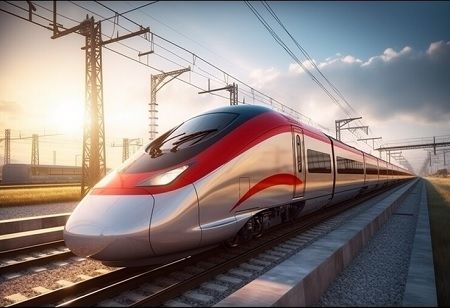 The Indian Railways has launched a significant initiative aimed at enhancing technological efficiency and logistical speed across India. As part of this development plan, they are working on creating a domestically produced bullet train capable of reaching speeds of 250 kilometers per hour (kmph). If successfully implemented, this new bullet train is anticipated to surpass all existing trains currently in operation in India by a significant margin, according to a report.
“It is being built on the Vande Bharat platform that can already clock a maximum speed of 220 kmph”, an officer in the Indian Railways was quoted saying in the report. In the present context, India is currently depending on Japanese technology for the bullet trains that are in the process of being constructed to link Ahmedabad and Mumbai. Notably, the Shinkansen E5 series bullet trains, deployed in Ahmedabad and Mumbai, represent some of the most advanced technologies globally. However, they are capable of reaching speeds of only up to 320 kmph.
For those unfamiliar, the National High-Speed Rail Corporation Ltd. (NHSRCL), tasked with executing India's inaugural bullet train project, has recently revealed that 300 kilometers of pier work for the project has been finished. Additionally, the land acquisition process for the entire 508-kilometer stretch was concluded in January of the following year.
The Vande Bharat trains, India's inaugural domestically designed and produced semi-high-speed trains, offer passengers a contemporary and comfortable rail travel experience. Renowned for their high speed, elevated safety standards, and top-tier service, these trains signify a significant advancement in rail travel. Additionally, the total funds utilized for the manufacturing of Vande Bharat trains amount to Rs 1343.72 crore, according to PIB.