

Meet TT Jagannathan, the Man Who Reinvented Brand Prestige
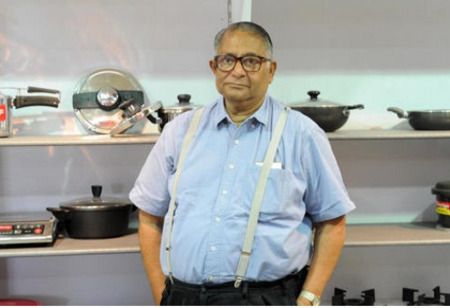
Who knew that a tiny opening on the cover of a cooking container would alter the fortune of TTK Group, renowned for its Prestige pressure cookers, when the company was on the brink of financial ruin. During the 1970s, TTK Prestige, headquartered in Bengaluru, encountered a major issue with pressure cookers exploding in households, but a simple solution of creating a hole in the lid to let out excessive steam helped them recover dwindling sales and rebuild customer trust.
The brain behind the gasket release system (GRS), a safety feature in pressure cookers, was the late TT Jagannathan, the honorary chairman of the TTK Group. Jagannathan, a graduate of IIT and Cornell University, hailed from a prestigious business lineage. His grandfather, TT Krishnamachari, established the TTK Group and served as the finance minister in Jawaharlal Nehru's administration.
Besides his academic achievements, Jagannathan had a keen interest in cooking. He often shared with his colleagues and industry peers that his culinary skills and creativity were honed through experiences in the kitchen. Jagannathan decided against patenting GRS as he felt it should be a standard feature in all pressure cookers.
In addition to this, he ventured into the kitchen and home appliances market, increasing Prestige's retail presence and maintaining a continuous flow of innovation and product launches over the years, all while being an avid reader and traveler.
A Gold Medalist from IIT Madras
Born into a prominent TTK family, his childhood was not centered around industrial settings or corporate meetings. During his time at Church Park Convent in Chennai, he sat next to a remarkably intelligent girl named, who happened to be none other than the late Chief Minister of Tamil Nadu, J Jayalalithaa, for five years from class I to V. Jagannathan achieved great success in his academic pursuits, earning a gold medal from IIT Madras and furthering his studies at Cornell University.
Also Read: Piyush Pandey: The Adman of India
His Career Did Not Start With the Pressure Cooker Business
In his book Disrupt and Conquer, which he wrote with Sandhya Mendonca, he reflects on his dream of pursuing a PhD and a career in academia in the US. Nonetheless, in 1972, he had to return home due to a family crisis involving the business run by his father TT Narasimhan. Jagannathan did not start his career in the cookers business, instead, he worked with the Maps & Atlases unit which had been established in 1965 in partnership with Bertelsmann of Germany. This unit was facing an annual loss of Rs 60 lakh and was burdened with debt. To turn things around, he transitioned the unit into contract printing for various materials such as books, pamphlets, government school books, and posters to prevent further losses.
He Put an End to the Explosion of Pressure Cookers With the GRS Innovation
Upon assuming control of the Bangalore cooker plant, he discovered that the Prestige brand was a well-established kitchen product in India, but it was marred by a reputation for being unsafe. Many customers had heard stories of cookers exploding and causing injuries to individuals. During his visits to markets in North India, merchants were straightforward in expressing their concerns about the cookers' safety and questioned their market appeal.
The incident acted as a catalyst for the development of the Gasket Release System (GRS), a simple yet groundbreaking safety innovation in the Indian industry.
The engineering team created a pressure cooker with a rubber gasket that would automatically release excess steam if the main vent malfunctioned. This invention, known as the GRS, was not only cost-effective but also a game-changer. Jagannathan frequently mentioned that no Prestige cooker had exploded since the implementation of the GRS.
But he Did Not Patent it
He chose not to patent the mechanism, opting instead to allow competitors to imitate it in order to increase trust among consumers not only in the Prestige brand, but in pressure cookers as a whole. This groundbreaking act of goodwill was not due to being naive, but stemmed from a well-thought-out strategic plan.
Also Read: Teachers’ Day 2025: These Educators Are Reshaping Communities through Innovative Teaching Methods
His Leadership Diversified Prestige’s Product Line
Under his leadership, Prestige diversified its line of products by introducing new items such as pressure pans, nonstick cookware, stainless steel cookers, and a microwave-compatible pressure cooker called MicroChef in 2011. Eventually, the company acquired the rights to the Prestige brand in India from its UK partner, terminating previous partnerships.
He Cleared Every Hurdle and Helped Prestige to Grow
In his youth, Jagannathan had to deal with India's burdensome tax system, which ironically, was partly established by his grandfather when he was the Finance Minister. At one time, income tax rates were as high as 97 percent, wealth tax was at five percent, and even expenditure tax was in place. Additionally, in 1979, a steep 100 percent import duty on shaving cream and toothpaste led to the group shutting down its Williams shaving cream business. TTK group managed to endure challenging times through sheer dedication and effort. Before the end of 2002, Jagannathan successfully cleared all of TTK Group's financial obligations, enabling the company to expand without the burden of excessive debt. This significant achievement marked the end of thirty years of revitalization efforts.
He Was Different from Other Family Leaders
Jagannathan stood out from other family leaders by prioritizing the use of professional management. He believed that one of the biggest challenges in business was knowing when to relinquish control. Instead of focusing on establishing a family legacy, he concentrated on developing effective systems. He showed his support for charitable organizations such as the TT Ranganathan Clinical Research Foundation, which works on helping those recovering from addiction. He worked together with IIT Madras on research related to biomedicine, and also endorsed projects like the Rotary Bangalore – TTK Blood Bank and Madras Voluntary Blood Bank.
Also Read: This Healthcare Leader Serviced the Poor for Just Rs.2
He Could Talk About Anything - From Serious Business Topics to Sharing Delicious Rasam Recipes
However, Jagannathan was not a typical businessman. He had various interests and talents, such as sports, cooking, music, and crafting. Those who knew him well appreciated his eagerness to learn. He could effortlessly switch from talking about the strength of aluminum to sharing a delicious rasam recipe. His three key principles for management were straightforward: attend work daily, pay attention to the specifics, and rely on practical judgment. His friends and acquaintances recall him for his playful cleverness, thirst for knowledge, and love for sharing tales.
His Legacy
Jagannathan demonstrated perseverance, intelligence, and modesty, transitioning from being denied access to his factory to establishing one of India's most reputable domestic brands. At a time when Tamil Nadu's economy was largely controlled by major automobile and technology companies, he ventured to Bengaluru and distinguished himself by creating a brand that resonated with the traditional values of Indian households. In the 1980s and 1990s, he demonstrated that an Indian family enterprise could adapt and evolve while still maintaining its original identity. In an era where many children of business owners struggle to succeed, Jagannathan emerged as a prime example of blending tradition with contemporary practices.