

PM Modi Led Manufacturing Initiatives: Make in India, PLI & More
PM GatiShakti National Master Plan
The Prime Minister's GatiShakti National Master Plan (PMGS-NMP) was introduced on October 13, 2021, with the aim of enhancing multimodal connectivity infrastructure in various economic zones.
PM GatiShakti represents a revolutionary strategy for economic expansion and sustainable development. This strategy is based on seven key components: Railways, Roads, Ports, Waterways, Airports, Mass Transport, and Logistics Infrastructure.
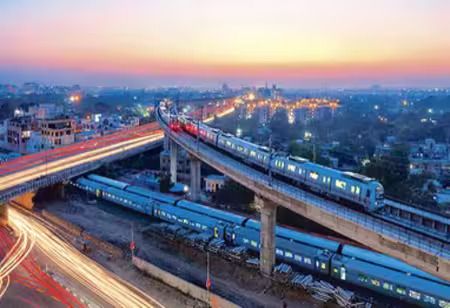 All seven components work together to drive the economy forward. They are complemented by the supporting roles of Energy Transmission, IT Communication, Bulk Water & Sewerage, and Social Infrastructure. Clean Energy and Sabka Prayas, which involve joint efforts from the Central Government, state governments, and the private sector, will power this approach, creating numerous job and entrepreneurial opportunities, particularly for youth.
The PM GatiShakti National Master Plan covers the seven components essential for economic transformation, seamless multimodal connectivity, and efficient logistics.
It also incorporates infrastructure developed by State Governments in line with the GatiShakti Master Plan. Emphasis will be placed on planning, financing with innovative methods, technological utilization, and expedited implementation.
Also Read: 5 Major CPO Appointments in 2025
Projects related to these components within the National Infrastructure Pipeline adhere to the PM GatiShakti framework. The Master Plan's benchmarks are world-class modern infrastructure and integrated logistics across various modes of transportation for goods and people, as well as project locations. This enhances productivity and accelerates economic growth and development.
The plan has been created as a Digital Master Planning tool by BISAG-N (Bhaskaracharya National Institute for Space Applications and Geoinformatics), utilizing a dynamic Geographic Information System (GIS) platform to consolidate data on specific action plans of Ministries/Departments into a comprehensive database. Real-time mapping of infrastructure projects are available through a map developed by BISAG-N, hosted securely on the Government of India's cloud platform MEGHRAJ.
Satellite imagery from ISRO and base maps from Survey of India are utilized. The database integrates ongoing and future projects of various Ministries with over 200 GIS layers, enabling effective planning, design, and execution of infrastructure projects aligned with a common vision.
Also Read: Anand Mahindra: Living the Philosophy ‘Purpose with Profit’
The digital system is a software allowing Ministries to update their data regularly with individual user identification (login ids). All Ministry data will be integrated into one platform for planning, review, and monitoring. The Logistics Division of the Ministry of Commerce & Industry (MOCI) supports stakeholders through BISAG-N in creating and updating necessary layers and databases through Application Programming Interface (APIs).
Also Read: Piyush Pandey: The Adman of India
In conclusion, as multinational corporations expand their production bases and India enhances its physical and digital infrastructure, the country stands to strengthen its position in global supply chains. By combining policy support with technology adoption and a skilled workforce, India has the potential not only to meet domestic demand but also to capture a larger share of global manufacturing opportunities in the coming decade.