

Future Energy Sector Leadership – Winner’s Playbook
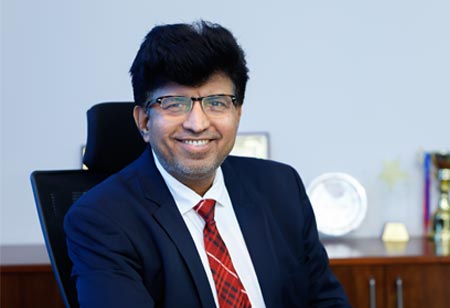
Baroruchi Mishra, Group CEO, Nauvata Energy Transition (NET) Enterprise, 0
VUCA world, which in itself was difficult to navigate for the corporate leadership, has truly and completely moved to its logical bookend – geopolitical chaos! And that of a proportion not seen after the WWII.
A vast number of corporate leaders in the Indian public sector, often protected and insulated by the government shield, may not be solidly grounded in competence and productive imagination needed to navigate this chaos and, therefore, may move their organizations by drift without having a clear direction.
Understanding the context is key. Leaders in the energy sector will need to embrace energy transition while operating in a world defined by wild price volatility, extreme weather events, very significant technology disruptions, fast pace of obsolescence, regulatory fragmentation and protectionism and rising expectations from the society.
The playbook for the future leaders is being re-written – the script this time will be completely digital. AI will shape the implementation of this script. Leaders that can adapt to AI and Energy Transition and do it in a sustainable, transparent, and balanced manner, are the ones who will be able to grow their organization and, indeed, realize their own full potential.
The start point for them will need to be a creative destruction of their own fossil-fuel only mindsets that have guided them for decades.
Resolving the trilemma of Energy Security, Equity, and Sustainability that India faces today, will be the key to success for the energy leaders of the future. The need for energy security is the most pronounced for India, but it is unthinkable that equity and sustainability can be ignored. ESG will need to be seen as vehicle for value creation and not just compliance. This needs knowledge, awareness, teamwork, and indeed a lot of humility to adopt a learning mindset to excel.
Some attributes of the future leadership to manage the vagaries of the present-day geo-politics are noted below:
AI Ready Leadership: Efficiency is key to optimal use of fossil fuels – 2/3rd ’s of the fossil fuel that is produced globally is wasted. Digitalization and AI have the potential to reduce this waste. AI can optimize the Design, Execute and Operate phases of any project or any program undertaken by the company. Ability of the leaders to adapt their systems and processes to make full utilization of AI will be key.
Drilling it down a few notches further, leaders will need to understand Autonomous workflows, Digital Twins, Remote Operations, and Data-driven decision-making and use them rather than wax eloquent about their own experiences and take suboptimal decisions that are driven by confirmation-bias and/or optimism-bias and a “yes-but” approach to AI. But of course, there has to be inbuilt checks and balances so that AI hallucinations etc.do not guide the organization towards a wrong path.
System Integrators: Competence to move beyond Asset Operations to “System Integration” will be key. This will help provide energy solutions to the users rather than a single source energy component. So, the leaders should have the ability to understand customer needs for energy and provide an integrated solution - fossil fuels, electricity from wind, solar, nuclear or thermal, hydrogen or green ammonia or biofuels.
Some would like to call it “bilingual leadership” – ability to integrate traditional O&G value chains with new molecules – hydrogen, SAF, e-fuels, thereby optimally managing the carbon footprint. Ability to integrate portfolios rather than take positions for or against a particular source of energy will be a wining characteristic of an Energy Leader of the future.
Also Read: Piyush Goyal: Transformations in Navigating International Trade Relationships
Ability to Understand & Lead In Carbon Economics: Carbon will become hard currency – if not already. Roughly 26 percent of CO2 emissions globally are covered by some form of Carbon Tax/ Carbon Pricing.
Understanding the pricing signals and tuning production and emission behavior in a manner that can help partake in the global carbon trade, especially in Europe which is very carbon conscious, will be key to growing the toplines of their respective companies.
Leaders should understand abatement cost curves and benefits from Article 6 of the Paris Accord and indeed the impact of CBAM (or similar) on their operations and navigate them in the most optimal manner. Closer home, understanding and using the new regulations relating to Carbon Credit Trading Schemes (CCTS), the compliance and the offset mechanisms that come with it will be necessary to integrate it into their work programs and budgets for the future.
Innovative Leadership: Leaders will need to spawn innovation – both process and tech innovation, in their respective organizations to stay ahead of the curve. This will be essential to deal with and adapt to the mercurial geopolitical situations.
In the words of the Noble Laureate, David Macmillan, “we might be one catalytic reaction away from solving climate change”! The innovation in organocatalysis that he is referring to, which could convert CO2 to useable fuel, need not come from the West! Can Indian leaders seize this opportunity?
Partnerships and investments in R&D and innovation
related to AI, Quantum Computing, Catalysis, Carbon Capture and modular and safe designs will need to be done in a structured manner with a firm conviction to lead in this space; tick in the box will not work!
Play Role of Chief Geopolitical Officers: Supporting the country to manage the fallouts of the geo-politics will be a key success factor for future leaders. Sadly , companies like HAL, for example, have not covered themselves in glory when it comes to providing key machines to the IAF; time and cost overruns have been devasting. This could impair India’s preparedness to deal with the pressing issues of current day geopolitics.
Delayed decision-making in the Oil and Gas PSUs in monetizing proven oil and gas reserves or slow progress in laying the transportation pipelines in the North-East for connecting stranded gas production to the main gas grid, are some other areas that have put paid to India’s efforts to deal with the vagaries of energy related geopolitics.
Ability for Leaders to work in partnerships and coalitions to hedge risks: Leaders will require to develop skills to work in partnerships and coalition to mitigate risk or amortize them over larger group of stakeholders, some of whom may be most competent to deal with those risks. “I can do all and I know all” mindset must give way to a more collaborative leadership.
Europe has shown the way on this – no one company in Europe is undertaking CCS (Carbon Capture and Storage) project alone. It is always a group of companies with shared objectives to manage their carbon emissions while keeping the risks and costs within acceptable ranges, that are undertaking these projects. Cross border carbon management enablers like the London Accord, Article 6 etc. are understood and used by these leaders.
Partnership also means that PSE leaders will need to move away from a “Mai- Baap” culture when dealing with their contract partners and treat them as equal partners to make the most of their ability to deliver projects. The bureaucracy and straight jacket approach followed in the PSUs’ contract management have pushed many companies out of business - levying Liquidated Damages unmindfully, withholding payments leading to unsustainable negative cash flows etc. without understanding the full context, are some examples.
Also Read: World EV Day 2025: Steering India towards a Sustainable Tomorrow
A win-win situation can always be found to manage the project progress as ONE Team with the contract partners. The contract partners will also need to keep away from the motive of “unjust enrichment” and demand only a fair compensation, to support the collaborative spirit.
This also points to the need for the leaders to dedicate time and effort towards building robust and diversified supply chain partnerships, so that company operations stay largely insulated from supply chain disruptions. Post Covid, many global companies that worked hard on a China+1 supply chain philosophy were largely successful.
Capitalizing on ESG: Future Leaders will need to move away from compliance to seeing opportunity in their ESG (Environmental, Social and Governance) roles. EGS should be used for value creation. Double Materiality needs to be understood and managed in a manner such that it becomes a win- win for the society and the company.
DE&I should become a cultural tool for value creation and value preservation rather than for fulfilling a target diversity number on the Leadership KPIs. The language that the leaders use and the performative space that the leaders give the diverse groups, will define inclusivity in the organizations that they lead. Gender biases are too often obvious in the choice of words by the leaders; this sends a wrong message to the organization who follows the leader.
Sustainability can be used to drive competitiveness - many in the West will be ready to pay more for low carbon products. Understanding this and tuning the production line to deliver on this aspect will be key. The approach to sustainability that the Energy Leaders take in the energy transition could be tuned towards helping them create jobs, re-skilling their workforce and developing core competencies that are future ready.
Talent management: Leaders, especially in the PSE will need to create an eco-system in their respective organizations that can grow and retain talents. They need to visualize what good looks like for the future team composition and act on it. Linked to this will also be the use of tools for performance management. Understating and enabling what drives performance will be key. Presenteeism is often not the best way for getting the most out of a talented workforce! A good balance is needed between work from home and work in office.
Resilience Is Key To Managing Polycrisis - Leadership should have the inner strength to stay mentally strong and steady and guide the organization in difficult times rather than blame their team members in case there are failures.
Also Read: Anand Mahindra: Living the Philosophy ‘Purpose with Profit’
Complacency kills enterprise and stunts growth. Hunger to perform and make a difference – not so much for the optics of it all or to please their political master, but to help the country navigate energy transition and improve its Human Development Index, will make a winning a leader in the energy sector.
Finally, it would be fair to say that great leaders do not bend with the wind but do adapt to the direction in which it is blowing. The wind is towards energy transition – south-easterly is the prevailing direction, as far as we can tell from the way the leaves of change flutter!
Play Role of Chief Geopolitical Officers: Supporting the country to manage the fallouts of the geo-politics will be a key success factor for future leaders. Sadly , companies like HAL, for example, have not covered themselves in glory when it comes to providing key machines to the IAF; time and cost overruns have been devasting. This could impair India’s preparedness to deal with the pressing issues of current day geopolitics.
Complacency kills enterprise and stunts growth. Hunger to perform and make a difference – not so much for the optics of it all or to please their political master, but to help the country navigate energy transition and improve its Human Development Index, will make a winning a leader in the energy sector
Delayed decision-making in the Oil and Gas PSUs in monetizing proven oil and gas reserves or slow progress in laying the transportation pipelines in the North-East for connecting stranded gas production to the main gas grid, are some other areas that have put paid to India’s efforts to deal with the vagaries of energy related geopolitics.
Ability for Leaders to work in partnerships and coalitions to hedge risks: Leaders will require to develop skills to work in partnerships and coalition to mitigate risk or amortize them over larger group of stakeholders, some of whom may be most competent to deal with those risks. “I can do all and I know all” mindset must give way to a more collaborative leadership.
Europe has shown the way on this – no one company in Europe is undertaking CCS (Carbon Capture and Storage) project alone. It is always a group of companies with shared objectives to manage their carbon emissions while keeping the risks and costs within acceptable ranges, that are undertaking these projects. Cross border carbon management enablers like the London Accord, Article 6 etc. are understood and used by these leaders.
Partnership also means that PSE leaders will need to move away from a “Mai- Baap” culture when dealing with their contract partners and treat them as equal partners to make the most of their ability to deliver projects. The bureaucracy and straight jacket approach followed in the PSUs’ contract management have pushed many companies out of business - levying Liquidated Damages unmindfully, withholding payments leading to unsustainable negative cash flows etc. without understanding the full context, are some examples.
Also Read: World EV Day 2025: Steering India towards a Sustainable Tomorrow
A win-win situation can always be found to manage the project progress as ONE Team with the contract partners. The contract partners will also need to keep away from the motive of “unjust enrichment” and demand only a fair compensation, to support the collaborative spirit.
This also points to the need for the leaders to dedicate time and effort towards building robust and diversified supply chain partnerships, so that company operations stay largely insulated from supply chain disruptions. Post Covid, many global companies that worked hard on a China+1 supply chain philosophy were largely successful.
Capitalizing on ESG: Future Leaders will need to move away from compliance to seeing opportunity in their ESG (Environmental, Social and Governance) roles. EGS should be used for value creation. Double Materiality needs to be understood and managed in a manner such that it becomes a win- win for the society and the company.
DE&I should become a cultural tool for value creation and value preservation rather than for fulfilling a target diversity number on the Leadership KPIs. The language that the leaders use and the performative space that the leaders give the diverse groups, will define inclusivity in the organizations that they lead. Gender biases are too often obvious in the choice of words by the leaders; this sends a wrong message to the organization who follows the leader.
Sustainability can be used to drive competitiveness - many in the West will be ready to pay more for low carbon products. Understanding this and tuning the production line to deliver on this aspect will be key. The approach to sustainability that the Energy Leaders take in the energy transition could be tuned towards helping them create jobs, re-skilling their workforce and developing core competencies that are future ready.
Talent management: Leaders, especially in the PSE will need to create an eco-system in their respective organizations that can grow and retain talents. They need to visualize what good looks like for the future team composition and act on it. Linked to this will also be the use of tools for performance management. Understating and enabling what drives performance will be key. Presenteeism is often not the best way for getting the most out of a talented workforce! A good balance is needed between work from home and work in office.
Resilience Is Key To Managing Polycrisis - Leadership should have the inner strength to stay mentally strong and steady and guide the organization in difficult times rather than blame their team members in case there are failures.
Also Read: Anand Mahindra: Living the Philosophy ‘Purpose with Profit’
Complacency kills enterprise and stunts growth. Hunger to perform and make a difference – not so much for the optics of it all or to please their political master, but to help the country navigate energy transition and improve its Human Development Index, will make a winning a leader in the energy sector.
Finally, it would be fair to say that great leaders do not bend with the wind but do adapt to the direction in which it is blowing. The wind is towards energy transition – south-easterly is the prevailing direction, as far as we can tell from the way the leaves of change flutter!