

Shifting Goals: India’s Evolving Attitude Towards Sports Careers
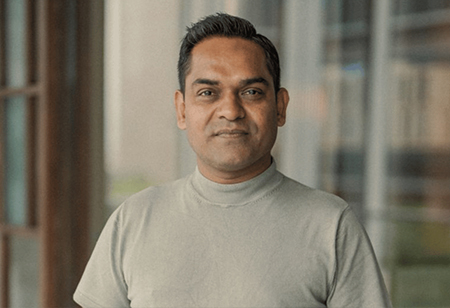
Sourjyendu Medda, Co-Founder and CEO, Sports For Life (SFL), 0
India is rich in talent, particularly in the realm of sports. However, this talent remains underutilized and overlooked. This may be due to insufficient motivation, a lack of support from political leaders, and, most importantly, the absence of public recognition. In ancient India, both parents and teachers placed significant value on sports. At that time, it was widely acknowledged that participation in sports was crucial for a child's physical and mental health. Yet, over recent decades, parents have shifted their focus away from physical health and are now primarily concerned with their children's academic performance.
In this exclusive interview with CEO Insights, Sourjyendu Medda, Co-Founder and CEO, Sports For Life (SFL) shares his perspectives on the influence of technology in transforming athletic performance tracking and how the views of Indian families are shifting when it comes to choosing sports as a career option.
How has the perception of sports as a career path changed among Indian families and youth in recent years?
There is a significant difference between my childhood and the upbringing of my children, especially when considering the cultural shift observed in the top 10-15 percent of households that earn more than one lakh a month. Coming from a middle-income, well-educated family, my focus during childhood was primarily on academic performance.
Nowadays, we as parents actively encourage our children to recognize that studying is just one aspect of life; while it is important, they should also explore their interests and try out different skills and vocations to determine what they truly want to pursue.
Career opportunities have expanded immensely both globally and in India, and as parents, we are guiding our children to engage in pursuits they are passionate about rather than just competing in areas they find uninteresting. This transformation has already taken place in the top 10-15 percent of households, and it is likely to extend to other segments of society. The freedom to choose a career by exploring various avenues—whether in primary education, core subjects, fine arts, or sports—is expected to grow, allowing people to discover more opportunities.
Also Read: Anand Mahindra: Living the Philosophy ‘Purpose with Profit’
Furthermore, we are increasingly exposed to Western cultures through media and travel, which enables us to evaluate what is beneficial and what may not suit our needs. Engaging in sports as a potential career is highly advantageous for children, promoting not only their career prospects but also their physical health and well-being, while helping them to distance themselves from passive activities like watching television. This also contributes to the overall shift in mindset.
How is AI reshaping athlete performance tracking and injury prevention in Indian sports today?
In our efforts to enhance youth sports, we are utilizing AI to optimize athlete performance and personalize their experiences. Numerous computer vision and machine learning tools have been developed to assess athlete performance and training, measuring various parameters that a coach observing with only the naked eye would struggle to detect.
Companies like ours are applying these technologies in youth sports, while others are also making similar advancements in professional sports, where athletes' movements and performance metrics essential to their sport are analyzed through computer vision.
This data allows athletes to reflect on their strengths and areas for improvement, as well as compare their performance against peers and competitors, enabling a training regimen tailored to performance metrics and athlete development.
Additionally, injury prevention is crucial, as athletes often lack awareness of which movements might lead to long-term injuries or issues. Nowadays, tools are capable of identifying body movements that are problematic, highlighting areas needing adjustment and refinement.
How can wearable tech and AI-based feedback help bridge the gap between elite training and grassroots development?
Wearable technology plays a crucial role in assessing athletes' performance across various important parameters related to their specific sports, as well as their strength and conditioning. Athletes must consistently focus on their strength and conditioning, making this aspect vital. These measurements are essential since a coach can't be available at all times during the day, in addition to other relevant metrics that have gained importance in sports today.
Typically, an athlete may train with a coach for only a couple of hours, yet they must enhance their strength and performance continuously throughout the day and year. Athletes are always in training or on a journey toward improvement. Consequently, these variables and measurements are consistently accessible to provide insights into what is working well, what needs improvement, and areas that require further development.
Also Read: 5 Major CPO Appointments in 2025
In your view, what policy or private-sector initiatives are most promising in transforming India into a sporting nation?
There is a necessity to reevaluate the entire primary and higher education framework. Our educational system, along with our curricula and schedules, is designed in a way that certainly imposes a significant educational rigor, and the global performance of Indians highlights the advantages of a robust and rigorous education.
However, it lacks the flexibility required for those who are pursuing sports or other vocations, as there are individuals who excel in these areas. Therefore, it is essential to introduce a more adaptable educational system that allows individuals who are talented in sports or other disciplines to train when necessary and complete their education during times when they are not engaged in athletic training or similar activities.
Individuals excelling in sports should receive greater recognition for their achievements, similar to practices in Western universities where points for sports and other vocational skills are allocated to those who perform impressively during admissions. This approach would encourage many to concentrate on their strengths, knowing it could lead to better admission opportunities. In India, there are currently not enough sports-related positions available in esteemed universities and colleges. Thus, this represents the second significant change that I believe is crucial. Furthermore, I commend the government's efforts to invest in sports and enhance infrastructure. I strongly feel that these two modifications in the educational system are essential.
Also Read: 5 Indian Movies That Inspire Entrepreneurs
What future opportunities are you looking forward to investing your time in?
My agenda is to develop youth sports in India and bring it to the extent where very high-quality coaching, very high-quality infrastructure and the deployment of technology wherever needed is done into youth sports development. I believe that this way we will be able to democratize sports learning across a lot more people and given that we have a huge population when so many more people will be basically trained in the right circumstances. With the right environment, right practices and right technology, we will definitely generate many more champions for the country. Eventually this will add to making India a stronger sporting nation.
Additionally, injury prevention is crucial, as athletes often lack awareness of which movements might lead to long-term injuries or issues. Nowadays, tools are capable of identifying body movements that are problematic, highlighting areas needing adjustment and refinement.
How can wearable tech and AI-based feedback help bridge the gap between elite training and grassroots development?
Wearable technology plays a crucial role in assessing athletes' performance across various important parameters related to their specific sports, as well as their strength and conditioning. Athletes must consistently focus on their strength and conditioning, making this aspect vital. These measurements are essential since a coach can't be available at all times during the day, in addition to other relevant metrics that have gained importance in sports today.
With the right environment, right practices and right technology, we will definitely generate many more champions for the country
Typically, an athlete may train with a coach for only a couple of hours, yet they must enhance their strength and performance continuously throughout the day and year. Athletes are always in training or on a journey toward improvement. Consequently, these variables and measurements are consistently accessible to provide insights into what is working well, what needs improvement, and areas that require further development.
Also Read: 5 Major CPO Appointments in 2025
In your view, what policy or private-sector initiatives are most promising in transforming India into a sporting nation?
There is a necessity to reevaluate the entire primary and higher education framework. Our educational system, along with our curricula and schedules, is designed in a way that certainly imposes a significant educational rigor, and the global performance of Indians highlights the advantages of a robust and rigorous education.
However, it lacks the flexibility required for those who are pursuing sports or other vocations, as there are individuals who excel in these areas. Therefore, it is essential to introduce a more adaptable educational system that allows individuals who are talented in sports or other disciplines to train when necessary and complete their education during times when they are not engaged in athletic training or similar activities.
Individuals excelling in sports should receive greater recognition for their achievements, similar to practices in Western universities where points for sports and other vocational skills are allocated to those who perform impressively during admissions. This approach would encourage many to concentrate on their strengths, knowing it could lead to better admission opportunities. In India, there are currently not enough sports-related positions available in esteemed universities and colleges. Thus, this represents the second significant change that I believe is crucial. Furthermore, I commend the government's efforts to invest in sports and enhance infrastructure. I strongly feel that these two modifications in the educational system are essential.
Also Read: 5 Indian Movies That Inspire Entrepreneurs
What future opportunities are you looking forward to investing your time in?
My agenda is to develop youth sports in India and bring it to the extent where very high-quality coaching, very high-quality infrastructure and the deployment of technology wherever needed is done into youth sports development. I believe that this way we will be able to democratize sports learning across a lot more people and given that we have a huge population when so many more people will be basically trained in the right circumstances. With the right environment, right practices and right technology, we will definitely generate many more champions for the country. Eventually this will add to making India a stronger sporting nation.