


Dr RK Thomas : A Visionary Strategist In Climate Resilience & Decentralized Tech
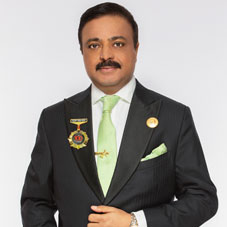
Dr RK Thomas
CEO
Dr Thomas holds eight doctorates, including Frontier studies from Stanford University, advanced certifications from Oxford in blockchain strategy, and leadership credentials from The Wharton School. He also has degrees in Technological Sciences, Computer Science, M.Tech, and an MBA from Kent State University.
Currently serving as CEO of Tree of Life Biotech (TOL Biotech) in the USA, Dr Thomas is at the forefront of climate technology and regenerative agriculture. His pioneering work includes engineered biochar systems, carbon-negative infrastructures, and AI-integrated environmental platforms deployed globally, from North America to Africa and the Middle East.
Recipient of honors including the Stephen Hawking Award for Scientific Innovation and India's top defence commendations, R.K. Thomas remains focused on one core mission: to make science serve the underserved. For him, leadership is measured not by scale, but by significance, regenerating ecosystems, bridging ethics with technology, and mentoring the next generation of impact-makers. Let’s hear from him.
How did your time at Stanford University shape your approach to leadership and innovation? What specific skills, both academic and experiential, have proven most valuable in your current role?
Stanford University didn’t just deepen my technical knowledge, it fundamentally shifted my mindset. I learned how to turn abstract theory into scalable, real-world impact. The biggest takeaway was the ability to connect complex systems thinking with practical, mission-driven execution.
In the classroom, I focused on network and software security engineering, gaining precision in risk modelling, secure design, and performance benchmarking. These skills now anchor my work, whether I’m building decentralised sustainability platforms or securing data layers for climate-focused blockchain systems.
But it was the environment beyond the classroom that shaped my leadership. Collaborating with physicists, economists, and systems thinkers taught me to approach problems laterally. That cross-disciplinary lens is critical in my role today, where we integrate AI, biotech, and quantum science into agriculture, water access, and carbon markets.
Stanford University also instilled strategic patience and ethical clarity. I was mentored to prioritise “difficult relevance”, solutions that matter, even if they’re hard. This philosophy drives my decision-making today, from regenerating degraded land to piloting circular energy systems. Finally, the global Stanford network continues to be a source of collaboration and peer validation. For me, Stanford University wasn’t just an academic experience, it was a launchpad for impact-driven leadership.
How would you describe the accessibility of faculty during your time at Stanford University?
At Stanford University, faculty accessibility wasn’t just about open office hours, it was a mindset. Professors were approachable, intellectually curious, and genuinely invested in student growth. I found it easy to engage in meaningful conversations beyond the classroom, whether it was a quick follow-up after a lecture or an in-depth discussion that extended into a long-term collaboration.
What truly stood out was how faculty supported inter - disciplinary exploration. I could approach them with unconventional connections, like linking photonics with agriculture or cybersecurity with sustainability, and I was always met with enthusiasm and guidance. Faculty also involved us in research labs, think tanks, and innovation hubs, making high-level problem-solving accessible. That culture of openness and intellectual exchange continues to shape how I lead, mentor, and collaborate today.
In what ways did you engage with the Stanford alumni network during your time as a student, and how have you continued to benefit from it after graduation?
The Stanford alumni network has been instrumental throughout my journey. As a student, I actively engaged with alumni to test ideas, access real-world insights, and refine my research in cyber resilience and AI-driven infrastructure. These conver - sations often led to co-authored papers, data access, and participation in high-level policy forums.
After graduation, the network became a launchpad, connecting me with experts in quantum science, climate finance, and sustainability to help scale innovations like water harvesting and blockchain traceability. It also offered strategic guidance during career pivots. Today, I
Stanford University also instilled strategic patience and ethical clarity. I was mentored to prioritise “difficult relevance”, solutions that matter, even if they’re hard. This philosophy drives my decision-making today, from regenerating degraded land to piloting circular energy systems. Finally, the global Stanford network continues to be a source of collaboration and peer validation. For me, Stanford University wasn’t just an academic experience, it was a launchpad for impact-driven leadership.
For me, leadership means building enduring, impactful solutions that serve both people and the planet
How would you describe the accessibility of faculty during your time at Stanford University?
At Stanford University, faculty accessibility wasn’t just about open office hours, it was a mindset. Professors were approachable, intellectually curious, and genuinely invested in student growth. I found it easy to engage in meaningful conversations beyond the classroom, whether it was a quick follow-up after a lecture or an in-depth discussion that extended into a long-term collaboration.
What truly stood out was how faculty supported inter - disciplinary exploration. I could approach them with unconventional connections, like linking photonics with agriculture or cybersecurity with sustainability, and I was always met with enthusiasm and guidance. Faculty also involved us in research labs, think tanks, and innovation hubs, making high-level problem-solving accessible. That culture of openness and intellectual exchange continues to shape how I lead, mentor, and collaborate today.
In what ways did you engage with the Stanford alumni network during your time as a student, and how have you continued to benefit from it after graduation?
The Stanford alumni network has been instrumental throughout my journey. As a student, I actively engaged with alumni to test ideas, access real-world insights, and refine my research in cyber resilience and AI-driven infrastructure. These conver - sations often led to co-authored papers, data access, and participation in high-level policy forums.
After graduation, the network became a launchpad, connecting me with experts in quantum science, climate finance, and sustainability to help scale innovations like water harvesting and blockchain traceability. It also offered strategic guidance during career pivots. Today, I
mentor others through the same network that once shaped and supported me.
Can you describe your leadership style? What principles or strategies do you rely on to guide your leadership?
My leadership is grounded in systems thinking, scientific rigor, and ethical responsibility. Leading across diverse, high-pressure fields, from military aviation to biotech and sustainability, I've learned that true leadership is about clarity, continuity, and meaningful impact, not control.
I prioritize purpose-driven decisions anchored in data and equity, empowering teams with autonomy while maintaining coordinated systems. Transparency and ethical governance are non-negotiable, ensuring trust through strong IT and ESG frameworks. I adopt a modular approach, treating each mission as an adaptive unit with clear goals and rapid feedback.
Mentorship is key, I strive to cultivate future leaders who can surpass expectations. Finally, I balance global vision with local sensitivity, decentralizing innovation while centralizing values. For me, leadership means building enduring, impactful solutions that serve both people and the planet.
What vision or goals are you aiming to achieve in the future?
The future I’m building connects planetary systems, digital ecosystems, and human health networks through science, quantum security, and ethical AI. I envision a biointelligent, decentralized civilization where technologies anticipate challenges and regenerate environments.
At TOL Biotech, we’re scaling carbon-negative infrastructures with an eye toward space-compatible ecosystems that sustain nutrient cycles, water, and energy in extreme environments. I’m developing quantum-secure space systems for environmental monitoring and early warning, alongside decentralized medical platforms that prioritize data sovereignty and ethical governance.
My goal is a planetary immune system, digitally connected and predictive. I’m also advancing quantum managerial disciplines to guide complex, long-term projects across regenerative agriculture, energy, and finance. Near-term, I’m focused on launching climate-tech zones in Asia and Africa, building space-agriculture labs, and partnering to deploy resilient healthcare grids. Ultimately, I’m shaping a future where climate justice, digital integrity, and human wellbeing thrive in transparent, accountable systems for all.
Dr RK Thomas, CEO, Tree Of Life Biotech
Dr RK Thomas is an award-winning scientist and CEO of Tree of Life Biotech. With over 34 years of experience in defense, biotech, and AI, he pioneers climate tech innovations like engineered biochar and blockchain carbon credits, driving global sustainability and regenerative agriculture solutions.
Can you describe your leadership style? What principles or strategies do you rely on to guide your leadership?
My leadership is grounded in systems thinking, scientific rigor, and ethical responsibility. Leading across diverse, high-pressure fields, from military aviation to biotech and sustainability, I've learned that true leadership is about clarity, continuity, and meaningful impact, not control.
I prioritize purpose-driven decisions anchored in data and equity, empowering teams with autonomy while maintaining coordinated systems. Transparency and ethical governance are non-negotiable, ensuring trust through strong IT and ESG frameworks. I adopt a modular approach, treating each mission as an adaptive unit with clear goals and rapid feedback.
Mentorship is key, I strive to cultivate future leaders who can surpass expectations. Finally, I balance global vision with local sensitivity, decentralizing innovation while centralizing values. For me, leadership means building enduring, impactful solutions that serve both people and the planet.
What vision or goals are you aiming to achieve in the future?
The future I’m building connects planetary systems, digital ecosystems, and human health networks through science, quantum security, and ethical AI. I envision a biointelligent, decentralized civilization where technologies anticipate challenges and regenerate environments.
At TOL Biotech, we’re scaling carbon-negative infrastructures with an eye toward space-compatible ecosystems that sustain nutrient cycles, water, and energy in extreme environments. I’m developing quantum-secure space systems for environmental monitoring and early warning, alongside decentralized medical platforms that prioritize data sovereignty and ethical governance.
My goal is a planetary immune system, digitally connected and predictive. I’m also advancing quantum managerial disciplines to guide complex, long-term projects across regenerative agriculture, energy, and finance. Near-term, I’m focused on launching climate-tech zones in Asia and Africa, building space-agriculture labs, and partnering to deploy resilient healthcare grids. Ultimately, I’m shaping a future where climate justice, digital integrity, and human wellbeing thrive in transparent, accountable systems for all.
Dr RK Thomas, CEO, Tree Of Life Biotech
Dr RK Thomas is an award-winning scientist and CEO of Tree of Life Biotech. With over 34 years of experience in defense, biotech, and AI, he pioneers climate tech innovations like engineered biochar and blockchain carbon credits, driving global sustainability and regenerative agriculture solutions.