


Dr Shikha Doomra : A Career Bridging Clinical Care & Healthcare Leadership
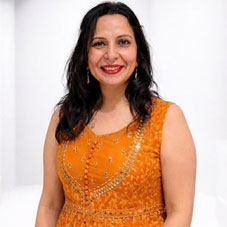
Dr Shikha Doomra
Clinical Medical Director
This philosophy characterizes the work of Dr Shikha Doomra a physician leader who is driven by a firm dedication to patients not just as individuals, but as society as a whole.
Armed with several years of front-line clinical experience and a healthcare executive, Shikha has translated her clinical wisdom into strategic leadership, especially in her role as population health medical director, where she has promoted patient and community-based care with system level change.
Shikha is an Internal Medicine and Obesity Medicine board-certified physician with more than 12 years of experience as a hospitalist, four years of payerside experience, including utilization management, care management, population health, and quality improvement.
She began her career in bedside medicine and went on to lead executive leadership positions as Medical Director and Physician Advisor, leading multifaceted clinical initiatives, enhancing quality indices like STAR ratings and risk adjustment, and catalyzing cost-reduction measures that can be sustained.
Shikha’s leadership style reflects a proactive, whole person approach, balancing data-driven decision-making with clinical empathy to enable better outcomes for patients, members, and communities. We bring you an insightful discussion with Shikha, as she reflects on her career journey and the leadership principles that shaped her success.
What leadership skills have been the most critical in navigating these overlapping worlds?
The most critical leadership skills have been stakeholder alignment, clear communication, and patient-centric decision-making. Creating shared goals across diverse teams while keeping patients, communities, and members at the center has been essential.
Equally important has been strategic fore sight- ensuring healthcare sustainability, building organizational resilience, and maintaining agility to adapt to emerging challenges.
Can you share a moment in your leadership journey that challenged you deeply?
One of the most challenging moments in my leadership journey was serving as a unit-based clinical leader on a designated COVID floor.
It highlighted that equality does not always result in equity, while technology was equally provided to connect patients with families, differences in digital literacy and language created unequal outcomes.
Addressing these gaps through interpreter services and targeted support reinforced the importance of equitable, patient-centred care. This experience shaped my advocacy beyond bedside medicine, including supporting vaccination drives in underserved communities, and remains a defining learning moment in my leadership development.
How do you foster trust and alignment within multi- disciplinary teams, including clinicians, admini-strators, and external partners?
I foster trust and alignment by leveraging clinical credibility to inform decisions, establishing shared goals, and keeping patients and members at the center of all discussions.
Clear, transparent communi- cation and early alignment on expectations are essential when working with multidisciplinary and cross-functional teams.
Consistent, transparent com- munications and respecting diverse expertise, breaks silos and creates trust and cross collaboration among clinicians, administrators, and external partners.
What principles guide your decision-making when clinical outcomes organizational goals, and ethical consi- derations intersect?
My decision-making is guided by a whole-person, patient-centered approach, adherence to evidence-based and standardized care guidelines, and consistently modeling values-based leader - ship.
I carefully balance clinical outcomes with organizational priorities by considering the broader impact on populations and communities. Ensuring alignment around shared goals enables the delivery of high-quality, affordable, and sustainable healthcare in high-stakes environments.
How do you inspire change and account ability across large, complex organi -zations?
I inspire change by leading with clarity, detail-oriented execution, and by clearly articulating the “why” behind the “what.” Explaining the purpose and impact of decisions, on patientcare, provider workflows, and organizational sustain ability - builds understanding and account ability.
By educating stakeholders, removing redundant processes, and leading by example, I align teams around shared goals and drive meaningful change across complex organizations.
What role does empathy play in your leadership style?
Empathy is a foundational element of my leadership style, especially during times of uncertainty or transformation. It allows me to understand resistance to change, recognize individual and team concerns, and respond thoughtfully to evolving pressures.
Through empathy, one can build trust and foster long-term relationships, enabling teams to align around shared goals
Addressing challenges with clarity resilience, confidence & collabo-ration has been essential in navigating and bridging those gaps
How do you foster trust and alignment within multi- disciplinary teams, including clinicians, admini-strators, and external partners?
I foster trust and alignment by leveraging clinical credibility to inform decisions, establishing shared goals, and keeping patients and members at the center of all discussions.
Clear, transparent communi- cation and early alignment on expectations are essential when working with multidisciplinary and cross-functional teams.
Consistent, transparent com- munications and respecting diverse expertise, breaks silos and creates trust and cross collaboration among clinicians, administrators, and external partners.
What principles guide your decision-making when clinical outcomes organizational goals, and ethical consi- derations intersect?
My decision-making is guided by a whole-person, patient-centered approach, adherence to evidence-based and standardized care guidelines, and consistently modeling values-based leader - ship.
I carefully balance clinical outcomes with organizational priorities by considering the broader impact on populations and communities. Ensuring alignment around shared goals enables the delivery of high-quality, affordable, and sustainable healthcare in high-stakes environments.
How do you inspire change and account ability across large, complex organi -zations?
I inspire change by leading with clarity, detail-oriented execution, and by clearly articulating the “why” behind the “what.” Explaining the purpose and impact of decisions, on patientcare, provider workflows, and organizational sustain ability - builds understanding and account ability.
By educating stakeholders, removing redundant processes, and leading by example, I align teams around shared goals and drive meaningful change across complex organizations.
What role does empathy play in your leadership style?
Empathy is a foundational element of my leadership style, especially during times of uncertainty or transformation. It allows me to understand resistance to change, recognize individual and team concerns, and respond thoughtfully to evolving pressures.
Through empathy, one can build trust and foster long-term relationships, enabling teams to align around shared goals
and deliver cohesive, patient and community centered outcomes.
As a woman leader in healthcare, what perspectives or strengths do you bring to leadership, and what barriers have you had to navigate?
As a woman leader in healthcare, I bring a strong sense of compassion, attention to detail, and a deep appreciation for work–life balance, all of which contribute to resilient and effective healthcare systems.
These strengths support patient-centered care, team well-being, and sustainable performance. While I have been fortunate to receive strong mentorship, organi -zational support, and family encourage -ment, I recognize that women leaders often face stereotypes and systemic barriers.
Addressing these challenges with clarity, confidence, and collaboration has been essential in navigating and bridging those gaps.
What advice would you give to emerging leaders, particularly physicians transi -tioning into non-traditional leadership roles?
Physicians transitioning into non-traditional leadership roles should see this shift as an opportunity to scale patient advocacy beyond the bedside to the community and population level.
Maintaining a patient- and member-centered focus, developing an end-to-end under standing of the healthcare ecosystem, from clinical care to billing and policy-making and embracing change are critical.
Additionally, effective leaders must be confident in setting priorities, establishing boundaries, and saying no when necessary to drive sustainable and impactful outcomes.
Dr Shikha Doomra, Clinical Medical Director, Capital Blue Cross
Dr Shikha Doomra, MD, is a board-certified Internal Medicine physician with over 12 years of experience in hospitalist care and several years in healthcare leadership roles.
She currently serves as the Clinical Medical Director at Capital Blue Cross in Pennsylvania, where she leads key initiatives in population health, cost-of-care optimization, and member safety.
Professional Highlights:
•Leadership at Capital Blue Cross: Manages Medicare initiatives, chairs committees for credentialing and member safety, and leads data-driven flu prevention programs.
•Previous Roles: Served as UM Medical Director at Capital Blue Cross and as a Hospitalist Team Lead and Physician Advisor at Tower Health System.
•Specialized Experience: Led a COVID designated unit at Tower Health and has a background in clinical documentation improve ment and sepsis quality projects
•Education & Certifications: Earned her MBBS from Kasturba Medical College in India and completed her Internal Medicine residency at St. Barnabas Hospital in the Bronx. She is board-certified in both Internal Medicine and Obesity Medicine.
As a woman leader in healthcare, what perspectives or strengths do you bring to leadership, and what barriers have you had to navigate?
As a woman leader in healthcare, I bring a strong sense of compassion, attention to detail, and a deep appreciation for work–life balance, all of which contribute to resilient and effective healthcare systems.
These strengths support patient-centered care, team well-being, and sustainable performance. While I have been fortunate to receive strong mentorship, organi -zational support, and family encourage -ment, I recognize that women leaders often face stereotypes and systemic barriers.
Addressing these challenges with clarity, confidence, and collaboration has been essential in navigating and bridging those gaps.
What advice would you give to emerging leaders, particularly physicians transi -tioning into non-traditional leadership roles?
Physicians transitioning into non-traditional leadership roles should see this shift as an opportunity to scale patient advocacy beyond the bedside to the community and population level.
Maintaining a patient- and member-centered focus, developing an end-to-end under standing of the healthcare ecosystem, from clinical care to billing and policy-making and embracing change are critical.
Additionally, effective leaders must be confident in setting priorities, establishing boundaries, and saying no when necessary to drive sustainable and impactful outcomes.
Dr Shikha Doomra, Clinical Medical Director, Capital Blue Cross
Dr Shikha Doomra, MD, is a board-certified Internal Medicine physician with over 12 years of experience in hospitalist care and several years in healthcare leadership roles.
She currently serves as the Clinical Medical Director at Capital Blue Cross in Pennsylvania, where she leads key initiatives in population health, cost-of-care optimization, and member safety.
Professional Highlights:
•Leadership at Capital Blue Cross: Manages Medicare initiatives, chairs committees for credentialing and member safety, and leads data-driven flu prevention programs.
•Previous Roles: Served as UM Medical Director at Capital Blue Cross and as a Hospitalist Team Lead and Physician Advisor at Tower Health System.
•Specialized Experience: Led a COVID designated unit at Tower Health and has a background in clinical documentation improve ment and sepsis quality projects
•Education & Certifications: Earned her MBBS from Kasturba Medical College in India and completed her Internal Medicine residency at St. Barnabas Hospital in the Bronx. She is board-certified in both Internal Medicine and Obesity Medicine.