

Kris Puthucode: Turning Best Practices into Business Performance

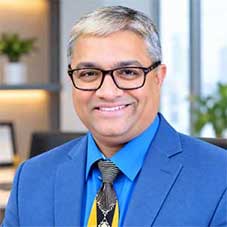
Kris Puthucode
Founder & CEO
The most influential leaders in this space are those who have witnessed these shifts firsthand and understand how to distinguish lasting capabilities from passing technology trends. Kris Puthucode, Founder & CEO of Software Quality Center (SQC Global), brings precisely that perspective.
His journey in systems engineering and software quality began in the late 1990s through his work with the SEI Software CMM, giving him more than three decades of experience observing how organizations have evolved from process-compliance and "quality-management-system" driven initiatives toward integrated performance, operational excellence, and transformation capabilities.
In 2026, SQC Global marked 25 years as an organization. During that journey, Kris has guided the company beyond its deep roots in software quality and CMMI into a broader capability portfolio covering organizational performance, quantitative and highmaturity management, cyber security, digital transformation, and AI best practices with executive advisory. SQC Global’s work now spans areas including CERT-RMM, ISO 27001, NIST 800-171/CMMC, and the Business Growth Capability Maturity Model (BG3.0).
What distinguishes Kris’s leadership is not an ambition to expand into every emerging discipline. Instead, he has deliberately kept SQC Global specialized and niche, building its reputation around depth, credibility, independence, and measurable client outcomes, instead of a broad coverage. The company works across the United States, India, and global markets, supporting organizations in technology, aerospace, defense, federal services, healthcare, and financial services.
For Kris, this evolution has never been about adopting a new framework simply because it is new. His approach is grounded in a practical question: whether a framework, technology, or methodology actually enables an organization to perform better, or just comply with some third party regulatory scheme – the latter intent is designed to fail or stall, and will get frowned upon exactly as such.
We have seen this time & again with standards, and frameworks that are imposed. That principle has remained constant through SQC Global’s 25-year journey - and provides the foundation for its next chapter across business growth practices, strengthening true cyber security by implementing the most critical controls to secure information, digital transformation, and AI. CEO Insights engaged in a one-on-one interaction with Kris Puthucode, Founder & CEO of Software Quality Center (SQC Global). Let’s dive in to know more.
How has your leadership philosophy evolved, and how does it shape SQC Global’s approach to clients?
My leadership philosophy has become simpler with experience: certification or a maturity rating should never be the business objective. It should be the outcome of building an organization that performs predictably, learns continuously, manages risk intelligently, and delivers measurable value. Early in my career, I focused heavily on process definition and institutionalization.
After working with hundreds of organizations and leading more than 300 formal CMMI appraisals, throughout the process, I learned that processes or controls alone do not create high performance. People, leadership, culture, data, and
adaptability matter equally. At SQC Global, we therefore ask what business problem we are solving, what risk we are reducing, and how success will be measured.
Which strategic initiatives have strengthened SQC Global’s global reputation and growth?
Our strongest strategic decision has been expanding our core competency without abandoning our roots. Software quality and organizational capability remain foundational while cybersecurity, quantitative performance management, and enterprise transformation have become increasingly interconnected.
We have expanded across CMMI domains, including CMMI-AI Maturity (AIM®), while strengthening our capabilities around SEIRMM, Insider Threat, and NIST-based cybersecurity requirements for organizations serving U.S. and international federal, defense, and aerospace markets.
We have also continued applying quantitative and statistical techniques to help clients understand process performance rather than simply collect metrics. Maintaining a strong U.S. presence alongside the depth of our India operations has further strengthened our global perspective while preserving our independence and pragmatic approach.
How will AI and automation reshape software quality and organizational capability?
AI will fundamentally change organi -zational capability, but I believe disciplined processes will become even more important. AI and automation can accelerate development, testing, analysis, monitoring, documentation, and decision-making while enabling organizations to identify patterns that humans may miss. This creates an opportunity to move from retrospective measurement toward predictive and eventually risk based, forward-looking management.
At the same time, AI introduces new questions around data quality, privacy, protection, governance, security, intellectual property, model risk, and accountability. CMMI-AI Maturity (AIM®) addresses these emerging challenges across organizations adopting or building AI solutions. The organizations that benefit most will combine AI with mature engineering, governance, cybersecurity, measurement, and continuous learning.
What leadership lesson has transformation challenges taught you?
One of my biggest leadership challenges has been helping organizations transform while the meaning of transformation itself continues to change. Organizations now face rapid technology shifts, distributed work, cybersecurity threats, regulatory expectations and AI adoption simultan -eously.
The natural response can be to introduce more controls processes and documentation, but complexity does not automatically mean maturity. I have learned that transformation succeeds when people understand why a change matters and how it connects to their work and organizational objectives.
Leadership must also distinguish necessary discipline from unnecessary bureaucracy. This principle influences how I lead SQC Global: we remain adaptable, listen to data and clients, and continuously question our own established methods.
How is SQC Global strengthening cyber security maturity and business resilience?
Cyber resilience is no longer simply an IT responsibility; it is an enterprise governance issue involving leadership, operations, people, technology, suppliers, and business continuity.
At SQC Global, we approach cybersecurity maturity much as we have approached organizational maturity for decades - by starting with business risk and institutionalizing the capabilities required to manage it.
Which strategic initiatives have strengthened SQC Global’s global reputation and growth?
Our strongest strategic decision has been expanding our core competency without abandoning our roots. Software quality and organizational capability remain foundational while cybersecurity, quantitative performance management, and enterprise transformation have become increasingly interconnected.
We have expanded across CMMI domains, including CMMI-AI Maturity (AIM®), while strengthening our capabilities around SEIRMM, Insider Threat, and NIST-based cybersecurity requirements for organizations serving U.S. and international federal, defense, and aerospace markets.
The goal is not to turn executives into statis-ticians; it is to ensure important decisions are supported by credible evidence and measur- able impact
We have also continued applying quantitative and statistical techniques to help clients understand process performance rather than simply collect metrics. Maintaining a strong U.S. presence alongside the depth of our India operations has further strengthened our global perspective while preserving our independence and pragmatic approach.
How will AI and automation reshape software quality and organizational capability?
AI will fundamentally change organi -zational capability, but I believe disciplined processes will become even more important. AI and automation can accelerate development, testing, analysis, monitoring, documentation, and decision-making while enabling organizations to identify patterns that humans may miss. This creates an opportunity to move from retrospective measurement toward predictive and eventually risk based, forward-looking management.
At the same time, AI introduces new questions around data quality, privacy, protection, governance, security, intellectual property, model risk, and accountability. CMMI-AI Maturity (AIM®) addresses these emerging challenges across organizations adopting or building AI solutions. The organizations that benefit most will combine AI with mature engineering, governance, cybersecurity, measurement, and continuous learning.
What leadership lesson has transformation challenges taught you?
One of my biggest leadership challenges has been helping organizations transform while the meaning of transformation itself continues to change. Organizations now face rapid technology shifts, distributed work, cybersecurity threats, regulatory expectations and AI adoption simultan -eously.
The natural response can be to introduce more controls processes and documentation, but complexity does not automatically mean maturity. I have learned that transformation succeeds when people understand why a change matters and how it connects to their work and organizational objectives.
Leadership must also distinguish necessary discipline from unnecessary bureaucracy. This principle influences how I lead SQC Global: we remain adaptable, listen to data and clients, and continuously question our own established methods.
How is SQC Global strengthening cyber security maturity and business resilience?
Cyber resilience is no longer simply an IT responsibility; it is an enterprise governance issue involving leadership, operations, people, technology, suppliers, and business continuity.
At SQC Global, we approach cybersecurity maturity much as we have approached organizational maturity for decades - by starting with business risk and institutionalizing the capabilities required to manage it.
Our work across NIST 800-171/CMMC, CERT-RMM, Insider Threat® and related cyber security environments reinforces the importance of moving beyond point-in-time compliance. Organizations need governance, accountability, evidence, measurement, incident readiness, workforce awareness, and continuous monitoring. Our objective is to connect cybersecurity with broader governance and resilience so that risk management becomes part of everyday business decisions.
How can leaders use quantitative management to improve decision-making?
The biggest mistake organizations make with metrics is assuming that more data auto matically leads to better management. Leaders should begin with business objectives and identify the measures that genuinely influence the decisions they need to make.
At higher maturity levels, organizations can move beyond descriptive metrics into statistical and predictive management through performance baselines, statistical models, regression analysis control charts, simulation, and forecasting. These techniques help leaders understand variation and assess the likelihood of achieving objectives before outcomes occur.
AI will make performance intelligence increasingly powerful, but judgment remains essential. The goal is not to turn executives into statisticians; it is to ensure important decisions are supported by credible evidence and measurable impact.
As SQC Global marks 25 years, what opportunities will shape its next phase?
Our 25th anniversary is both a milestone and an opportunity to rethink what SQC Global should become next. We see strong opportunities at the intersection of organizational capability, cybersecurity, AI-enabled trans- formation, quantitative performance management, and executive advisory. These areas have traditionally been addressed separately, but leadership teams increasingly need them integrated.
Digital transformation without governance creates risk, cybersecurity without organi- zational capability can become compliance-driven, and process improvement without analytics can become subjective. We intend to deepen our work in CMMI and high-maturity environments, CMMI-AI Maturity expand cybersecurity capabilities, and help executives use quantitative and AI-enabled performance intelligence. Our next phase is about integration rather than adding disconnected services.
Software Quality & Digital Transformation Leader 2026 mean to you?
It is an honor to be recognized as one of the Influential Software Quality & Digital Transformation Leaders 2026, particularly as SQC Global celebrates its 25th anniversary. I see the recognition as a reflection not only of my journey, but also of the clients, my highly respected colleagues, and organizations that have shaped it.
As a Software Engineer, I began working with software engineering and systems process maturity in the late 1990s, long before terms such as digital transformation, cyber resilience, and generative AI became commonplace.
The terminology has changed, but the central question remains: how can organizations become measurably better? I hope SQC Global is remembered for bringing pragmatism to structure and proving that frameworks create value when they improve real organizational performance.
Kris Puthucode, Founder & CEO, Software Quality Center
Kris Puthucode, Founder & CEO of Software Quality Center (SQC Global), is a software quality and organizational transformation leader with over three decades of industry experience. He has led more than 300 formal CMMI appraisals and advised organizations across software quality, cybersecurity, quantitative management, AI maturity, and enterprise transformation, helping leaders build measurable, resilient, and high performing organizations.
How can leaders use quantitative management to improve decision-making?
The biggest mistake organizations make with metrics is assuming that more data auto matically leads to better management. Leaders should begin with business objectives and identify the measures that genuinely influence the decisions they need to make.
At higher maturity levels, organizations can move beyond descriptive metrics into statistical and predictive management through performance baselines, statistical models, regression analysis control charts, simulation, and forecasting. These techniques help leaders understand variation and assess the likelihood of achieving objectives before outcomes occur.
AI will make performance intelligence increasingly powerful, but judgment remains essential. The goal is not to turn executives into statisticians; it is to ensure important decisions are supported by credible evidence and measurable impact.
As SQC Global marks 25 years, what opportunities will shape its next phase?
Our 25th anniversary is both a milestone and an opportunity to rethink what SQC Global should become next. We see strong opportunities at the intersection of organizational capability, cybersecurity, AI-enabled trans- formation, quantitative performance management, and executive advisory. These areas have traditionally been addressed separately, but leadership teams increasingly need them integrated.
Digital transformation without governance creates risk, cybersecurity without organi- zational capability can become compliance-driven, and process improvement without analytics can become subjective. We intend to deepen our work in CMMI and high-maturity environments, CMMI-AI Maturity expand cybersecurity capabilities, and help executives use quantitative and AI-enabled performance intelligence. Our next phase is about integration rather than adding disconnected services.
Software Quality & Digital Transformation Leader 2026 mean to you?
It is an honor to be recognized as one of the Influential Software Quality & Digital Transformation Leaders 2026, particularly as SQC Global celebrates its 25th anniversary. I see the recognition as a reflection not only of my journey, but also of the clients, my highly respected colleagues, and organizations that have shaped it.
As a Software Engineer, I began working with software engineering and systems process maturity in the late 1990s, long before terms such as digital transformation, cyber resilience, and generative AI became commonplace.
The terminology has changed, but the central question remains: how can organizations become measurably better? I hope SQC Global is remembered for bringing pragmatism to structure and proving that frameworks create value when they improve real organizational performance.
Kris Puthucode, Founder & CEO, Software Quality Center
Kris Puthucode, Founder & CEO of Software Quality Center (SQC Global), is a software quality and organizational transformation leader with over three decades of industry experience. He has led more than 300 formal CMMI appraisals and advised organizations across software quality, cybersecurity, quantitative management, AI maturity, and enterprise transformation, helping leaders build measurable, resilient, and high performing organizations.