


Narendra Kailasiya: Creating A Unified Ecosystem For Comprehensive Healthcare

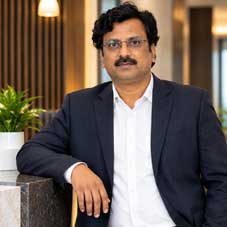
Narendra Kailasiya
CEO
It is at this intersection of disciplines that Advocate Narendra Kailasiya, CEO of Shaavi Polyclinic, has shaped his leadership journey. His association with healthcare services began in a supportive role in 2017 while he continued working in the IT sector, before transitioning full-time into healthcare in 2021. The professional experience he brings to the sector, however, was built over several decades across engineering and technology.
Beginning his career as a mechanical engineer, Narendra spent around 10–12 years in the automobile industry, where he developed an understanding of systems, processes and operational discipline. He subsequently transitioned into information technology and spent nearly 15 years in the sector, gaining exposure to technologyled efficiency, business intelligence and structured problem-solving. Complementing this experience is an academic journey spanning industrial engineering, quality management, commerce, production and finance management, and law.
His decision to pursue law emerged from his growing involvement in healthcare. Narendra recognised that healthcare decisions frequently carry legal, ethical, regulatory and compliance implications, making legal understanding highly relevant to responsible organisational leadership.
Today, this multidisciplinary foundation influences how he leads Shaavi Polyclinic. Rather than viewing healthcare purely through an operational or business lens, he brings together perspectives from engineering, technology, quality management, finance and law.
His approach places patient welfare, compliance, accountability, risk awareness and responsible decisionmaking at the centre, supporting Shaavi’s broader vision of building an integrated healthcare ecosystem focused on multispecialty access, coordinated services and patient centric management.
What inspired Shaavi Polyclinic’s integrated multi- specialty healthcare model?
The vision for Shaavi came from observing how patients often have to move between different doctors, diagnostic centres and service providers, making healthcare inconvenient and fragmented. My association with healthcare began in a supportive capacity in 2017, and after transitioning full-time into the sector in 2021, I became increasingly focused on the need for a more integrated model where multiple specialities, pathology and diagnostics are available under one roof.
We built Shaavi around accessibility, coordination and patient convenience. My leadership approach is rooted in viewing healthcare from the patient’s perspective, with an emphasis on transparency, technology, accountability and continuous improvement. The objective is to create a system where patients receive appropriate care with greater convenience, confidence and dignity.
What milestones and strategic decisions have shaped Shaavi’s growth?
One of our most important milestones has been bringing specialists across multiple disciplines together with clinical, pathology and diagnostic services within a coordinated environment. Equally important has been developing processes that connect the entire patient journey, from enquiry and registration to consultation, diagnostics, treatment and billing.
We have invested in technology and infrastructure to improve accuracy, efficiency and patient experience. Strategically, we chose to build ShaAvi around patient convenience, professional collaboration and process-driven healthcare rather than treating every service independently. Instead of expanding locations simply for growth, our priority is to strengthen the existing ecosystem and make the overall healthcare journey simpler for patients.
How do you align specialists while main- taining quality and clinical independence?
I believe healthcare leadership requires bringing professionals together without interfering with their individual expertise or clinical independence. Every specialist brings distinct knowledge, and my responsibility is to provide the infrastructure, systems, information and administrative support they need to perform effectively.
We focus on clear responsibilities, transparent communication, well-defined processes, mutual respect and account ability. SOPs and technology also help us strengthen coordination across
The vision for Shaavi came from observing how patients often have to move between different doctors, diagnostic centres and service providers, making healthcare inconvenient and fragmented. My association with healthcare began in a supportive capacity in 2017, and after transitioning full-time into the sector in 2021, I became increasingly focused on the need for a more integrated model where multiple specialities, pathology and diagnostics are available under one roof.
We built Shaavi around accessibility, coordination and patient convenience. My leadership approach is rooted in viewing healthcare from the patient’s perspective, with an emphasis on transparency, technology, accountability and continuous improvement. The objective is to create a system where patients receive appropriate care with greater convenience, confidence and dignity.
Advocate Narendra Kailasiya integrates technology, operational discipline, and legal insight to build accessible, accountable, patient centric healthcare ecosystems
What milestones and strategic decisions have shaped Shaavi’s growth?
One of our most important milestones has been bringing specialists across multiple disciplines together with clinical, pathology and diagnostic services within a coordinated environment. Equally important has been developing processes that connect the entire patient journey, from enquiry and registration to consultation, diagnostics, treatment and billing.
We have invested in technology and infrastructure to improve accuracy, efficiency and patient experience. Strategically, we chose to build ShaAvi around patient convenience, professional collaboration and process-driven healthcare rather than treating every service independently. Instead of expanding locations simply for growth, our priority is to strengthen the existing ecosystem and make the overall healthcare journey simpler for patients.
How do you align specialists while main- taining quality and clinical independence?
I believe healthcare leadership requires bringing professionals together without interfering with their individual expertise or clinical independence. Every specialist brings distinct knowledge, and my responsibility is to provide the infrastructure, systems, information and administrative support they need to perform effectively.
We focus on clear responsibilities, transparent communication, well-defined processes, mutual respect and account ability. SOPs and technology also help us strengthen coordination across
functions.
Rather than managing through hierarchy, I aim to create an environment where professionals recognise that they are part of one coordinated healthcare ecosystem. Keeping the patient at the centre gives diverse teams a common objective and ultimately strengthens collaboration and quality of care.
What changes will shape India’s out patient and diagnostic healthcare eco -system?
I believe India’s outpatient healthcare ecosystem will increasingly move towards preventive, technology-enabled and integrated care. Patients are becoming better informed and increasingly seeking early diagnosis, specialist access, reliable diagnostics and greater convenience instead of waiting for health conditions to become serious.
Digital platforms, AI-enabled tools and wider access to healthcare information will further influence this shift. I see significant opportunity in connecting specialist consultations, diagnostics, preventive healthcare and digital systems into one coordinated patient journey.
For integrated providers such as Shaavi, the opportunity lies in creating eco -systems where different healthcare services work seamlessly together, improving accessibility efficiency, continuity of care and overall patient convenience.
What is your vision for Shaavi Poly clinic’s next phase of growth?
Our vision is to develop ShaAvi into a scalable, integrated and patient-centric healthcare ecosystem that brings specialist care, diagnostics and supporting services together in a coordinated manner.
We intend to strengthen our specialist network, expand diagnostic capabilities and use technology to make the patient journey more seamless and efficient. We will simultaneously continue investing in processes, professional coordination and quality standards.
We are also exploring home-care services and software solutions that could support institutions delivering multiple healthcare services under one roof. Our goal is not simply to add centres or services, but to build a trusted, sustainable institution delivering accessible, comprehensive and responsible healthcare.
Narendra Kailasiya, CEO, Shaavi Polyclinic
Advocate Narendra Kailasiya, CEO of Shaavi Polyclinic is a multidisciplinary professional with experience spanning engineering, automobile, IT and healthcare. With expertise across technology, quality management, finance, business and law, he leads Shaavi’s integrated healthcare model with a focus on patient-centricity, opera-tional efficiency, compliance, account ability and responsible organisational growth.