


Natrajan Ramakrishna: Redefining Leadership With Integrity, Innovation & Impact
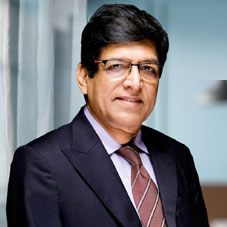
Natrajan Ramakrishna
Independent Director
One such leader is Natrajan Ramakrishna, an experienced Independent Director serving on multiple boards.
Uncompromising professional uprightness and visionary innovativeness have made his leadership approach stand out as a benchmark of integrity and forward thinking.
This combination of integrity, innovation, and strong governance defines Natrajan’s leadership approach and professional journey across financial services, infrastructure, and inclusion-led institutions.
With three decades of experience, Natrajan’s major professional journey is built on a solid foundation of responsibility, indepen -dence, and absolute conformity to professional standards.
His approach to leadership is informed by years of experience evaluation and strengthening resilience through governance, policy alignment, and strategic foresight.
His efforts cut across stakeholder-focused innovation, new market dynamics and sustainable business models, which are always guided by the stance that long-term success relies on ethical decision-making, lifelong learning, and having the courage to defy the outdated.
His academic background and extensive exposure to paradigm shifts in the industry still make him firm in assuring businesses are resilient and at the same time answerable to society and the regulators.
We are delighted to engage in an exclusive interview with Natrajan, who takes us through his professional journey and shares insights on leadership.
What key leadership insights do you bring to your current role as the Director?
I have been guided by three enduring principles throughout my career. First, an owner’s mindset: placing the organisation and its stake holders at the centre; it builds account ability, long-term thinking and responsible leadership.
Second, my experience with globally respected leaders reinforced that strong governance is the bedrock of sustainable business; transparency, ethics and integrity are essential for trust and valuation.
Third, modern leadership demands cross-functional collaboration, where insights from diverse teams drive better decisions and meaningful innovation. These principles continue to shape my approach and performance in my current directorship.
What has been your most significant contribution as a Director across the organisations you serve?
The biggest contribution in my directorial functions is in purpose-led organisations rather than profit driven ones.
Vastu Housing, for example, aims to increase financial inclusion in under served areas; Solar Industries is driven by passion and commitment to strengthen national security and support Atmanirbhar Bharat; India One Payments has been at the forefront of financial inclusion, enabling financial access in rural and remote areas.
Across these roles, the consistent theme has been helping institutions create inclusive, real-world impact, improving lives through access, security and opportunity, rather than purely financial outcomes.
How do you approach mitigating financial, legal, and operational risks?
My approach to managing financial, legal, and operational risks is driven by the recognition that technology, particularly Digitisation and AI, is now central to business strategy.
Boards increasingly include technology experts and specialised committees to ensure rigorous over sight of operational, cybersecurity, and compliance risks particularly in regulated institutions operating in semi-formal markets.
AI facilitates the use of data to make decisions, whether it is finding the most suitable expansion sites or making a improved credit scores is sufficient, customer acquisition, and internal controls.
With the inclusion of advanced technology in the governance and decision-making processes, organisations will be able to foresee the risks and enhance resilience in addition to safeguarding profitability and integrity in regulatory compliance.
What are the major challenges in scaling operations into tier-2 cities and beyond, particularly in terms of governance, operations, and local market adaptation?
A key challenge in rural markets is assessing creditworthiness, as many customers lack formal documentation or financial history.
AI-driven tools now play a vital role by analysing alternative data, improving both accuracy and ethics in lending decisions. Technology also strengthens demand fore casting and helps identify viable expansion locations.
Talent availability poses another hurdle, with skilled professionals often unwilling to relocate. While WFH is emerging as a powerful tool to address this, housing continues to serve as a critical stability anchor in rural economies.
Companies, therefore, address this through hub-and-spoke HR models and remote work, maintaining only essential onground staff.
The traditionally cash-driven nature of rural markets is improving as ATMs, digital banking, and government-linked accounts expand financial inclusion, supported by players like India One Payments.
Furthermore, AI platforms currently enable farmers and rural entrepreneurs with real-time analytics on pricing, supply chain, climate risks, and insurance, which helps improve income stability.
All of these technology-based models, inclusive financial structures and adaptive HR practices allow successful scaling, along with ensuring governance and operational efficiency.
How would you describe your philosophy on developing talent within finance and audit teams, and promote continuous learning and ethical conduct?
A strong talent development philosophy in finance and audit begins with recognising that, despite India producing many CAs each year, truly skilled professionals are still limited.
Rising industry salaries and the high-risk nature of audit work make attracting and retaining talent increasingly difficult, highlighting the need for continuous learning.
Organizations must therefore focus on structured training, technological exposure, and specialized upskilling in areas like derivatives, fraud detection, cyber risk, and technology-driven auditing.
Current regulatory requirements for continued education are inadequate, which contributes to persistent skill gaps and audit
My approach to managing financial, legal, and operational risks is driven by the recognition that technology, particularly Digitisation and AI, is now central to business strategy.
Boards increasingly include technology experts and specialised committees to ensure rigorous over sight of operational, cybersecurity, and compliance risks particularly in regulated institutions operating in semi-formal markets.
Building strong cross functional teams and fostering innovation by staying attuned to customer needs and market shifts
AI facilitates the use of data to make decisions, whether it is finding the most suitable expansion sites or making a improved credit scores is sufficient, customer acquisition, and internal controls.
With the inclusion of advanced technology in the governance and decision-making processes, organisations will be able to foresee the risks and enhance resilience in addition to safeguarding profitability and integrity in regulatory compliance.
What are the major challenges in scaling operations into tier-2 cities and beyond, particularly in terms of governance, operations, and local market adaptation?
A key challenge in rural markets is assessing creditworthiness, as many customers lack formal documentation or financial history.
AI-driven tools now play a vital role by analysing alternative data, improving both accuracy and ethics in lending decisions. Technology also strengthens demand fore casting and helps identify viable expansion locations.
Talent availability poses another hurdle, with skilled professionals often unwilling to relocate. While WFH is emerging as a powerful tool to address this, housing continues to serve as a critical stability anchor in rural economies.
Companies, therefore, address this through hub-and-spoke HR models and remote work, maintaining only essential onground staff.
The traditionally cash-driven nature of rural markets is improving as ATMs, digital banking, and government-linked accounts expand financial inclusion, supported by players like India One Payments.
Furthermore, AI platforms currently enable farmers and rural entrepreneurs with real-time analytics on pricing, supply chain, climate risks, and insurance, which helps improve income stability.
All of these technology-based models, inclusive financial structures and adaptive HR practices allow successful scaling, along with ensuring governance and operational efficiency.
How would you describe your philosophy on developing talent within finance and audit teams, and promote continuous learning and ethical conduct?
A strong talent development philosophy in finance and audit begins with recognising that, despite India producing many CAs each year, truly skilled professionals are still limited.
Rising industry salaries and the high-risk nature of audit work make attracting and retaining talent increasingly difficult, highlighting the need for continuous learning.
Organizations must therefore focus on structured training, technological exposure, and specialized upskilling in areas like derivatives, fraud detection, cyber risk, and technology-driven auditing.
Current regulatory requirements for continued education are inadequate, which contributes to persistent skill gaps and audit
failures across sectors.
As transactions become large and intricate, advanced AI and analytical systems are necessary to perform effective auditing (internal and external) as well as to guarantee accuracy and speed, in addition to strengthening fraud detection.
Audit quality and organisational governance cannot be strengthened without investing in these capabilities. Therefore, talent development is a lifelong learning process; it requires a high level of ethics, long term commitment to the latest developments, and the creation of competent, responsible, and future-proof finance and audit teams.
How will effective governance be defined in the next decade, by ethics, empathy, or something more?
Effective governance in the coming decade will move from traditional financial oversight to a comprehensive, risk-driven model.
Boards will require deeper expertise in geopolitics, technology, cyber risk, and regulatory complexity, as global disruptions increasingly influence strategy.
Ethical conduct will take greater priority through stronger compliance frameworks, whistle blower systems, and technology-enabled controls.
They will also make governance stakeholder-centric, and reputational risks will increase through realtime feedback from the people.
To conclude, efficient governance will be based on unified risk control, moral discipline, technology-led governance, and more insight regarding geopolitical and social changes.
Ethics is no longer an internal governance priority; it is the backbone of any business that believes in stakeholder centricity.
What advice would you like to pass on to the upcoming leaders?
Upcoming leaders should focus on building strong cross-functional teams and fostering innovation by staying attuned to customer needs and market shifts.
Governance and ethical conduct must remain central to shaping sustainable organizational culture. Continuous learning, whether through personal up-skilling or engaging subject-matter experts is essential for strengthening core capabilities.
Future leaders also need to invest in new research about the future and digital technologies to keep abreast of the new trends.
In the end, the key to success will be prioritisation of people, innovation, forward-thinking and a learning approach.
Natrajan Ramakrishna, Independent Director, Vastu Housing Finance Corporation
Natrajan is a visionary leader driving ethical governance, cross-functional innovation, and resilient strategies shaping sustainable business models that empower organisations to navigate complex markets responsibly.
•Hobbies: I am a voracious reader with a strong interest in governance and risk, especially geopolitics and its impact on business and research into Dialogue Architecture, an unexplored field.
•Favorite Book: Bhagavad Gita.
•Favorite Travel Destination: I enjoy road travel to various destinations.
•Favorite Cuisine: I prefer simple Maharashtrian and South Indian cuisines—idlis or upma for breakfast and a light phulka–sabzi–dal lunch—though I also cook excellent Punjabi food.
Awards and Recognition:
•Identified by PwC for a global leadership program that involved under taking an adventurous UNDP Project on studying the impact of Landmines in Eritrea.
As transactions become large and intricate, advanced AI and analytical systems are necessary to perform effective auditing (internal and external) as well as to guarantee accuracy and speed, in addition to strengthening fraud detection.
Audit quality and organisational governance cannot be strengthened without investing in these capabilities. Therefore, talent development is a lifelong learning process; it requires a high level of ethics, long term commitment to the latest developments, and the creation of competent, responsible, and future-proof finance and audit teams.
How will effective governance be defined in the next decade, by ethics, empathy, or something more?
Effective governance in the coming decade will move from traditional financial oversight to a comprehensive, risk-driven model.
Boards will require deeper expertise in geopolitics, technology, cyber risk, and regulatory complexity, as global disruptions increasingly influence strategy.
Ethical conduct will take greater priority through stronger compliance frameworks, whistle blower systems, and technology-enabled controls.
They will also make governance stakeholder-centric, and reputational risks will increase through realtime feedback from the people.
To conclude, efficient governance will be based on unified risk control, moral discipline, technology-led governance, and more insight regarding geopolitical and social changes.
Ethics is no longer an internal governance priority; it is the backbone of any business that believes in stakeholder centricity.
What advice would you like to pass on to the upcoming leaders?
Upcoming leaders should focus on building strong cross-functional teams and fostering innovation by staying attuned to customer needs and market shifts.
Governance and ethical conduct must remain central to shaping sustainable organizational culture. Continuous learning, whether through personal up-skilling or engaging subject-matter experts is essential for strengthening core capabilities.
Future leaders also need to invest in new research about the future and digital technologies to keep abreast of the new trends.
In the end, the key to success will be prioritisation of people, innovation, forward-thinking and a learning approach.
Natrajan Ramakrishna, Independent Director, Vastu Housing Finance Corporation
Natrajan is a visionary leader driving ethical governance, cross-functional innovation, and resilient strategies shaping sustainable business models that empower organisations to navigate complex markets responsibly.
•Hobbies: I am a voracious reader with a strong interest in governance and risk, especially geopolitics and its impact on business and research into Dialogue Architecture, an unexplored field.
•Favorite Book: Bhagavad Gita.
•Favorite Travel Destination: I enjoy road travel to various destinations.
•Favorite Cuisine: I prefer simple Maharashtrian and South Indian cuisines—idlis or upma for breakfast and a light phulka–sabzi–dal lunch—though I also cook excellent Punjabi food.
Awards and Recognition:
•Identified by PwC for a global leadership program that involved under taking an adventurous UNDP Project on studying the impact of Landmines in Eritrea.