


Sharad Panot : Leading India's Industrial Transformation With Purpose & Precision
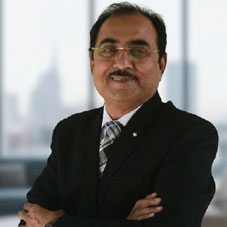
Sharad Panot
Independent Director
With 38 years of multisector experience across automotive engineering, manufacturing, and industrial operations, he brings a rare blend of engineering depth, transformation capability, and ethical governance to every role he leads.
Sharad’s journey began on the factory floor, where time spent across welding bays, paint shops, and assembly lines shaped his belief that meaningful transformation starts with people, not machines.
These early experiences built a strong foundation in discipline, process precision, and operational effectiveness.
Over time, his responsibilities grew into larger domains such as Quality Assurance, Business Process Re-engineering, Lean Manufacturing, and the implementation of global quality frameworks, enabling him to drive improvements across complex manufacturing ecosystems.
A mechanical engineer and certified Competent Person under Factory Rules, Sharad has contributed to global transformation programs with leading consulting firms.
His strategic insight allows him to anticipate technological shifts, regulatory changes, and market challenges well ahead of time.
Today, as Independent Director at Fluidomat, Technical Advisor to India Insulation, and Advisor to Manifeme Life Sciences, Sharad guides organizations through the next phase of industrial evolution.
His expertise spans operational reliability, safety and compliance culture, ESG-aligned governance, and the responsible integration of AI and digital technologies.
Known for balancing human intelligence with data driven insight, he enables decisions that strengthen teams, enhance resilience, and prepare enterprises for future challenges.
Sharad’s leadership philosophy is grounded in purpose, clarity, and sustainability. With a future focused mindset, he remains committed to helping Indian and global industries become more intelligent, adaptable, and human-centered.
We are delighted to engage in an exclusive interview with Sharad, who takes us through his professional journey, perspectives on leadership and the industry’s future.
What key challenges has Fluidomat identified, and how is the company addressing them?
Fluidomat addresses today’s multi dimensional industrial challenges through a strategy built on three pillars. The first is innovation, driven by inhouse design and R&D to enhance efficiency, product performance and global competitiveness.
The second is operational resilience, supported by end-to-end manufacturing capabilities and a diversified supplier ecosystem that ensures agile, reliable, and consistent delivery.
The third is sustainability, where ESG principles are integrated into products, processes, and manufacturing practices to meet evolving global expectations.
With strong technological depth, disciplined governance, and adaptive thinking, the company is positioning itself as a trusted long-term partner for the next phase of industrial transformation.
Which new technology are you betting big on, and how do you foresee it to improving operations?
The biggest shift today is the convergence of AI and digital technology, transforming manufacturing through realtime data, predictive insights, and intelligent operations.
Digital tools enhance precision, AI accelerates decisions, and people provide judgment and ethics. Ultimately AI and digital transformation are not initiatives, but long-term attitudes that enhance productivity, governance, and sustainability.
How are you assessing and strengthening the safety and compliance culture within manufacturing operations?
I believe safety and compliance must be treated as a core culture
We are delighted to engage in an exclusive interview with Sharad, who takes us through his professional journey, perspectives on leadership and the industry’s future.
True excellence thrives in psychological safety; when people feel safe to challenge, innovate and grow, organizations evolve faster than markets
What key challenges has Fluidomat identified, and how is the company addressing them?
Fluidomat addresses today’s multi dimensional industrial challenges through a strategy built on three pillars. The first is innovation, driven by inhouse design and R&D to enhance efficiency, product performance and global competitiveness.
The second is operational resilience, supported by end-to-end manufacturing capabilities and a diversified supplier ecosystem that ensures agile, reliable, and consistent delivery.
The third is sustainability, where ESG principles are integrated into products, processes, and manufacturing practices to meet evolving global expectations.
With strong technological depth, disciplined governance, and adaptive thinking, the company is positioning itself as a trusted long-term partner for the next phase of industrial transformation.
Which new technology are you betting big on, and how do you foresee it to improving operations?
The biggest shift today is the convergence of AI and digital technology, transforming manufacturing through realtime data, predictive insights, and intelligent operations.
Digital tools enhance precision, AI accelerates decisions, and people provide judgment and ethics. Ultimately AI and digital transformation are not initiatives, but long-term attitudes that enhance productivity, governance, and sustainability.
How are you assessing and strengthening the safety and compliance culture within manufacturing operations?
I believe safety and compliance must be treated as a core culture
rather than a control. When real-time analytics, rigorous audits, and continuous behavioral reinforcement come together, they shift safety from a procedural requirement to a shared mindset.
Embedding safety KPIs into leadership goals and integrating them into strategic decisions ensures that safety and compliance evolve into organizational DNA, not as obligations, but as everyday habits shaped by awareness, accountability, and intent.
How do you cultivate a culture of continuous improvement and performance excellence?
Continuous improvement, in my view, is a disciplined and incremental process sustained by experimentation, cross functional learning, and open feedback. I encourage this through capability rotations that broaden leadership perspectives and governance practices that integrate learning metrics into regular reviews.
Sharad Panot, Independent Director, Fluidomat
A seasoned leader in automotive and industrial operations, Sharad Panot is widely recognized for steering large-scale transformation, strengthening operational excellence, and championing people centric growth across India’s industrial land scape. With nearly four decades of multidisciplinary experience, he is known for blending engineering depth with strategic foresight, ethical governance, and a commitment to building future-ready enterprises.
•Interests & Influences:
Sharad is an avid reader who draws inspiration from both modern business literature and timeless philoso-phical works. Among the books that have shaped his thinking are Good to Great by Jim Collins, The Innovator’s Dilemma by Clayton Christensen, and the Jain classic Tattvartha Sutra by Acharya Umaswami—a text he values for its clarity, balance, and enduring guidance on right knowledge and purposeful action.
•Travel:
He enjoys exploring new destinations and frequently travels across Europe. Germany and Austria remain his preferred places for their engineering precision, industrial excellence, and rich cultural heritage.
•Cuisine:
Sharad appreciates authentic Indo-Indian cuisine, valuing simplicity, regional flavors, and the comforting familiarity of local food traditions.
Embedding safety KPIs into leadership goals and integrating them into strategic decisions ensures that safety and compliance evolve into organizational DNA, not as obligations, but as everyday habits shaped by awareness, accountability, and intent.
How do you cultivate a culture of continuous improvement and performance excellence?
Continuous improvement, in my view, is a disciplined and incremental process sustained by experimentation, cross functional learning, and open feedback. I encourage this through capability rotations that broaden leadership perspectives and governance practices that integrate learning metrics into regular reviews.
Sharad Panot, Independent Director, Fluidomat
A seasoned leader in automotive and industrial operations, Sharad Panot is widely recognized for steering large-scale transformation, strengthening operational excellence, and championing people centric growth across India’s industrial land scape. With nearly four decades of multidisciplinary experience, he is known for blending engineering depth with strategic foresight, ethical governance, and a commitment to building future-ready enterprises.
•Interests & Influences:
Sharad is an avid reader who draws inspiration from both modern business literature and timeless philoso-phical works. Among the books that have shaped his thinking are Good to Great by Jim Collins, The Innovator’s Dilemma by Clayton Christensen, and the Jain classic Tattvartha Sutra by Acharya Umaswami—a text he values for its clarity, balance, and enduring guidance on right knowledge and purposeful action.
•Travel:
He enjoys exploring new destinations and frequently travels across Europe. Germany and Austria remain his preferred places for their engineering precision, industrial excellence, and rich cultural heritage.
•Cuisine:
Sharad appreciates authentic Indo-Indian cuisine, valuing simplicity, regional flavors, and the comforting familiarity of local food traditions.