


Pankaj Kumar Goyal : Leading With Financial Discipline & Strategic Foresight

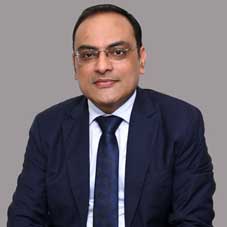
Pankaj Kumar Goyal
CFO
Within this evolving leadership landscape, Pankaj Kumar Goyal, CFO, Happy Forgings, represents a finance leadership approach grounded in discipline, analytical thinking and strategic responsiveness. His professional philosophy reflects an uncompromised commitment to financial integrity, strong governance and reporting accuracy, recognising that reliable financial information is fundamental to building stakeholder confidence and enabling sound decision-making.
His approach is also inherently analytical, with a strong emphasis on examining business situations through data, numbers and financial insights - even when such analysis is not explicitly demanded.
This mindset enables him to identify under lying trends, evaluate potential risks and bring greater clarity to complex business decisions. Rather than viewing finance as a function that merely records performance, he approaches it as a strategic lens through which opportunities and challenges can be assessed.
His responsibilities further encompass critical areas of financial management, including managing the organisation’s capital structure, negotiating debt and equity raising, driving cost-optimisation initiatives and responding effectively to economic downturns and market volatility.
These responsibilities require both financial expertise and the ability to remain decisive under changing market conditions. Through this combination of financial prudence, analytical rigour and strategic adaptability, Pankaj Kumar Goyal contributes to strengthening the financial foundation and longterm resilience of Happy Forgings. Let’s read on.
Which milestones have been most significant from your perspective as a finance leader, and what have they taught you about enabling sustainable growth?
One of the biggest lessons has been that rapid expansion can easily stretch a company’s balance sheet. As a finance leader, I believe my role is not to slow growth, but to ensure that growth is financially sustainable.
We need to build adequate operating cash flows to fund expansion rather than depend excessively on leverage.
Every major milestone has reinforced my belief that a healthy balance sheet is fundamental to long-term resilience, allowing the business to pursue opportunities confidently through different economic cycles.
As CFO, how are you strengthening financial discipline and data-driven decision-making while ensuring Happy Forgings retains the flexibility to pursue growth opportunities and capacity expansion?
I focus on connecting operational and financial data in real time across production divisions, customers and products.
We closely monitor indicators such as realisations per kilogram, capacity utilisation, raw material yields and power consumption, enabling us to identify cost pressures quickly and take corrective action.
I also favour phased, modular capacity expansion aligned with confirmed order pipelines, which reduces the risk of over-leveraging. Strong internal cash generation and a low-leverage approach preserve our credit profile and borrowing flexibility.
This financial discipline gives us the confidence to invest quickly in high-margin opportunities such as heavy forgings, precision machining and captive renewable energy.
With exports and precision machining gaining momen- tum alongside investments in captive solar power, how do you assess these initiatives from a CFO’s perspective while balancing immediate capital requirements with long-term value creation?
I evaluate every investment based on its strategic contribution, return potential and impact on long-term cash flows. Precision machining and export expansion are particularly attractive because they increase value addition, improve reali-sations per kilogram and support stronger EBITDA margins.
I view captive solar differently - as a cost-defensive infrastructure investment that can structurally reduce power expenses for energy-intensive forging operations. Its predictable savings and relatively short payback make it financially compelling.
We need to build adequate operating cash flows to fund expansion rather than depend excessively on leverage.
Every major milestone has reinforced my belief that a healthy balance sheet is fundamental to long-term resilience, allowing the business to pursue opportunities confidently through different economic cycles.
Pankaj Kumar Goyal combines financial discipline, analytical rigour, and strategic foresight to drive resilient, profitable, and sustainable business growth
As CFO, how are you strengthening financial discipline and data-driven decision-making while ensuring Happy Forgings retains the flexibility to pursue growth opportunities and capacity expansion?
I focus on connecting operational and financial data in real time across production divisions, customers and products.
We closely monitor indicators such as realisations per kilogram, capacity utilisation, raw material yields and power consumption, enabling us to identify cost pressures quickly and take corrective action.
I also favour phased, modular capacity expansion aligned with confirmed order pipelines, which reduces the risk of over-leveraging. Strong internal cash generation and a low-leverage approach preserve our credit profile and borrowing flexibility.
This financial discipline gives us the confidence to invest quickly in high-margin opportunities such as heavy forgings, precision machining and captive renewable energy.
With exports and precision machining gaining momen- tum alongside investments in captive solar power, how do you assess these initiatives from a CFO’s perspective while balancing immediate capital requirements with long-term value creation?
I evaluate every investment based on its strategic contribution, return potential and impact on long-term cash flows. Precision machining and export expansion are particularly attractive because they increase value addition, improve reali-sations per kilogram and support stronger EBITDA margins.
I view captive solar differently - as a cost-defensive infrastructure investment that can structurally reduce power expenses for energy-intensive forging operations. Its predictable savings and relatively short payback make it financially compelling.
We are also phasing investments so that renewable-energy spending does not crowd out customer-driven CapEx. At the same time, clean energy strengthens our ESG credentials and supports access to global OEM opportunities.
With Happy Forgings entering FY27 with strong growth momentum, increasing exports and continued product diversification, what is your long-term financial vision for the company?
My long-term vision is to convert disciplined capital deployment into sustainable ROCE and enduring stakeholder value. We will continue prioritising high-margin growth areas, including heavy forgings and precision machining, while funding expansion primarily through internal cash generation and maintaining a low-leverage balance sheet.
Internationally, we aim to increase our export contribution and diversify into industrial applications to reduce dependence on automotive cycles. We also intend to expand capacity in line with customer demand and strengthen our value-added product mix. Captive renewable energy will support both cost com - petitiveness and ESG objectives, creating greater resilience and strengthening our global positioning.
What advice would you offer to finance professionals preparing to take on CFO roles in manufacturing?
My advice is to move beyond the spreadsheet and understand the shop floor. A manufac -turing CFO must know how capacity utili -sation, yields, scrap, machine downtime, throughput and raw-material efficiency ultimately influence financial performance.
Cash and working capital also need constant attention because excess inventory can lock up liquidity while insufficient inventory can disrupt production. I would encourage future CFOs to focus on leading indicators rather than relying only on historical reports and to integrate operational and financial data for predictive decision-making.
Above all, capital discipline must become a culture. Every investment should have a clear return framework, realistic payback and measurable business impact.
Pankaj Kumar Goyal, Chief Financial Officer, Happy Forgings
Pankaj Kumar Goyal is the Chief Financial Officer of Happy Forgings, bringing strategic financial leadership to the company’s growth and diversification journey. His expertise spans capital allocation, financial discipline, governance, risk management and cost optimisation. He focuses on strengthening balance sheet resilience, driving data-led decisions and enabling sustainable, profitable growth.