


Pulkit Sharma: Looking Beyond Conventional Approaches to Mental Health

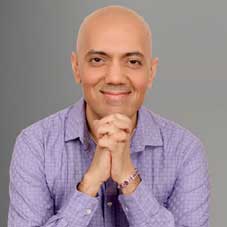
Pulkit Sharma
Clinical Psychologist, Psychoanalytic Therapist, Spiritual Counsellor, Columnist and Author
As psychological concerns become more complex, this broader perspective is creating space for therapeutic approaches that combine clinical knowledge with a deeper exploration of the human mind and inner life.
Pulkit Sharma, Clinical Psychologist, Psychoanalytic Therapist, Spiritual Counsellor, Columnist, and Author, has shaped his professional journey around this broader understanding of psycho -logical well-being.
His work brings together mental health, spirituality and writing, complemented by public speaking and mental health advocacy. Based in Pondicherry, his professional journey has its roots in Delhi, where he pursued his Master’s in Psychology and M.Phil. in Clinical Psychology.
His connection with psychology, however, began much earlier. During his school years in the 1980s, witnessing a friend being mocked for what appeared to be a mental-health difficulty left Pulkit Sharma with a lasting sense of compassion and curiosity about human behaviour. His first psychology class at Bal Bharati School gave that curiosity a clear direction, strengthening his resolve to work directly with people rather than pursue psychology solely as an academic discipline.
As his clinical experience developed, Pulkit Sharma began to recognise the limitations of conventional psychotherapy and sought a deeper understanding of what shapes human thought and behaviour. This led him towards intensive psychoanalytic training and a sustained exploration of the unconscious.
Yet, his search continued. An observation by his psychoanalytic mentor, Dr. Madhu Sarin, encouraged him to explore a dimension that psychology and psycho -analysis alone could not fully address.
He subsequently turned towards spirituality, exploring Transcendental Meditation, Hatha Yoga, and eventually Integral Yoga developed by Sri Aurobindo and the Mother.
This exploration ultimately took him from Delhi to Pondicherry and became an important foundation for his psycho-spiritual approach to counselling and psychotherapy.
Today, his work brings together clinical rigour, psychological depth, and an inquiry into consciousness meaning and inner transformation — reflecting a continuing effort to understand mental well-being beyond symptoms and conventional boundaries.
CEO Insights engaged in a one-on-one interaction with Pulkit Sharma, let’s hear more from him.
What professional experi- ences have most shaped your clinical approach over two decades?
I have been fortunate to work across very different organisations, each teaching me something distinct. At Swanchetan Society for Mental Health, I worked with trauma survivors, including victims of bomb blasts sexual assault and ethnic violence, sometimes in slums and police stations.
It taught me that therapy cannot always happen under ideal conditions; therapists must be flexible and ask what difference they can make, even in one encounter. At VIMHANS, from 2009 to 2013, I witnessed the impact of stigma on patients and families, which strengthened my commitment to mental-health awareness.
My associations with Sri Aurobindo Society, Sri Aurobindo Ashram, World Union and SACAR further deepened my under standing of spiritual psychology.
What led you to develop an integrative approach to psychological healing?
I gradually realised that no single psychological framework provides all the answers. Mainstream psychotherapy can offer significant relief, while psychoanalysis provides a deeper understanding of the unconscious, but I continued to see people struggling despite conventional interventions.
Sri Aurobindo's broader understanding of consciousness also influenced my thinking. However I do not believe modern psychology should be rejected. Its rigour and evidence-based foundation are valuable and should be integrated with spirituality.
I broadly look at four dimensions — the body, the unconscious mind, the conscious or rational mind, and the psychic or higher consciousness dimension. Rather than focusing only on symptoms, I try to understand whether these dimensions are in harmony.
How have you expanded your professional model beyond individual psycho- therapy?
I realised early that I could either remain within the therapy room or contribute to changing society's under standing of mental health. I chose to do both.
I continue to undertake intensive one-to-one clinical work, while also working with schools, colleges and universities, training professionals, providing super vision, conducting workshops, writing and engaging in mental-health advocacy. I believe this model must keep evolving.
I never want to remain attached to an approach simply because I spent years training in it. I continually ask whether something makes sense and genuinely helps people. If it works, I continue; if it does not, I am willing to move on.
How has When the Soul Heals influenced your work?
I decided to write When the Soul Heals in the year 2017 to amalgamate my conventional understanding of clinical psychology along with the deeper insights which I gained about human consciousness through my engagement with spirituality. The book grew from my clinical experience and strong belief that psychological disorders cannot always be understood and healed through conventional psychothera -peutic approaches.
Drawing upon western approaches to counselling and psychological healing and
It taught me that therapy cannot always happen under ideal conditions; therapists must be flexible and ask what difference they can make, even in one encounter. At VIMHANS, from 2009 to 2013, I witnessed the impact of stigma on patients and families, which strengthened my commitment to mental-health awareness.
My associations with Sri Aurobindo Society, Sri Aurobindo Ashram, World Union and SACAR further deepened my under standing of spiritual psychology.
My experience has taught me to adapt according to the individual and circum - stances rather than insist that therapy happen in an ideal format
What led you to develop an integrative approach to psychological healing?
I gradually realised that no single psychological framework provides all the answers. Mainstream psychotherapy can offer significant relief, while psychoanalysis provides a deeper understanding of the unconscious, but I continued to see people struggling despite conventional interventions.
Sri Aurobindo's broader understanding of consciousness also influenced my thinking. However I do not believe modern psychology should be rejected. Its rigour and evidence-based foundation are valuable and should be integrated with spirituality.
I broadly look at four dimensions — the body, the unconscious mind, the conscious or rational mind, and the psychic or higher consciousness dimension. Rather than focusing only on symptoms, I try to understand whether these dimensions are in harmony.
How have you expanded your professional model beyond individual psycho- therapy?
I realised early that I could either remain within the therapy room or contribute to changing society's under standing of mental health. I chose to do both.
I continue to undertake intensive one-to-one clinical work, while also working with schools, colleges and universities, training professionals, providing super vision, conducting workshops, writing and engaging in mental-health advocacy. I believe this model must keep evolving.
I never want to remain attached to an approach simply because I spent years training in it. I continually ask whether something makes sense and genuinely helps people. If it works, I continue; if it does not, I am willing to move on.
How has When the Soul Heals influenced your work?
I decided to write When the Soul Heals in the year 2017 to amalgamate my conventional understanding of clinical psychology along with the deeper insights which I gained about human consciousness through my engagement with spirituality. The book grew from my clinical experience and strong belief that psychological disorders cannot always be understood and healed through conventional psychothera -peutic approaches.
Drawing upon western approaches to counselling and psychological healing and
traditional spiritual perspectives, I sought to focus on the deeper dimensions of human experience. It’s been seven years since the book was published and it still continues to inspire psychologists and spiritualists across the globe.
What principles help you navigate complex psycho- logical cases?
The most important principle underlying my work is flexibility. Psychological difficulties cannot always be addressed by rigidly applying one method, a textbook approach or focusing exclusively on symptoms.
I try to understand the person as a whole, including their conscious, unconscious processes and deeper psychological or spiritual dimensions. My experience has taught me to adapt according to the individual and circumstances rather than insist that therapy happen in an ideal format. Ultimately, the question I keep returning to is: what can genuinely make a difference to this person's life?
What emerging mental-health trends concern you most today?
I believe we are entering a particularly difficult phase for mental health. Social-media addiction is a major concern because attention spans and frustration tolerance are declining, while people increasingly depend on external validation. Everything — from holidays to achievements — can become a performance for others. I am also concerned about our growing dependence on AI.
It is a powerful and potentially useful tool, including for straightforward emotional concerns, and I do not believe we should simply reject it.
However, complex situations involving grief, anger or unresolved relationships require deeper understanding than generic advice can provide. We need to educate people about where AI can help and where professional intervention remains essential.
What lasting contribution would you like to create through your work?
I want to continue developing my work in spiritual psychology, but my vision increasingly extends towards a broader question of human unity. Through studying different religions and spiritual traditions, I have become convinced that we need to move beyond conflicts based on religion, ethnicity, culture and identity.
Psychology can help us understand some of these conflicts through processes such as projection, where we attribute unwanted qualities to others. Collective violence also creates psychological trauma that can perpetuate hatred and revenge across generations.
I do not claim that I can transform the world, but I would like to contribute alongside like-minded people. If my work can make even a small difference, I would consider that meaningful.
Pulkit Sharma, Clinical Psychologist, Psychoanalytic Therapist, Spiritual Counsellor, Columnist and Author
Pulkit Sharma is a Clinical Psychologist, Psychoanalytic Therapist, Spiritual Counsellor, Columnist and Author. With postgraduate training in Psychology and Clinical Psychology, alongside psycho analytic and spiritual studies, he brings together clinical practice, psychoanalysis and spiritual psychology. His work spans counselling mental-health advocacy, writing and public engagement, with a focus on holistic well-being.