


Rajeev Sharan : Bridging Financial Research & Strategic Leadership With Purposeful Insight
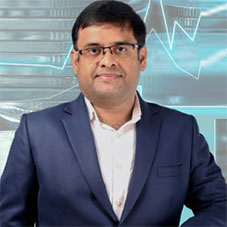
Rajeev Sharan
Head - Research
This level of clarity has been the hallmark of Rajeev Sharan, Head of Research at Brickwork Ratings. Rajeev has a long history in moulding financial, economic and climatic risk research into meaningful intelligence that drives decision-making. At Brickwork Ratings, a SEBI-registered Credit Rating Agency promoted by Canara Bank, he drives research with the mission to provide transparent, independent, and fair credit ratings and enhance the country's financial literacy.
BWR has been instrumental in assisting investors, corporates and institutions to succeed in the intricacies of the financial ecosystem with its broad portfolio and pioneering municipal ratings in over 100 cities.
A finance professional with deep subject matter expertise, Rajeev holds nearly two decades of experience spanning financial research, economic research, climate risk research, scenario analysis, market intelligence, and stakeholder management. His career developed via top multinational companies such as Swiss Re, Standard Chartered Bank, and Axis Bank, filled with cross-functional expertise and cross-cultural knowledge.
To him, the rule of thumb has been simple and consistent; clarity of purpose not only sharpens the analysis but also turns the stakeholders into active partners, which opens the road to solutions that make a real impact. We are delighted to engage in an exclusive interview with Rajeev, who takes us through his leadership style and vision.
Could you share some challenges you’ve faced in your journey and the key takeaways from those experiences?
Throughout my career, I have had the opportunity to work in cross-functional and cross-cultural teams within multinational organizations. Collaborating with colleagues across diverse geographies has helped me understand and navigate the challenges related to cultural nuances, communication styles, and language differences.
Over time, I have consciously adapted my communication approach to be more neutral, inclusive, and effective across varied cultural contexts. This experience has reinforced my belief in empathetic leadership, one that values and empowers experts by recognizing their unique perspectives and integrating them into a cohesive vision. I have found that bringing together diverse viewpoints not only strengthens collaboration but also helps create a shared narrative that drives collective success.
How do you generate new research ideas and evaluate their potential impact and alignment with market trends?
I generally follow a two-dimensional approach to evaluate and prioritize new research ideas, focusing on impact and feasibility, while ensuring alignment with strategic goals and stakeholder expectations. On the impact side, I evaluate the fit of the idea to the organization's goals and its differentiation ability.
My priority is on issues that are pertinent and under explored, with areas where we can utilise our expertise to provide previously unexplored infor- mation, reinforcing thought leadership and generating tangible value. On the feasibility side, I consider factors such as data availability, technical complexity, and resource requirements.
A strong idea must be supported by practical execution capabilities, which is why a balanced assessment of both impact and feasibility is key to selecting and advancing the right research initiatives.
What major challenges have you observed in the industry, and what initiatives are you undertaking to address them?
I have worked in financial services, insurance and reinsurance, banking, and credit rating. The availability of high-quality data that is necessary to develop models, perform the analysis, and create actionable insights has been one of the key challenges I have witnessed in this industry.
Another major challenge is uncertainty around climate risk and ESG assessments, which have become increasingly relevant across all financial sectors, not just carbon intensive industries. Additionally, the industry faces rapidly evolving regulatory requirements, requiring organizations to constantly adapt. Finally, the shortage of specialized talent in areas such as data science, climate economics, and ESG. Successfully navigating these challenges demands both technical expertise and the ability to adapt quickly to changing industry conditions.
How do you assess potential collaborations with FinTech and non-traditional financial service providers?
I have personally been engaged in fintech partnerships and non-traditional competitor engagement in my previous roles. We generally used four steps to select FinTech partners for potential collaborations: ecosystem mapping, curating thematic startup lists through industry networks and accelerator programs; strategic screening, evaluating technological synergy, market expansion potential, and cultural alignment; technical due diligence, integrating prototypes into forecasting pipelines and stress testing data flows; and tracking KPIs, monitoring whether objectives such as improving underwriting accuracy or reducing time to generate insights were met. This structured approach ensured collaborations were strategically aligned, operationally effective, and delivered measurable value.
Which emerging techno-logies are you integrating into your research, and how are they adding value?
AI is a broad term, and its applications vary across contexts. In my previous role at Swiss Re, AI was leveraged to enhance underwriting accuracy, detect fraud, and implement natural
Success is built on four pillars: curiosity, colla -boration, rigor, and differentiation
My priority is on issues that are pertinent and under explored, with areas where we can utilise our expertise to provide previously unexplored infor- mation, reinforcing thought leadership and generating tangible value. On the feasibility side, I consider factors such as data availability, technical complexity, and resource requirements.
A strong idea must be supported by practical execution capabilities, which is why a balanced assessment of both impact and feasibility is key to selecting and advancing the right research initiatives.
What major challenges have you observed in the industry, and what initiatives are you undertaking to address them?
I have worked in financial services, insurance and reinsurance, banking, and credit rating. The availability of high-quality data that is necessary to develop models, perform the analysis, and create actionable insights has been one of the key challenges I have witnessed in this industry.
Another major challenge is uncertainty around climate risk and ESG assessments, which have become increasingly relevant across all financial sectors, not just carbon intensive industries. Additionally, the industry faces rapidly evolving regulatory requirements, requiring organizations to constantly adapt. Finally, the shortage of specialized talent in areas such as data science, climate economics, and ESG. Successfully navigating these challenges demands both technical expertise and the ability to adapt quickly to changing industry conditions.
How do you assess potential collaborations with FinTech and non-traditional financial service providers?
I have personally been engaged in fintech partnerships and non-traditional competitor engagement in my previous roles. We generally used four steps to select FinTech partners for potential collaborations: ecosystem mapping, curating thematic startup lists through industry networks and accelerator programs; strategic screening, evaluating technological synergy, market expansion potential, and cultural alignment; technical due diligence, integrating prototypes into forecasting pipelines and stress testing data flows; and tracking KPIs, monitoring whether objectives such as improving underwriting accuracy or reducing time to generate insights were met. This structured approach ensured collaborations were strategically aligned, operationally effective, and delivered measurable value.
Which emerging techno-logies are you integrating into your research, and how are they adding value?
AI is a broad term, and its applications vary across contexts. In my previous role at Swiss Re, AI was leveraged to enhance underwriting accuracy, detect fraud, and implement natural
language processing for analyzing policy documents. In my current role, we are exploring advanced statistical and machine learning techniques for predictive rating.
Using information from various sources and leveraging our rating portfolio and credit risk knowledge, we are developing advanced data-driven models to estimate the probability of default, which informs the rating assignment. These initiatives demonstrate how emerging technologies are being integrated into our research methodologies and decision-making processes to improve accuracy and efficiency.
What is your vision for the next five years?
My vision in my present job is to achieve a fully integrated system where the macro economic, climate and geopolitical models interoperate seamlessly to generate early warning signals identify business opportunities and facilitate proactive decision making. From a research leadership perspective, I believe success is built on four pillars: curiosity, collaboration, rigor, and differentiation.
Curiosity drives questioning of assumptions, collaboration ensures diverse expertise shapes solutions, rigor guarantees insights are defensible and aligned with strategy, and differentiation allows a team to focus on underexplored areas, carve a niche, and establish thought leadership.
By adhering to these principles, I aim to create research outputs that are not only accurate and actionable but also innovative and impactful for the organization. This will help keep the team future-oriented, strategic and value delivering in a fast-changing industry.
What advice would you give aspiring young leaders?
In research and analytics, the main element of success is to ensure that one is well versed with the area they specialize in, be it climate risk, credit risk, insurance research or any other area, because the key to success lies in confidence and credibility.
At the same time, cultivating fluency in adjacent domains such as regulations, macro economics, and data science is crucial to becoming a well-rounded researcher capable of producing meaningful and actionable insights.
Investing in people is non-negotiable: formalize mentor - ship, encourage cross-training, and celebrate both successes and smart failures. Finally, with rapid technological advance - ments and fast evolving regulatory landscape, continuous learning is critical. Staying current through skill development, micro-learning courses, conferences, and peer networks ensures sustained growth and relevance in the industry.
Rajeev Sharan, Head Of Research, Brickwork Ratings
A visionary finance leader with two decades of experience, Rajeev blends clarity of purpose with deep expertise to transform financial, economic, and climate risk research into actionable insights that drive strategic decision making.
•Hobbies: Astronomy, reading and driving
•Favorite Book: A Brief History of Time by Stephen Hawking
•Favorite Cuisine: Indian
•Favorite Travel Destination: Switzerland
Using information from various sources and leveraging our rating portfolio and credit risk knowledge, we are developing advanced data-driven models to estimate the probability of default, which informs the rating assignment. These initiatives demonstrate how emerging technologies are being integrated into our research methodologies and decision-making processes to improve accuracy and efficiency.
What is your vision for the next five years?
My vision in my present job is to achieve a fully integrated system where the macro economic, climate and geopolitical models interoperate seamlessly to generate early warning signals identify business opportunities and facilitate proactive decision making. From a research leadership perspective, I believe success is built on four pillars: curiosity, collaboration, rigor, and differentiation.
Curiosity drives questioning of assumptions, collaboration ensures diverse expertise shapes solutions, rigor guarantees insights are defensible and aligned with strategy, and differentiation allows a team to focus on underexplored areas, carve a niche, and establish thought leadership.
By adhering to these principles, I aim to create research outputs that are not only accurate and actionable but also innovative and impactful for the organization. This will help keep the team future-oriented, strategic and value delivering in a fast-changing industry.
What advice would you give aspiring young leaders?
In research and analytics, the main element of success is to ensure that one is well versed with the area they specialize in, be it climate risk, credit risk, insurance research or any other area, because the key to success lies in confidence and credibility.
At the same time, cultivating fluency in adjacent domains such as regulations, macro economics, and data science is crucial to becoming a well-rounded researcher capable of producing meaningful and actionable insights.
Investing in people is non-negotiable: formalize mentor - ship, encourage cross-training, and celebrate both successes and smart failures. Finally, with rapid technological advance - ments and fast evolving regulatory landscape, continuous learning is critical. Staying current through skill development, micro-learning courses, conferences, and peer networks ensures sustained growth and relevance in the industry.
Rajeev Sharan, Head Of Research, Brickwork Ratings
A visionary finance leader with two decades of experience, Rajeev blends clarity of purpose with deep expertise to transform financial, economic, and climate risk research into actionable insights that drive strategic decision making.
•Hobbies: Astronomy, reading and driving
•Favorite Book: A Brief History of Time by Stephen Hawking
•Favorite Cuisine: Indian
•Favorite Travel Destination: Switzerland