


Rajesh Das : Driving Sustainable Impact through Strategic CSR Leadership

Rajesh Das
CSR Head
One notable figure in this field is Rajesh Das a highly regarded CSR and sustain ability expert with over 15 years of experience spearheading impactful social programs in India, Africa, and Sri Lanka.
Over the years, his leadership journey has evolved from grassroots program implementation to shaping group-level CSR strategy at the promoter and Board level, reinforcing his belief that social impact should be treated as a core business function rather than merely a compliance requirement.
Currently heading CSR at Vardhman Group, Rajesh Das leads strategy, governance, compliance, and the execution of high-impact initiatives aligned with the Sustainable Development Goals (SDGs) and ESG priorities. Overseeing CSR portfolios exceeding INR 30 crore annually, he has consistently championed framing CSR strategy, data-driven decision-making, measurable impact assessments, and strong stakeholder collaboration.
Under his leadership, several initiatives have contributed to reducing school dropout rates among girls, improving farmer incomes, extending education and healthcare support and achieving sanitation coverage in underserved communities.
He has also led award-winning programs such as “Hygiene That Empowers” and “Sustainable Agriculture & Livelihoods Enhancement for Farmers,” both of which have significantly advanced rural live lihoods and women’s empowerment.
As a strong advocate of technology-enabled social impact and collaborative partnerships, Rajesh Das firmly believes that sustainable change is achieved when empathy, governance, and innovation come together to create scalable and inclusive growth.
CEO INSIGHTS magazine engaged in a one-on-one interaction with Rajesh Das, let’s read on.
How are digital tools and AI-driven approaches transforming the effective -ness and transparency of CSR initiatives today?
I strongly believe that technology, particularly AI and data-driven systems, is transforming CSR into a more strategic, transparent, and measurable function. Technology has helped shift the focus from activity-based reporting to outcome-driven impact assessment.
Today, we can measure real changes such as improved school retention, higher farmer incomes, and behavioural shifts in health and sanitation through structured analytics and digital monitoring systems.
AI also enables predictive decision-making by identifying early risks in areas like education and livelihoods, allowing organizations to take proactive action. From a governance perspective, digital dashboards and automated reporting tools have significantly improved compliance accuracy, transparency, and stakeholder trust under evolving ESG frameworks.
I also see technology strengthening collaboration across governments, NGOs, and institutions by creating a unified, data-backed approach to scaling impact. For me, AI-driven CSR is about empowering leaders with better insights to create sustainable and credible social change.
How can organizations leverage innovation to make CSR programs more scalable and replicable across regions?
In my experience, innovation makes CSR scalable when it is aligned with the shared value approach, where business growth and social progress support each other. I believe CSR should go beyond philanthropy and communities should be viewed as long-term partners rather than just beneficiaries. Programs focused on education, livelihoods, sanitation, and climate resilience become more sustainable when they encourage local ownership and participation.
I have also seen how technology and data-driven systems improve impact measurement, transparency and execution across regions. Strong partnerships with governments, NGOs, and institutions further help reduce risks and accelerate scaling.
For me, successful CSR innovation lies in creating adaptable, evidence-based models through shared values principles that strengthen communities while also enhancing business resilience, stakeholder trust, and long-term sustainable growth across multiple regions.
What are the key challenges and opportunities in driving sustainability at the grass- roots level?
In my experience, the biggest challenge in climate resilient agriculture is balancing long-term sustainability with farmers’ immediate livelihood needs. Smallholder farmers, especially women, face climate risks, income instability, and limited access to credit, training, and markets. I believe sustainability programs succeed only when they clearly improve incomes and build trust within communities.
At the same time, the opportunities are immense. Climate smart agriculture can strengthen rural livelihoods while reducing environmental impact. I have seen women-led farming initiatives create lasting social and economic change, as women often reinvest in their families and communities. For me grassroots sustainability requires collaboration, local ownership and long-term commitment.
How do you see the intersection of ESG goals and rural development shaping the future of CSR across industries?
I believe the intersection of ESG goals and rural development will significantly shape the future of CSR across manufacturing, technology, services, IT, and banking sectors. Rural development is no longer viewed as a standalone initiative but as a strategic driver of resilient value chains, inclusive growth and longterm sustainability.
In manufacturing, it strengthens supply chains and community resilience, while in technology and IT, it promotes digital inclusion skills development, and employ ability. In banking, ESG-driven rural development supports financial inclusion and sustainable capital deployment. I believe organizations that integrate rural communities into their long-term business and ESG strategies will create stronger trust, resilience, and sustainable impact.
The next frontier of CSR is regeneration - where businesses move beyond incremental impact to drive systemic trans -formation by embedding sustainability at the core of value creation
How can organizations leverage innovation to make CSR programs more scalable and replicable across regions?
In my experience, innovation makes CSR scalable when it is aligned with the shared value approach, where business growth and social progress support each other. I believe CSR should go beyond philanthropy and communities should be viewed as long-term partners rather than just beneficiaries. Programs focused on education, livelihoods, sanitation, and climate resilience become more sustainable when they encourage local ownership and participation.
I have also seen how technology and data-driven systems improve impact measurement, transparency and execution across regions. Strong partnerships with governments, NGOs, and institutions further help reduce risks and accelerate scaling.
For me, successful CSR innovation lies in creating adaptable, evidence-based models through shared values principles that strengthen communities while also enhancing business resilience, stakeholder trust, and long-term sustainable growth across multiple regions.
What are the key challenges and opportunities in driving sustainability at the grass- roots level?
In my experience, the biggest challenge in climate resilient agriculture is balancing long-term sustainability with farmers’ immediate livelihood needs. Smallholder farmers, especially women, face climate risks, income instability, and limited access to credit, training, and markets. I believe sustainability programs succeed only when they clearly improve incomes and build trust within communities.
At the same time, the opportunities are immense. Climate smart agriculture can strengthen rural livelihoods while reducing environmental impact. I have seen women-led farming initiatives create lasting social and economic change, as women often reinvest in their families and communities. For me grassroots sustainability requires collaboration, local ownership and long-term commitment.
How do you see the intersection of ESG goals and rural development shaping the future of CSR across industries?
I believe the intersection of ESG goals and rural development will significantly shape the future of CSR across manufacturing, technology, services, IT, and banking sectors. Rural development is no longer viewed as a standalone initiative but as a strategic driver of resilient value chains, inclusive growth and longterm sustainability.
In manufacturing, it strengthens supply chains and community resilience, while in technology and IT, it promotes digital inclusion skills development, and employ ability. In banking, ESG-driven rural development supports financial inclusion and sustainable capital deployment. I believe organizations that integrate rural communities into their long-term business and ESG strategies will create stronger trust, resilience, and sustainable impact.
What emerging trends in CSR and sustain ability do you believe will define the next decade?
The next decade of CSR and sustainability will focus on climate resilience, inclusive growth and deeper ESG integration. Organi -zations are moving beyond compliance-driven CSR toward measurable, long-term impact. Climate adaptation water security, sustainable livelihoods, and disaster resilience will become major priorities alongside carbon reduction.
I also see CSR and ESG increasingly merging, with stronger accountability, governance, and outcome based reporting. CSR is gradually shifting from traditional philanthropy to strategically align with business goals and drive competitive advantage.
Technology and AI will play a critical role in improving transparency, predictive decision-making, and impact measurement. Inclusive growth through green jobs, skills development, and rural livelihoods will remain central, particularly in emerging economies like India.
Additionally, nature-positive and circular economy approaches will gain importance as businesses prioritize biodiversity, resource efficiency and sustainable development within their long-term growth strategies.
Are there any new focus areas or innovative initiatives you are planning to introduce in the near future?
I am focused on building future-ready CSR initiatives that combine climate resilience, technology, and inclusive growth. One of my key priorities is integrating climate adaptation into livelihoods, agriculture, water security, and rural development programs. I also plan to strengthen AI-driven impact measurement and digital dashboards to improve decision-making, transparency, and ESG alignment.
Another major focus area is creating green jobs, women-led livelihood programs, and climate-resilient communities. Additionally, I see strong potential in nature-positive initiatives such as regenerative agri -culture, circular economy practices, and watershed restoration through collaborative partnerships with governments, NGOs, and sustainability-focused institutions.
What message would you like to share with organizations aiming to create meaningful, long-term social impact?
My message to industry leaders is that meaningful social impact begins with empathy, trust, and transparency. I believe organizations must genuinely listen to communities and treat them as partners in progress. Long-term impact requires patience, ethical leadership, and collabo -ration rather than short-term initiatives.
Rajesh Das, Head of CSR, Vardhman Group
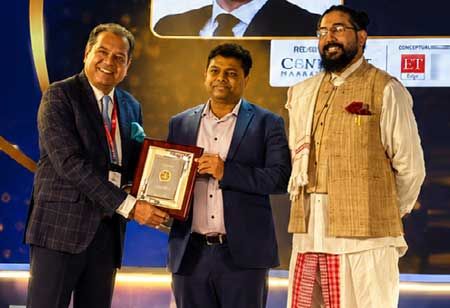
Rajesh Das is a nationally recognized CSR and sustainability leader with over 15 years of experience in designing and scaling high-impact social initiatives. He currently heads Corporate Social Responsibility at the Vardhman Group. As a GRI-Certified Sustain ability Professional and an alumnus of SPJIMR Mumbai, he specializes in ESG-aligned CSR strategies, shared value creation, and social impact measurement. He is the recipient of the Economic Times Impactful CSR Leader of India 2025 award.
Hobbies: Travelling
Favorite Cuisine: Odia and Bengali
Favorite Book: The Holy Bible
Favorite Travel Destination: Iceland and the Swiss Alps
Awards & Recognition: Economic Times Impactful CSR Leader of India in 2025, Global CSR Leadership Award in 2024, by the World Federation of CSR professionals.
The next decade of CSR and sustainability will focus on climate resilience, inclusive growth and deeper ESG integration. Organi -zations are moving beyond compliance-driven CSR toward measurable, long-term impact. Climate adaptation water security, sustainable livelihoods, and disaster resilience will become major priorities alongside carbon reduction.
I also see CSR and ESG increasingly merging, with stronger accountability, governance, and outcome based reporting. CSR is gradually shifting from traditional philanthropy to strategically align with business goals and drive competitive advantage.
Technology and AI will play a critical role in improving transparency, predictive decision-making, and impact measurement. Inclusive growth through green jobs, skills development, and rural livelihoods will remain central, particularly in emerging economies like India.
Additionally, nature-positive and circular economy approaches will gain importance as businesses prioritize biodiversity, resource efficiency and sustainable development within their long-term growth strategies.
Are there any new focus areas or innovative initiatives you are planning to introduce in the near future?
I am focused on building future-ready CSR initiatives that combine climate resilience, technology, and inclusive growth. One of my key priorities is integrating climate adaptation into livelihoods, agriculture, water security, and rural development programs. I also plan to strengthen AI-driven impact measurement and digital dashboards to improve decision-making, transparency, and ESG alignment.
Another major focus area is creating green jobs, women-led livelihood programs, and climate-resilient communities. Additionally, I see strong potential in nature-positive initiatives such as regenerative agri -culture, circular economy practices, and watershed restoration through collaborative partnerships with governments, NGOs, and sustainability-focused institutions.
What message would you like to share with organizations aiming to create meaningful, long-term social impact?
My message to industry leaders is that meaningful social impact begins with empathy, trust, and transparency. I believe organizations must genuinely listen to communities and treat them as partners in progress. Long-term impact requires patience, ethical leadership, and collabo -ration rather than short-term initiatives.
Rajesh Das, Head of CSR, Vardhman Group
Rajesh Das is a nationally recognized CSR and sustainability leader with over 15 years of experience in designing and scaling high-impact social initiatives. He currently heads Corporate Social Responsibility at the Vardhman Group. As a GRI-Certified Sustain ability Professional and an alumnus of SPJIMR Mumbai, he specializes in ESG-aligned CSR strategies, shared value creation, and social impact measurement. He is the recipient of the Economic Times Impactful CSR Leader of India 2025 award.
Hobbies: Travelling
Favorite Cuisine: Odia and Bengali
Favorite Book: The Holy Bible
Favorite Travel Destination: Iceland and the Swiss Alps
Awards & Recognition: Economic Times Impactful CSR Leader of India in 2025, Global CSR Leadership Award in 2024, by the World Federation of CSR professionals.