


Sajeendra Kumar Nambiar: Charting New Horizons In Maritime Engineering And Defence Innovation
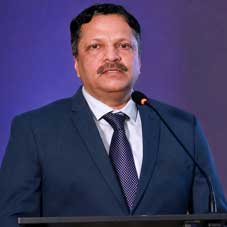
Sajeendra Kumar Nambiar, Seatech Integrated Technology
As the sector embraces digitalization, sustainability, indigenous manufacturing, and next-generation vessel techno- logies, engineering excellence alone is no longer enough.
Organizations require visionary leaders who can seamlessly integrate technical innovation with strategic planning, operational efficiency, and business acumen.
From designing advanced naval platforms to managing complex shipbuilding programmes, today's maritime leaders play a critical role in delivering safe, resilient, and future-ready maritime solutions while navigating evolving technological and geopolitical challenges.
Sajeendra Kumar Nambiar is one such distinguished leader, with over 33 years of experience spanning naval architecture, shipbuilding, ship repair, defence programmes, afloat operations, technology development, project execution and corporate leadership.
He has built an exceptional reputation for delivering engineering excellence across the complete maritime value chain.
His contributions to the wider maritime ecosystem include serving as President of the Indian Marine Designers Association, Member of the CII National Committee on Shipping & Ports, and Member of the Indian Register of Shipping Advisory Committee.
These roles have complemented a career dedicated to advancing engineering excellence across the complete maritime value chain.
Sajeendra holds a B.Tech in Naval Architecture & Shipbuilding from Cochin University of Science and Technology and has further strengthened his expertise through postgraduate studies at IIT Delhi, a Business Management programme at MDI Gurugram, a Master's in Strategic Studies from the University of Madras, and specialized education in ship production and repair at MIT, Boston.
This unique blend of technical, managerial, and strategic education has enabled him to approach maritime engineering from a multidimensional perspective.
He began his professional journey with India's Ministry of Defence, where he undertook critical operational, technical, and leadership assignments involving naval design warship construction, ship acqui-sition and trials, quality assurance, dockyard operations, ship repair, and fleet technical management.
These formative experiences provided deep insight into the complete lifecycle of naval platforms while instilling a strong commitment to safety, operational readiness technical integrity, and disciplined execution.
Between 2013 and 2021, Sajeendra led Proposal Design and Naval Architecture at L&T Ship building, where he spearheaded concept and bid design for defence, commercial, and offshore vessels, contributing to orders exceeding USD 450 million.
Since joining SeaTech Integrated Technology Pvt. Ltd. in 2022 as Technical Director and Managing Director, he has driven the company's strategic expansion across defence, commercial shipbuilding and marine engineering.
Under his leadership, SeaTech has executed advanced
engineering programmes associated with projects worth over ₹5,000 crore while advancing indigenous technologies such as active fin stabilizers controllable pitch propellers, floating docks specialized vessel designs, and green shipbuilding solutions, reinforcing India's growing leadership in maritime innovation.
What leadership principles have consistently guided your decisions and helped you build high-performing organisations?
My leadership philosophy is anchored in technical integrity, accountability, disciplined execution, and continuous learning.
In maritime engineering, every decision has long-term implications for safety and operational performance, so engineering excellence must always come before short-term gains.
I believe strategy only creates value when backed by flawless execution, realistic planning, and strong risk management. Equally important is building trust through transparency and delivering on commitments.
I also focus on developing capable teams, robust processes, and a culture where people take ownership and accountability, challenge assumptions and continuously improve creating organizations that thrive beyond individual leadership.
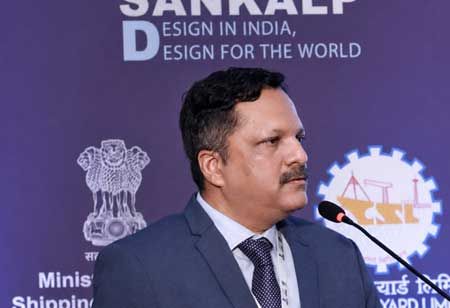
You have held several industry leadership positions. How have these roles shaped your vision for strengthening India's mari- time ecosystem and driving greater collaboration?
Serving industry bodies has given me a broader perspective on India's maritime ecosystem beyond any single organization.
I firmly believe national capability can only grow through collaboration between designers shipyards equipment manufac-turers, research institutions, regulators, and academia.
India has exceptional engineering talent, but we need stronger policy support, research investment, and opportunities for indigenous design development.
We must recognize ship design as a strategic national capability, encourage intellectual property creation, and strengthen industry-academia partnerships.
A coordinated ecosystem will enable India to develop globally competitive maritime techno- logies and emerge as a leader in indigenous shipbuilding.
What strategic capabilities are essential for successfully delivering large-scale maritime and defence engineering programmes in today's rapidly evolving environment?
Large-scale engineering pro- grammes demand much more than technical expertise. Systems thinking is critical because every decision impacts multiple engineering disciplines through- out a vessel's lifecycle.
Strong programme governance, disciplined execution, effective risk management, and commercial awareness are equally important.
Digital engineering, simulation, and data-driven project controls help identify challenges early, while resilient supply chains and strategic technology partner ships strengthen long-term capabilities.
Above all, leaders must make balanced decisions under uncertainty by considering performance, cost, safety, schedule, and customer expectations while maintaining confidence across all stakeholders involved in the programme.
My leadership philo - sophy is anchored in technical integrity, accountability, discip - lined execution, and continuous learning
What leadership principles have consistently guided your decisions and helped you build high-performing organisations?
My leadership philosophy is anchored in technical integrity, accountability, disciplined execution, and continuous learning.
In maritime engineering, every decision has long-term implications for safety and operational performance, so engineering excellence must always come before short-term gains.
I believe strategy only creates value when backed by flawless execution, realistic planning, and strong risk management. Equally important is building trust through transparency and delivering on commitments.
I also focus on developing capable teams, robust processes, and a culture where people take ownership and accountability, challenge assumptions and continuously improve creating organizations that thrive beyond individual leadership.
You have held several industry leadership positions. How have these roles shaped your vision for strengthening India's mari- time ecosystem and driving greater collaboration?
Serving industry bodies has given me a broader perspective on India's maritime ecosystem beyond any single organization.
I firmly believe national capability can only grow through collaboration between designers shipyards equipment manufac-turers, research institutions, regulators, and academia.
India has exceptional engineering talent, but we need stronger policy support, research investment, and opportunities for indigenous design development.
We must recognize ship design as a strategic national capability, encourage intellectual property creation, and strengthen industry-academia partnerships.
A coordinated ecosystem will enable India to develop globally competitive maritime techno- logies and emerge as a leader in indigenous shipbuilding.
What strategic capabilities are essential for successfully delivering large-scale maritime and defence engineering programmes in today's rapidly evolving environment?
Large-scale engineering pro- grammes demand much more than technical expertise. Systems thinking is critical because every decision impacts multiple engineering disciplines through- out a vessel's lifecycle.
Strong programme governance, disciplined execution, effective risk management, and commercial awareness are equally important.
Digital engineering, simulation, and data-driven project controls help identify challenges early, while resilient supply chains and strategic technology partner ships strengthen long-term capabilities.
Above all, leaders must make balanced decisions under uncertainty by considering performance, cost, safety, schedule, and customer expectations while maintaining confidence across all stakeholders involved in the programme.
How have collaboration, stakeholder engagement, and multidisciplinary team -work contributed to the successful execution of complex maritime and defence programmes?
Complex maritime programmes succeed only when diverse stakeholders work toward a common objective. I believe collaboration should begin during the concept stage, allowing operational, regulatory, production, and technology considerations to be aligned early.
Throughout my career trans- parent communication and clearly defined responsibilities have helped bridge differing priorities among designers, shipyards, customers, suppliers, and classification societies.
I encourage multidisciplinary teams to challenge assumptions while remaining collectively accountable for outcomes. When collaboration is built on mutual respect, shared ownership, and technical excellence, it significantly reduces project risks and becomes a powerful driver of innovation.
How do you see digital engineering, AI, autonomous systems and green technologies transforming maritime engineering, and what skills will future leaders need?
These technologies are fundamentally changing how ships are designed, built, and operated. Digital engineering, simulation, digital twins, and AI improve design accuracy, operational efficiency, and predictive maintenance, while green technologies are reshaping propulsion, energy management, and sustainability strategies.
However, technology must always be supported by sound engineering judgement, validation, and safety. Future leaders will need strong technical fundamentals along side digital fluency systems thinking, commercial understanding, cybersecurity awareness, and sustain ability expertise.
Most importantly they must remain adapt able, ethically grounded, and capable of integrating innovation into practical engineering solutions that deliver long-term value.
Looking ahead, what legacy would you like to leave through your contributions to maritime engineering and the development of future engineering leaders?
I hope to contribute to a stronger, self-reliant, and globally respected Indian maritime engineering ecosystem. My aspiration is to help advance indigenous ship design, high-technology naval systems, and engineering innovation so that India increasingly develops its own maritime technologies.
Equally important is leaving behind organizations built on integrity, capable teams, and sustainable processes rather than individual leadership.
I remain committed to mentoring young engineers, encouraging them to combine technical excellence with strategic thinking and leadership. If the next generation surpasses what we have achieved, I would consider that my most meaningful professional legacy.
Sajeendra Kumar Nambiar, Seatech Integrated Techno-logy
Sajeendra Kumar Nambiar is a distinguished maritime engi- neering leader with over 33 years of experience in naval architecture, shipbuilding, defence programmes and marine technology.
He has served as President of the Indian Marine Designers Association and as a Member of the CII National Committee on Shipping & Ports and the Indian Register of Shipping Advisory Committee.
Renowned for advancing indigenous innovation, he has led complex engineering programmes while contributing to India’s maritime capabilities through technical excellence and strategic leadership.
Complex maritime programmes succeed only when diverse stakeholders work toward a common objective. I believe collaboration should begin during the concept stage, allowing operational, regulatory, production, and technology considerations to be aligned early.
Throughout my career trans- parent communication and clearly defined responsibilities have helped bridge differing priorities among designers, shipyards, customers, suppliers, and classification societies.
I encourage multidisciplinary teams to challenge assumptions while remaining collectively accountable for outcomes. When collaboration is built on mutual respect, shared ownership, and technical excellence, it significantly reduces project risks and becomes a powerful driver of innovation.
How do you see digital engineering, AI, autonomous systems and green technologies transforming maritime engineering, and what skills will future leaders need?
These technologies are fundamentally changing how ships are designed, built, and operated. Digital engineering, simulation, digital twins, and AI improve design accuracy, operational efficiency, and predictive maintenance, while green technologies are reshaping propulsion, energy management, and sustainability strategies.
However, technology must always be supported by sound engineering judgement, validation, and safety. Future leaders will need strong technical fundamentals along side digital fluency systems thinking, commercial understanding, cybersecurity awareness, and sustain ability expertise.
Most importantly they must remain adapt able, ethically grounded, and capable of integrating innovation into practical engineering solutions that deliver long-term value.
Looking ahead, what legacy would you like to leave through your contributions to maritime engineering and the development of future engineering leaders?
I hope to contribute to a stronger, self-reliant, and globally respected Indian maritime engineering ecosystem. My aspiration is to help advance indigenous ship design, high-technology naval systems, and engineering innovation so that India increasingly develops its own maritime technologies.
Equally important is leaving behind organizations built on integrity, capable teams, and sustainable processes rather than individual leadership.
I remain committed to mentoring young engineers, encouraging them to combine technical excellence with strategic thinking and leadership. If the next generation surpasses what we have achieved, I would consider that my most meaningful professional legacy.
Sajeendra Kumar Nambiar, Seatech Integrated Techno-logy
Sajeendra Kumar Nambiar is a distinguished maritime engi- neering leader with over 33 years of experience in naval architecture, shipbuilding, defence programmes and marine technology.
He has served as President of the Indian Marine Designers Association and as a Member of the CII National Committee on Shipping & Ports and the Indian Register of Shipping Advisory Committee.
Renowned for advancing indigenous innovation, he has led complex engineering programmes while contributing to India’s maritime capabilities through technical excellence and strategic leadership.