


Sudip Haldar: Engineering The Next Generation Of Railways
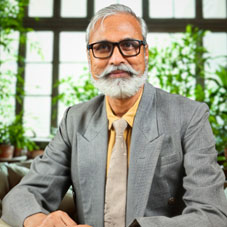
Sudip Haldar
CTO
Functioning with the spirit of ‘Make in India’embedded across its 13 manufacturing units, Jupiter Wagons offers end-to-end solutions for the rail segment, road segment, maritime segment, defense segment, and mining segment.
The company indigenizes high-end technology and brings international expertise to serve India’s transportation needs. The organization has formed joint ventures with partners from the Czech Republic, Slovakia, Slovenia, Spain and France to bring in technology for braking systems and high-performance technology for railways. Sudip has played a lead instrumental role in setting up these joint ventures and implementing them in India.
A mechanical engineering graduate from Jadavpur University, Sudip worked across various fields such as petroleum, metrology, and cutting tools from 1983 to 1997. He then moved to robotics and industrial automation.
Circa 2010-11, Sudip started working in the railway rolling stock segment along with the introduction of infrastructure-standardisation drive by the RDSO/ Indian Railways such as G105. He has since focused on the integration of automation and computer-based technology in railway manufacturing. In addition, to G-105, Sudip realised valuable certification by Association of American Railroads (AAR) for a number of railway accessories and track products.
We present an engaging conversation with Sudip as he shares insights from his professional journey and leadership perspective.
Which key technologies are you prioritizing to drive innovation in the rail transport industry?
The rail transport industry is focused on enhancing safety, consistency, comfort, speed, and operational efficiency through advanced engineering and electronic control systems. A key area of innovation involves quantifying previously subjective factors such as passenger comfort by scientifically measuring parameters like acceleration and jerk, enabling more precise design and smoother operations. I have led
projects pertaining to design, product development, and establishing these technologies through trials.
In freight transport, efforts are directed towards optimizing load capacity by reducing wagon dead weight through improved design, advanced materials, analytics, and modern braking systems.
What key challenges are you currently facing, and what measures do you undertake to address them?
One of the key challenges is the commercial implementation of new wagon designs. While advanced analytics, tools, and technical expertise are available to develop innovative solutions innovation and the usual procedures of approvals and standardization with the railways must also be followed. Designing alone is not enough.
Once a design is developed, it must be endorsed by the railway experts at the Research Design and Standards Organization, and only after securing their approval can manufacturing begin. The concept - to - commi- ssioning journey therefore becomes long and painstaking. Following each and every step of this process to the ‘T’, I have brought forward new wagon designs.
Since all new designs must be vetted, approved, and formally adopted by this authority before manufacturing orders are released, the process can slow down the pace of innovation. To address this, we focus on close coordination with regulatory bodies, ensuring strict compliance with standards, and presenting well validated, data-backed proposals to facilitate smoother approvals and faster implementation.
How do you foster a culture of innovation within your team and ensure you remain ahead of the techno- logical curve in the industry?
We foster innovation by aligning engineering excellence with market demand, ensuring our solutions are both technically robust and commercially viable.
In response to evolving needs such as the rise of SUVs, we have redesigned auto -mobile carrier wagons in coordination with the Research Design and Standards Organization.
We also upgraded BLC wagons to the more efficient BLSS design, improving load capacity and freight economics. By combining market insight, technology, and regulatory collaboration, we stay ahead of the industry curve.
What measures are being taken to integrate environ- mentally friendly techno- logies into products and operations?
We are integrating environ- mentally friendly technologies by focusing on energy efficiency, process optimization, and supply chain localization.
At the manufacturing level, we have reduced energy consum-
In freight transport, efforts are directed towards optimizing load capacity by reducing wagon dead weight through improved design, advanced materials, analytics, and modern braking systems.
What key challenges are you currently facing, and what measures do you undertake to address them?
One of the key challenges is the commercial implementation of new wagon designs. While advanced analytics, tools, and technical expertise are available to develop innovative solutions innovation and the usual procedures of approvals and standardization with the railways must also be followed. Designing alone is not enough.
Once a design is developed, it must be endorsed by the railway experts at the Research Design and Standards Organization, and only after securing their approval can manufacturing begin. The concept - to - commi- ssioning journey therefore becomes long and painstaking. Following each and every step of this process to the ‘T’, I have brought forward new wagon designs.
We are expanding manufacturing, stren -gthening technology integration, and aligning with policy priorities to support long-term rail growth for India
Since all new designs must be vetted, approved, and formally adopted by this authority before manufacturing orders are released, the process can slow down the pace of innovation. To address this, we focus on close coordination with regulatory bodies, ensuring strict compliance with standards, and presenting well validated, data-backed proposals to facilitate smoother approvals and faster implementation.
How do you foster a culture of innovation within your team and ensure you remain ahead of the techno- logical curve in the industry?
We foster innovation by aligning engineering excellence with market demand, ensuring our solutions are both technically robust and commercially viable.
In response to evolving needs such as the rise of SUVs, we have redesigned auto -mobile carrier wagons in coordination with the Research Design and Standards Organization.
We also upgraded BLC wagons to the more efficient BLSS design, improving load capacity and freight economics. By combining market insight, technology, and regulatory collaboration, we stay ahead of the industry curve.
What measures are being taken to integrate environ- mentally friendly techno- logies into products and operations?
We are integrating environ- mentally friendly technologies by focusing on energy efficiency, process optimization, and supply chain localization.
At the manufacturing level, we have reduced energy consum-
ption per wagon by adopting modern inverter based welding equipment, improving worker training, and investing in advanced power quality correction systems to enhance energy efficiency.
By establishing in-house foundries and production units we have significantly reduced road transportation of outsourced components, thereby lowering fossil fuel consumption and overall carbon footprint.
What emerging technologies will significant impact the rail transport industry in the near future?
Over the next decade, the rail industry will be driven by technologies that enhance speed, safety, durability, and passenger comfort. Key advancements include axle-mounted disc brakes, lightweight fire-resistant materials, improved rolling stock design, and flash butt welded tracks to reduce accident risks.
Passenger focused innovations such as vacuum toilets and biodigester systems developed with the Defense Research and Development organization are also improving hygiene and sustainability. Together, these technologies will enable safer, faster and more efficient rail operations.
What is your strategic roadmap for the future?
Our roadmap aligns with the Government of India’s National Rail Plan 2030, which aims to raise rail freight share from 27 percent to 45 percent by 2050 in line with net-zero goals.
This requires scaling wagon capacity from 330,000 to nearly one million, while improving speed and efficiency. Accordingly, we are expanding manufacturing, strengthening technology integration, and aligning with policy priorities to support long-term rail growth.
Sudip Haldar, CTO, Jupiter Wagons
Sudip is a forward-looking mobility leader who blends engineering depth with automation expertise, building Jupiter Wagons Limited into a technology-driven force advancing safe, efficient, and sustainable multimodal transport solutions.
•Hobbies: Reading books on analytics, emerging technologies, and mythology, as well as reciting poetry. I also enjoy staying updated on advanced technologies and developments in the field.
•Favorite Book: Siddhartha by Hermann Hesse, a profound and timeless work inspired by Indian philosophy. Some other books I value include East of Eden and The Monk Who Sold His Ferrari.
•Favorite Cuisine: Indian cuisine
•Favorite Travel Destination: North of Spain; Eastern Europe
Awards & Recognitions:
•Undertaken professional training and knowledge-sharing initiatives and awards thereof.
•Certifications and awards in Neuro Linguistic Programming for excellence in communication and people engagement skills
By establishing in-house foundries and production units we have significantly reduced road transportation of outsourced components, thereby lowering fossil fuel consumption and overall carbon footprint.
What emerging technologies will significant impact the rail transport industry in the near future?
Over the next decade, the rail industry will be driven by technologies that enhance speed, safety, durability, and passenger comfort. Key advancements include axle-mounted disc brakes, lightweight fire-resistant materials, improved rolling stock design, and flash butt welded tracks to reduce accident risks.
Passenger focused innovations such as vacuum toilets and biodigester systems developed with the Defense Research and Development organization are also improving hygiene and sustainability. Together, these technologies will enable safer, faster and more efficient rail operations.
What is your strategic roadmap for the future?
Our roadmap aligns with the Government of India’s National Rail Plan 2030, which aims to raise rail freight share from 27 percent to 45 percent by 2050 in line with net-zero goals.
This requires scaling wagon capacity from 330,000 to nearly one million, while improving speed and efficiency. Accordingly, we are expanding manufacturing, strengthening technology integration, and aligning with policy priorities to support long-term rail growth.
Sudip Haldar, CTO, Jupiter Wagons
Sudip is a forward-looking mobility leader who blends engineering depth with automation expertise, building Jupiter Wagons Limited into a technology-driven force advancing safe, efficient, and sustainable multimodal transport solutions.
•Hobbies: Reading books on analytics, emerging technologies, and mythology, as well as reciting poetry. I also enjoy staying updated on advanced technologies and developments in the field.
•Favorite Book: Siddhartha by Hermann Hesse, a profound and timeless work inspired by Indian philosophy. Some other books I value include East of Eden and The Monk Who Sold His Ferrari.
•Favorite Cuisine: Indian cuisine
•Favorite Travel Destination: North of Spain; Eastern Europe
Awards & Recognitions:
•Undertaken professional training and knowledge-sharing initiatives and awards thereof.
•Certifications and awards in Neuro Linguistic Programming for excellence in communication and people engagement skills