


Sunil Varshney: Bridging Scientific Innovation And Entrepreneurial Leadership In Polymer Science

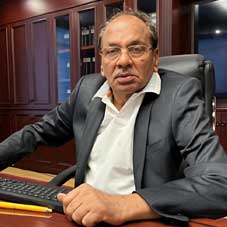
Sunil Varshney
President
Many of these leaders have built enterprises that extend beyond commercial success, contributing to innovation, knowledge creation, and international collaboration. In science-driven sectors, their leadership is particularly significant, as transforming specialized research into solutions with global relevance requires both technical depth and a long-term vision.
Representing this blend of scientific expertise and entrepreneurial leadership is Sunil Varshney, President of Polymer Source. With decades of experience in polymer synthesis, Sunil has built a career spanning academia, industrial research, and entrepreneurship. His work encompasses innovative polymer solutions and the development of simple and complex macromolecular architectures. At Polymer Source, his focus on research, quality, and scientific advancement has helped the company establish a strong presence as a provider of research-grade polymers to scientists worldwide. Let’s dive in to know more.
What initially drew you towards polymer science and how did your education influence the direction of your career?
I was born in Moradabad, Uttar Pradesh, in 1954, and my interest in chemistry began quite early. I pursued my master’s degree with great enthusiasm and graduated with top honours, receiving a gold medal. My growing inclination towards research encouraged me to secure a CSIR fellowship and pursue a Ph.D. in Polymer Science at IIT Delhi.
The doctoral program allowed me to understand polymers and their complexities at a much deeper level further strengthening my interest in the discipline. I later received a postdoctoral fellowship at the University of Florida in Gainesville, where I benefited from an excellent research environment and valuable international exposure. These academic experiences built the
scientific foundation that eventually guided me towards research, industry, innovation, and entrepreneurship.
Your journey included significant challenges while trying to obtain a U.S. visa. How did you navigate that difficult period?
When I returned to India in 1981 to defend my Ph.D., I encountered an unexpected situation when the U.S. Embassy in Delhi declined to renew my J-1 visa, believing that I might intend to settle in the United States. Between 1981 and 1982, I applied more than 80 times, but my attempts were initially unsuccessful.
As a result, I could not return to Gainesville to access my savings and belongings.It was a period of considerable uncertainty and unemployment, but I chose to remain persistent rather than become discouraged.
Eventually, I secured an important meeting with Consulate General Bobby Watson, which, despite being disrupted, became a turning point. That difficult phase strengthened my resilience and taught me lessons that proved valuable throughout my academic and entrepreneurial journey.
How did your years in Belgium influence your expertise and subsequent career in polymer science?
My association with Belgium began in 1985 when I joined the University of Liège as a postdoctoral fellow under Professor Philippe Tessier. Within a year, I progressed to the role of Group Leader, which gave me the opportunity to work closely with some of the leading scientists in the field. During this period, I focused extensively on developing specialty catalysts for polymerization.
The research resulted in more than 35 patents and around 40 influential publications, while the work was subsequently cited in over 5,000 articles. This recognition considerably strengthened my position within the polymer science community.
More importantly, my experience in Belgium expanded my scientific capabilities and international exposure, eventually creating opportunities in North America, where I transitioned from academic research to industry and later pursued entrepreneurship.
How has Polymer Source evolved since its inception, and what vision mission, and values continue to shape the organization?
Polymer Source was established with the vision of providing innovative, high-quality research-grade polymers to scientists around the world. From the
Your journey included significant challenges while trying to obtain a U.S. visa. How did you navigate that difficult period?
When I returned to India in 1981 to defend my Ph.D., I encountered an unexpected situation when the U.S. Embassy in Delhi declined to renew my J-1 visa, believing that I might intend to settle in the United States. Between 1981 and 1982, I applied more than 80 times, but my attempts were initially unsuccessful.
As a result, I could not return to Gainesville to access my savings and belongings.It was a period of considerable uncertainty and unemployment, but I chose to remain persistent rather than become discouraged.
Eventually, I secured an important meeting with Consulate General Bobby Watson, which, despite being disrupted, became a turning point. That difficult phase strengthened my resilience and taught me lessons that proved valuable throughout my academic and entrepreneurial journey.
How did your years in Belgium influence your expertise and subsequent career in polymer science?
My association with Belgium began in 1985 when I joined the University of Liège as a postdoctoral fellow under Professor Philippe Tessier. Within a year, I progressed to the role of Group Leader, which gave me the opportunity to work closely with some of the leading scientists in the field. During this period, I focused extensively on developing specialty catalysts for polymerization.
The research resulted in more than 35 patents and around 40 influential publications, while the work was subsequently cited in over 5,000 articles. This recognition considerably strengthened my position within the polymer science community.
More importantly, my experience in Belgium expanded my scientific capabilities and international exposure, eventually creating opportunities in North America, where I transitioned from academic research to industry and later pursued entrepreneurship.
How has Polymer Source evolved since its inception, and what vision mission, and values continue to shape the organization?
Polymer Source was established with the vision of providing innovative, high-quality research-grade polymers to scientists around the world. From the
beginning, research and development have remained central to our approach, allowing us to address requirements ranging from simple polymers to highly complex macromolecular architectures.
Our mission is to contribute to the advancement of polymer science through elegant methodologies while supporting research across chemistry, physics, materials technology, nanoscience, and related disciplines. Innovation, quality, and customer satisfaction remain the core values guiding our operations.
Today, we operate from a state-of-the-art facility in Greater Montreal and serve researchers globally through international distributors. The fact that our products have been referenced in more than 3,000 peer-reviewed articles and patents demonstrates the scientific community’s accep- tance of our work.
What opportunities and challenges do you foresee in establishing Polymer Source in India as a research and learning center for polymers?
I believe establishing Polymer Source in India as a research and learning center for polymers offers considerable possibilities, although there are challenges to address. One concern is the comparatively limited investment in R&D, which affects India’s ability to strengthen its global position in innovation. At the same time, this gap represents an opportunity to create a stronger foundation for poly- mer research.
Polymer Source could contribute its expertise and legacy while creating an environment that encourages advanced research and learning. Such an initiative could also help attract accomplished Indian scientists working overseas and provide opportunities for them to contribute in India. With appropriate government support and sustained R&D investment, I believe the center could promote research excellence, support economic development, and help India strengthen its position in polymer chemistry.
Sunil Varshney, President, Polymer Source
Sunil Varshney brings 35 years of experience in polymer synthesis, with a professional journey spanning research, academia, industry, and entrepreneurship. Over the years, he has been associated with organizations and institutions including Pressure Chemical Company, McGill University, Norsolor- Orkem, and the University of Liège. Recognized as a pioneer in living anionic polymerization, he has made extensive contributions to polymer science, authored more than 154 scientific papers, and holds 36 patents.
Our mission is to contribute to the advancement of polymer science through elegant methodologies while supporting research across chemistry, physics, materials technology, nanoscience, and related disciplines. Innovation, quality, and customer satisfaction remain the core values guiding our operations.
Today, we operate from a state-of-the-art facility in Greater Montreal and serve researchers globally through international distributors. The fact that our products have been referenced in more than 3,000 peer-reviewed articles and patents demonstrates the scientific community’s accep- tance of our work.
What opportunities and challenges do you foresee in establishing Polymer Source in India as a research and learning center for polymers?
I believe establishing Polymer Source in India as a research and learning center for polymers offers considerable possibilities, although there are challenges to address. One concern is the comparatively limited investment in R&D, which affects India’s ability to strengthen its global position in innovation. At the same time, this gap represents an opportunity to create a stronger foundation for poly- mer research.
Polymer Source could contribute its expertise and legacy while creating an environment that encourages advanced research and learning. Such an initiative could also help attract accomplished Indian scientists working overseas and provide opportunities for them to contribute in India. With appropriate government support and sustained R&D investment, I believe the center could promote research excellence, support economic development, and help India strengthen its position in polymer chemistry.
Sunil Varshney, President, Polymer Source
Sunil Varshney brings 35 years of experience in polymer synthesis, with a professional journey spanning research, academia, industry, and entrepreneurship. Over the years, he has been associated with organizations and institutions including Pressure Chemical Company, McGill University, Norsolor- Orkem, and the University of Liège. Recognized as a pioneer in living anionic polymerization, he has made extensive contributions to polymer science, authored more than 154 scientific papers, and holds 36 patents.