


Swapin Vidya: Pioneering Autonomous AI Systems for the Future of Agriculture
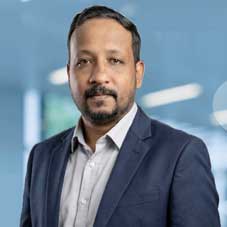
Swapin Vidya
Founder & Lead Product Architect
The focus has shifted from merely digitizing agriculture to creating intelligent, autonomous systems that can operate in remote environments with minimal human inter vention. This new generation of founders is bridging the gap between scientific research and field-level application, empowering farmers with predictive insights automated interventions, and precision agriculture tools that enhance productivity and sustainability.
Among these emerging innovators is Swapin Vidya, Founder & Lead Product Architect of Peachbot AI. With a rare interdisciplinary background combining biological sciences and advanced computing, he identified a critical gap early in his research career, the absence of dedicated hardware and software systems designed specifically for biological data. Unlike structured commercial datasets, biological data is complex, unstructured, and often incomplete demanding a funda -mentally different computational approach.
To address this challenge, he developed a prototype capable of understanding DNA, RNA, and proteins through an integrated single-board computing architecture. This break through led to a patented biological computing framework, which later evolved into an ecosystem of four devices serving healthcare, agriculture, ecology, and bioinformatics.
A key achievement in his journey has been successfully running AI and LLM-based models locally on compact, resource-constrained hardware, eliminating cloud dependency. His philosophy centers on identifying systemic gaps and building autonomous, practical, and user friendly solutions tailored for real-world impact. Let’s hear more from him in this interaction.
What inspired you to start Peachbot AI, and how has your vision evolved since its inception?
Peachbot AI originated as a small research initiative. However as development progressed, it became clear that there was no comprehensive, integrated system designed specifically for biological sciences. Existing solutions relied on modifying commercial software for agricultural or biological applications, which added complexity and inefficiency for domain experts.
This realization inspired the creation of a plug-and play ecosystem tailored for biological data. Over time, the vision evolved toward building fully autonomous systems capable of operating without internet connectivity, particularly in remote environments. Today, Peachbot AI focuses on localized AI systems that can self-learn, diagnose, predict, and execute decisions independently, reducing reliance on centralized cloud systems and enhancing accessibility.
How are you improving healthcare accessibility, especially in underserved or rural areas?
Healthcare delivery in rural and under served regions often suffers due to limited connectivity and infrastructure. Peachbot AI addresses this challenge by embedding AI models directly into compact offline-capable hardware devices.
These systems enable healthcare professionals to analyze biological data, detect patterns, and receive actionable recommendations without needing constant internet access.
By reducing dependence on centralized diagnostic systems, Peachbot AI makes advanced biological analysis and predictive insights available in remote settings, thereby improving healthcare accessibility and efficiency.
How does Peachbot AI’s technology help farmers optimize their practices and improve crop yields?
Peachbot AI integrates AI and IoT into agriculture through a proactive and autonomous framework. Instead of merely presenting dashboard metrics, the system locks onto a specific farm location, analyzes geographical and climatic factors, retrieves historical weather data, identifies patterns, and predicts potential outcomes.
Rather than simply displaying nutrient levels, it provides precise corrective prescriptions. With user permission, it can automatically adjust irrigation systems to balance nutrient levels.
The system can also detect crop diseases such as leaf rust in coffee plantations, identify the affected sector, deploy cameras or drones, diagnose the pathology, and recommend or execute corrective actions. Designed as a plug-and-play solution, it supports farmers who may not be technically trained, ensuring ease of adoption.
What are the biggest challenges in implementing AI and IoT solutions in agriculture, and how does Peachbot AI tackle them?
Our primary challenges include hardware constraints in rural environments, lack of reliable connectivity, trust-building among traditional farmers, inter -disciplinary coordination, and academic validation of the system. Most AI solutions depend heavily on cloud computing, but rural agriculture often lacks stable internet access.
Peachbot AI addressed this by developing fully redundant, weatherproof hardware capable of operating offline. Advanced AI models run locally within a compact device, enabling autonomous decision-making.
The system has also been validated through collaborations with universities and research institutions to ensure scientific credibility and reliability. The long-term design philosophy even considers future autonomous environments, such as space colonies, emphasizing complete self-sufficiency and redundancy.
What trends do you see shaping the AI industry and how is Peachbot AI posi -tioning itself?
The AI industry is moving from cloud-dominated architectures toward localized and edge-based intelligence. While cloud computing has driven the first wave of AI expansion, it presents limitations related to connectivity, latency, and scalability in remote environments.
Healthcare delivery in rural and under served regions often suffers due to limited connectivity and infrastructure. Peachbot AI addresses this challenge by embedding AI models directly into compact offline-capable hardware devices.
By reducing dependence on centralized diagnostic systems, Peachbot AI makes advanced biological analysis and predictive insights available in remote settings, thereby improving healthcare accessibility and efficiency
These systems enable healthcare professionals to analyze biological data, detect patterns, and receive actionable recommendations without needing constant internet access.
By reducing dependence on centralized diagnostic systems, Peachbot AI makes advanced biological analysis and predictive insights available in remote settings, thereby improving healthcare accessibility and efficiency.
How does Peachbot AI’s technology help farmers optimize their practices and improve crop yields?
Peachbot AI integrates AI and IoT into agriculture through a proactive and autonomous framework. Instead of merely presenting dashboard metrics, the system locks onto a specific farm location, analyzes geographical and climatic factors, retrieves historical weather data, identifies patterns, and predicts potential outcomes.
Rather than simply displaying nutrient levels, it provides precise corrective prescriptions. With user permission, it can automatically adjust irrigation systems to balance nutrient levels.
The system can also detect crop diseases such as leaf rust in coffee plantations, identify the affected sector, deploy cameras or drones, diagnose the pathology, and recommend or execute corrective actions. Designed as a plug-and-play solution, it supports farmers who may not be technically trained, ensuring ease of adoption.
What are the biggest challenges in implementing AI and IoT solutions in agriculture, and how does Peachbot AI tackle them?
Our primary challenges include hardware constraints in rural environments, lack of reliable connectivity, trust-building among traditional farmers, inter -disciplinary coordination, and academic validation of the system. Most AI solutions depend heavily on cloud computing, but rural agriculture often lacks stable internet access.
Peachbot AI addressed this by developing fully redundant, weatherproof hardware capable of operating offline. Advanced AI models run locally within a compact device, enabling autonomous decision-making.
The system has also been validated through collaborations with universities and research institutions to ensure scientific credibility and reliability. The long-term design philosophy even considers future autonomous environments, such as space colonies, emphasizing complete self-sufficiency and redundancy.
What trends do you see shaping the AI industry and how is Peachbot AI posi -tioning itself?
The AI industry is moving from cloud-dominated architectures toward localized and edge-based intelligence. While cloud computing has driven the first wave of AI expansion, it presents limitations related to connectivity, latency, and scalability in remote environments.
Peachbot AI is strategically positioned in the localized AI segment. By embedding AI models into compact devices capable of independent decision making, the company is enabling biological-aware computing systems.
These systems not only process data but inherently understand agricultural cycles crop requirements environmental conditions, and biological patterns. The integration of AI with robotics further strengthens its position in autonomous agriculture.
What leadership methodo- logies do you follow?
Peachbot AI operates as a highly research-intensive organization with an inter disciplinary team structure. Rather than a rigid corporate hierarchy the organization functions through collaboration among agricultural experts, computer engineers, biological scientists and hardware specialists.
Managing such diversity requires continuous cross-disciplinary consultation and validation. Since expertise varies widely across domains, strong coordination and structured communication are essential.
Partnerships with academic institutions also play a key role in validating research outcomes. As we transition from a research-driven framework to a business-oriented model, continuous learning remains a central leadership principle.
What key milestones are you planning to achieve in the future?
Future plans include scaling agricultural solutions internationally, particularly in Southeast Asian and ASEAN countries with limited geographical resources. We aim for an international product launch while prioritizing markets that would benefit most from autonomous agricultural systems.
Another significant milestone involves partially open-sourcing hardware components to encourage innovation and community-driven development. The long-term vision is to pioneer a foundational biological computing framework, essentially creating computers that inherently understand biological systems and agriculture rather than treating them as secondary applications.
What message would you like to convey to budding industry leaders?
Upcoming industry leaders must remain aligned with technological evolution. From the dot-com era to the AI revolution, industries have consistently transformed through innovation.
Leaders who fail to adapt to technological movements risk becoming obsolete. Continuous learning, technological awareness, and adaptability are critical for long-term relevance and impact.
Swapin Vidya, Founder & Lead Product Architect, Peachbot AI
Swapin Vidya is the Founder & Lead Product Architect of Peachbot AI. With expertise spanning biological sciences and advanced computing, he developed a patented biological computing framework powering autonomous systems across healthcare, agriculture, ecology, and bioinformatics.
•Hobbies: Enjoys building robots and designing intelligent hardware systems.
•Favorite Cuisine: Open to all cuisines without specific preference.
•Favorite Book: Stranger in Cambodia
•Favorite Travel Destination: Cambodia
•Awards & Recognition: His recogni -tions include holding patents for biological computing systems and publishing peer reviewed research papers in edge computing and localized AI systems.
These systems not only process data but inherently understand agricultural cycles crop requirements environmental conditions, and biological patterns. The integration of AI with robotics further strengthens its position in autonomous agriculture.
What leadership methodo- logies do you follow?
Peachbot AI operates as a highly research-intensive organization with an inter disciplinary team structure. Rather than a rigid corporate hierarchy the organization functions through collaboration among agricultural experts, computer engineers, biological scientists and hardware specialists.
Managing such diversity requires continuous cross-disciplinary consultation and validation. Since expertise varies widely across domains, strong coordination and structured communication are essential.
Partnerships with academic institutions also play a key role in validating research outcomes. As we transition from a research-driven framework to a business-oriented model, continuous learning remains a central leadership principle.
What key milestones are you planning to achieve in the future?
Future plans include scaling agricultural solutions internationally, particularly in Southeast Asian and ASEAN countries with limited geographical resources. We aim for an international product launch while prioritizing markets that would benefit most from autonomous agricultural systems.
Another significant milestone involves partially open-sourcing hardware components to encourage innovation and community-driven development. The long-term vision is to pioneer a foundational biological computing framework, essentially creating computers that inherently understand biological systems and agriculture rather than treating them as secondary applications.
What message would you like to convey to budding industry leaders?
Upcoming industry leaders must remain aligned with technological evolution. From the dot-com era to the AI revolution, industries have consistently transformed through innovation.
Leaders who fail to adapt to technological movements risk becoming obsolete. Continuous learning, technological awareness, and adaptability are critical for long-term relevance and impact.
Swapin Vidya, Founder & Lead Product Architect, Peachbot AI
Swapin Vidya is the Founder & Lead Product Architect of Peachbot AI. With expertise spanning biological sciences and advanced computing, he developed a patented biological computing framework powering autonomous systems across healthcare, agriculture, ecology, and bioinformatics.
•Hobbies: Enjoys building robots and designing intelligent hardware systems.
•Favorite Cuisine: Open to all cuisines without specific preference.
•Favorite Book: Stranger in Cambodia
•Favorite Travel Destination: Cambodia
•Awards & Recognition: His recogni -tions include holding patents for biological computing systems and publishing peer reviewed research papers in edge computing and localized AI systems.