


Yaser Shaikh : Aligning Business Goals With Engineering Innovation For Scalable Impact

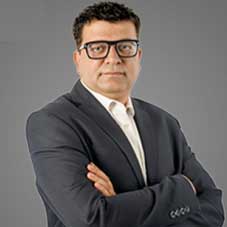
Yaser Shaikh
Head - Engineering & Product Development
Such leadership ensures consistent performance, adaptability, and scalable success across organizations. This balanced approach not only drives results but also nurtures resilient, high performing teams, an approach exemplified by Yaser Shaikh.
As the Head of Engineering and Product Development at Naxnova, Yaser Shaikh plays a pivotal role in driving innovation across advanced manufacturing and automotive technologies. With over two decades of experience in engineering leadership, he brings deep expertise in product development, project execution, and cross-functional integration.
His approach combines cutting-edge technologies with robust engineering frameworks, enabling the development of high-performance, reliable, and future-ready solutions aligned with global industry standards and evolving customer needs.
Below is an excerpt of Yaser Shaikh’s exclusive interaction with CEO Insights magazine.
Can you share your educational background and career journey so far?
My journey in engineering spans over two decades and has been both dynamic and rewarding. I began my career in Pune with a focus on engineering and production, then pursued a master’s degree in engineering at the University of Hull in Yorkshire, UK. After gaining international exposure through professional stints in the UK and the Gulf, I returned to India about 15 years ago.
Since then, I’ve been deeply involved in the automotive sector, which continues to fascinate me due to its constant evolution, mobility potential, and technological advancements. With over 23 years in the industry I remain committed to contributing meaningfully to its future growth.
You have a strong track record in project execution. How do you balance speed, innovation and quality in product development?
Balancing speed, innovation, and quality is less about trade-offs and more about intelligent orchestration. The starting point is always clarity of intent, not every project demands breakthrough innovation or maximum speed. We align priorities based on business needs, whetherit’s time-to-market, differentiated innovation, or uncompromising quality.
Speed is achieved through strong frame works, design reuse strategies and clear requirements, not shortcuts. Innovation stems from deep product understanding, market awareness, and structured experimentation. Quality, however, is non-negotiable, especially in safety-critical domains.
Unlike earlier practices where quality was inspected at the end, today it is embedded throughout the lifecycle, from design and validation to manufacturing. Ultimately, success lies in portfolio-level thinking, where each program is optimized differently but aligned with business outcomes.
How are the latest technologies reshaping vehicle design and user experience?
We are witnessing a fundamental shift from machine centric to human-centric, software -defined vehicles (SDVs). Modern vehicles are no longer static; they evolve through software updates and lifecycle-driven enhancements. Advanced sensing techno-logies, such as radar, vision systems, and in-cabin monitoring—are enabling vehicles to move from reactive to predictive behavior.
Human-machine interaction (HMI) is also transforming rapidly. Interfaces are becoming more intuitive and less intrusive, with smart surfaces, gesture controls, and ambient intelligence.
The real innovation lies in the invisible layer technology seamlessly embedded beneath surfaces, enhancing safety and user experience without being obtrusive. Vehicles today are not just modes of transport; they are personalized, adaptive environments offering both safety and luxury.
What role do data and analytics play in engineering decisions and product strategies?
Balancing speed, innovation, and quality is less about trade-offs and more about intelligent orchestration. The starting point is always clarity of intent, not every project demands breakthrough innovation or maximum speed. We align priorities based on business needs, whetherit’s time-to-market, differentiated innovation, or uncompromising quality.
Yaser Shaikh believes true leadership lies in empowering teams, embedding quality, and driving innovation through clarity, owner-ship, and purposeful engineering excel-lence
Speed is achieved through strong frame works, design reuse strategies and clear requirements, not shortcuts. Innovation stems from deep product understanding, market awareness, and structured experimentation. Quality, however, is non-negotiable, especially in safety-critical domains.
Unlike earlier practices where quality was inspected at the end, today it is embedded throughout the lifecycle, from design and validation to manufacturing. Ultimately, success lies in portfolio-level thinking, where each program is optimized differently but aligned with business outcomes.
How are the latest technologies reshaping vehicle design and user experience?
We are witnessing a fundamental shift from machine centric to human-centric, software -defined vehicles (SDVs). Modern vehicles are no longer static; they evolve through software updates and lifecycle-driven enhancements. Advanced sensing techno-logies, such as radar, vision systems, and in-cabin monitoring—are enabling vehicles to move from reactive to predictive behavior.
Human-machine interaction (HMI) is also transforming rapidly. Interfaces are becoming more intuitive and less intrusive, with smart surfaces, gesture controls, and ambient intelligence.
The real innovation lies in the invisible layer technology seamlessly embedded beneath surfaces, enhancing safety and user experience without being obtrusive. Vehicles today are not just modes of transport; they are personalized, adaptive environments offering both safety and luxury.
What role do data and analytics play in engineering decisions and product strategies?
Data and analytics have shifted engineering from experience-driven to evidence-driven decision-making. Today, we leverage real-world data, from field performance, sensor logs, and validation cycles, to refine designs, identify failure modes early, and optimize systems efficiently.
From a strategic standpoint, data helps us answer a critical question: What should we build? It informs product roadmaps, improves ROI on innovation, and enhances lifecycle intelligence through predictive maintenance and continuous improvement. Data is no longer a byproduct; it is a core input and a strategic asset that defines competitive advantage.
What are your key leadership principles and success mantra?
My leadership philosophy revolves around three pillars: clarity, ownership, and systems thinking. Clarity ensures that teams understand what they are building and why. Ownership empowers individuals with account ability, driving better outcomes across speed, innovation, and quality.
Systems thinking is crucial in a complex domain like automotive engineering. Structured frameworks, risk analysis, and stage-gated processes ensure consistency and scalability. Equally important is fostering a learning culture, encouraging feedback, collaboration, and calculated risk-taking. Ultimately, leadership is about building self-sufficient teams that consistently deliver results at scale.
What is your future roadmap, both personally and for your organization?
My focus is on advancing engineering intelligence and human-centric experiences. I aim to contribute to next-generation sensing and safety systems that enable predictive, context-aware mobility. Beyond technology, my goal is to build empowered teams capable of solving complex, cross-disciplinary challenges.
In essence, I envision a future where technology doesn’t just function, it understands, adapts, and protects, creating a safer and more intuitive mobility ecosystem.
Yaser Shaikh, Head - Engineering & Product Development, Naxnova
Yaser Shaikh is the Head of Engineering and Product Development at Naxnova, with over two decades of experience in the automotive sector. He specializes in product innovation, systems integration, and engineering leadership, driving high-quality, future ready solutions through a strong focus on technology, data, and team empowerment.
From a strategic standpoint, data helps us answer a critical question: What should we build? It informs product roadmaps, improves ROI on innovation, and enhances lifecycle intelligence through predictive maintenance and continuous improvement. Data is no longer a byproduct; it is a core input and a strategic asset that defines competitive advantage.
What are your key leadership principles and success mantra?
My leadership philosophy revolves around three pillars: clarity, ownership, and systems thinking. Clarity ensures that teams understand what they are building and why. Ownership empowers individuals with account ability, driving better outcomes across speed, innovation, and quality.
Systems thinking is crucial in a complex domain like automotive engineering. Structured frameworks, risk analysis, and stage-gated processes ensure consistency and scalability. Equally important is fostering a learning culture, encouraging feedback, collaboration, and calculated risk-taking. Ultimately, leadership is about building self-sufficient teams that consistently deliver results at scale.
What is your future roadmap, both personally and for your organization?
My focus is on advancing engineering intelligence and human-centric experiences. I aim to contribute to next-generation sensing and safety systems that enable predictive, context-aware mobility. Beyond technology, my goal is to build empowered teams capable of solving complex, cross-disciplinary challenges.
In essence, I envision a future where technology doesn’t just function, it understands, adapts, and protects, creating a safer and more intuitive mobility ecosystem.
Yaser Shaikh, Head - Engineering & Product Development, Naxnova
Yaser Shaikh is the Head of Engineering and Product Development at Naxnova, with over two decades of experience in the automotive sector. He specializes in product innovation, systems integration, and engineering leadership, driving high-quality, future ready solutions through a strong focus on technology, data, and team empowerment.