

"Amazing How Far India Has Come": World Bank On India's Recovery Amid COVID-19
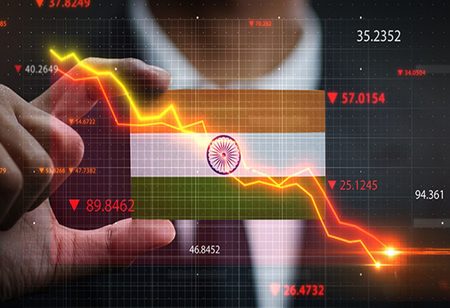 According to the World Bank’s latest report, India's economy has glanced off remarkably from the COVID-19 epidemic and nationwide lockdown over the last year. The report has predicted that the country's real GDP growth for the fiscal year (FY21-22) could range from 7.5 to 12.5 percent, but it is not out of the woods yet.
The Washington-based global lender, in its latest South Asia Economic Focus report unconfined ahead of the annual Spring meeting of the World Bank and the International Monetary Fund (IMF), said that the economy was already slowing when the COVID-19 pandemic unfolded.
After reaching 8.3 percent in FY17, growth decelerated to 4.0 percent in FY20. The slowdown was caused by a decline in private consumption growth and shocks to the financial sector (the collapse of a large non-bank finance institution), which compounded pre-existing weaknesses in investment.
The World Bank states, "Given the significant uncertainty pertaining to both epidemiological and policy developments, the real GDP growth for FY21-22 can range from 7.5 to 12.5 percent, depending on how the ongoing vaccination campaign proceeds, whether new restrictions to mobility are required, and how quickly the world economy recovers."
Hans Timmer, World Bank Chief Economist for the South Asia Region, told news agency Press Trust of India, states, "It is amazing how far India has come compared to a year ago. If you think a year ago, how deep the recession was unprecedented declines inactivity of 30 to 40 percent, no clarity about vaccines, huge uncertainty about the disease. And then if you compare it now, India is bouncing back, has opened up many of the activities, started vaccination, and is leading in the production of vaccination
He adds, “The situation is still incredibly challenging, both on the pandemic side with the flare-up that is being experienced now. It is an enormous challenge to vaccinate everybody in India, the official said.
Most people underestimate the challenge.” Even with the rebound and there is uncertainty here about the numbers, but it basically means that over two years there was no growth in India and there might well have been over two years, a decline in per capita income.”
Timmer states, “That's such a difference with what India was accustomed to. And it means that there are still many parts of the economy that have not recovered or have not fared as well as they would have without a pandemic. There is a huge concern about the financial markets.”
The report states, as economic activity normalizes, domestically and in key export markets, the current account is expected to return to mild deficits (around 1 percent in FY22 and FY23) and capital inflows are projected by continued accommodative monetary policy and abundant international liquidity conditions.
Noting that the COVID-19 shock will lead to a long-lasting inflexion in India's fiscal trajectory, the report said that the general government deficit is expected to remain above 10 percent of GDP until FY22. As a result, public debt is projected to peak at almost 90 percent of GDP in FY21 before declining gradually thereafter.
As growth resumes and the labor market scenario improve, poverty reduction is expected to return to its pre-pandemic trajectory.
The poverty rate (at the USD 1.90 line) is projected to return to pre-pandemic levels in FY22, falling within 6 and 9 percent, and fall further to between 4 and 7 percent by FY24.