

'Made in India' Must become Symbol of Excellence and More: PM
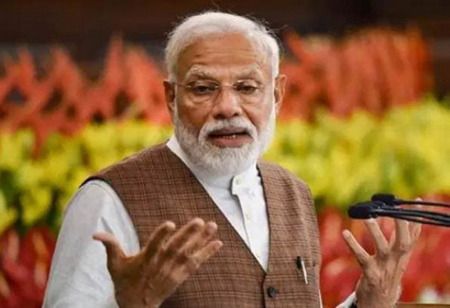
Prime Minister Narendra Modi urged states to promote manufacturing, improve the "ease of doing business," and enhance the services sector to elevate India as a key player in global services. During the 5th National Conference of Chief Secretaries, Modi underscored the importance of excellence in governance, service provision, and production.
He reiterated the significance of the 'Made in India' designation becoming a signifier of superior quality and international competitiveness.
Also Read: FM Links Pension Reforms to Atmanirbhar Bharat Vision
He expressed that India possesses the capacity to emerge as the global hub for food production, emphasizing the necessity for the nation to transition towards high-value agriculture, horticulture, animal husbandry, dairying, and fisheries to establish itself as a significant player in the international food market.
The focal point of the three-day conference that commenced on December 26 was the notion of ‘Human Capital for Viksit Bharat’. Modi noted that this conference represents a significant advancement in bolstering the principles of cooperative federalism and enhancing the collaboration between the Central and State governments to realize the goal of a developed India.
He emphasized India's demographic strength, noting that around 70 percent of the population falls within the working-age bracket. This demographic trend presents a rare historical opportunity that, when coupled with economic advancement, has the potential to greatly expedite progress towards a developed India.
Also Read: Shirish Chandra Murmu Appointed RBI Deputy Governor
Modi emphasized that India has embarked on a path of comprehensive reform, propelled primarily by the energy of its youthful populace, with a key focus on empowering this demographic being at the forefront of the government's agenda. He observed that the conference is taking place during a period of advanced reforms in the country and its progression towards establishing itself as a significant global economic force.
He emphasized the importance of enhancing self-reliance and stated that India should strive for self-reliance by producing flawless products with minimal environmental harm.
The goal is to make the 'Made in India' label known for its quality and reinforce the dedication to achieving "zero effect, zero defect".
The Prime Minister encouraged both the Central and state governments to work together in identifying 100 products for domestic production to decrease reliance on imports and enhance economic resilience as part of the 'Developed India' vision.
He also mentioned the importance of collaboration between academia and industry in higher education to produce skilled professionals. He emphasized that India possesses a diverse and storied heritage and history, making it a prime candidate for becoming one of the top tourist destinations worldwide. Modi encouraged the states to develop a plan for establishing a high-quality tourist destination at an international level and supporting the entire tourism industry.
Also Read: WPP Media Appoints Vinish Mathews as Head of Team Fulcrum
He emphasized the need to synchronize the national sports schedule with the international sports schedule. The prime minister highlighted that the focus should be on investing in the states for the next decade to achieve the desired outcomes in sports competitions. He stated that it is essential for every state to prioritize this and develop the necessary infrastructure to attract multinational corporations. Modi emphasized the need for a stronger focus on healthcare, education, transportation, tourism, professional services, and artificial intelligence in the services sector to position India as a leading global services provider.
He mentioned that India is on the verge of introducing the National Manufacturing Mission (NMM). States need to collaborate with the conversations and resolutions that come out of meetings between chief secretaries and DGPs to improve governance and the execution of policies. The Prime Minister suggested that similar conferences could be organized at the departmental level to encourage a national outlook among officers and enhance governance results in the pursuit of a developed India.
He concluded by stating that each state should develop a 10-year plan that includes specific actions based on the discussions held during the conference, including timelines for one, two, five, and 10 years, and the use of technology for monitoring progress. The conference included a range of specialized sessions that allowed for in-depth discussions on important and evolving topics. This signifies another significant achievement in enhancing the collaboration between the Central government and the states by maintaining a consistent and organized conversation about priorities for national development.