

Byju Raveendran's Stand Against Vulture Funds
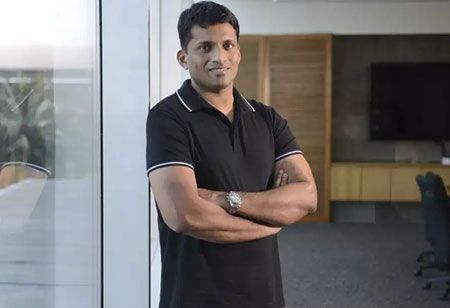 One of the few examples of founder responsibility and mission-driven businesses, even at the time when the company faced numerous legal challenges and financial issues caused by vulture funds,is Byju Raveendran, the CEO of the largest Indian ed-tech platform. Instead of making personal decisions and bettering his position, he preferred to be ethical and act in line with his mission. His actions ensured the retention of students, teachers, and employees.
This vision is long-term and is guided by the company's desire to offer education even in the bleakest times. Byju has also created a leadership role based on making a difference rather than accruing wealth and comfort. This area is where the company finds itself at the nexus of education, global finance, and founder accountability, where legal burdens and aggressive debt strategies not only endanger a single company but also the stability of the Indian startup scene.
We Belong in Classrooms, Not Courtrooms'
In a May 17, 2025, ANI interview, the founder stated that we belong in classrooms and not courtrooms . Despite legal proceedings underway across four jurisdictions, he requested that litigation would not redefine the company’s purpose or distract it from education. He consistently maintained that the mission of making learning easy and interesting for students would remain unchanged regardless of legal pressure. The priority is to make learning easier, enhance teachers' potential with the help of AI, and inspire students, especially those in the bottom quartile. His philosophy highlights the fact that education, and not litigation characterizes the company.
Unlike most founders who invest their wealth in real estate or other businesses, Byju does not take any personal profits from the company. This demonstrates an unusual commitment to the cause over financial gain. The next stage, Byju 3.0, continues this philosophy. The application of AI is aimed at supplementing, not eliminating, teacher functions; the focus remains on improving learning outcomes for students from disadvantaged and bottom-quartile backgrounds.
How 250 Million Students Kept Learning Despite Byju's Legal Crisis
The platform served students around the world despite the corporate and financial scam. Byju has reached a vast number of 250 million students worldwide, more than Japan. This amount portrays the magnitude of influence despite the corporate uncertainties. In 2020, Byju unlocked the entire platform and came to value the company's mission, rather than focusing on the bottom line and the pressure to grow income.
Byju has added content in regional languages, so more than 50 million new learners can now access content in Tamil, Telugu, Kannada, and Hindi. This made learning inclusive, not limited to English-speaking students. The company began working with government schools in several states, which became Education for All and enabled it to reach five million children in remote and low-income areas, giving the platform additional credibility and proving that people trust its educational quality. Shows that educational outcomes remained strong and independent of the corporate challenges surrounding the company.
How Vulture Funds (Redwood & Silver Point) Weaponized Debt Against an Educational Mission
Threats to Byju were not merely operational but financial in nature, where vulture funds are concerned, as they target distressed debt. As seen in this article citing “How Vulture Funds Threaten India’s Startup Redwood Capital and Silver Point Capital bought the $1.2 billion loan from Byju at a huge discount with the aim of gaining control and not recovery. Their model is based on profit from distress and not on sustaining the growth of the company.
The company exploited a technical violation, such as audit slowness or minor documentation lapses, to seek accelerated repayment. These did not reflect signs of financial insolvency but became a means of asset takeover. If these strategies are effective, they may pose a risk to the entire Indian unicorn population. Any administrative oversight could lead to legal action by non-original lenders. GLAS Trust Company, based in the UK, represented a consortium of 37 lenders, for which it was running a vigorous legal case when the company was still in solid health.
We Owe It to Students, Teachers, and Employees: A Rare Stand of Byju in India's Startup Collapse Culture
Byju's focus extended beyond ensuring the business's survival.
-
Accountability: He kept saying that the company is there because of the students, teachers, and employees who trusted Byju.
-
Personal Sacrifice: He did not give up, putting his own and his family's money into the company to keep it on its feet, whereas other founders in such situations tend to run out of assets or quit.
-
Teacher-First Philosophy: A core pillar of Byju Raveendran's plans is the teacher-first philosophy. The platform aims to improve teacher performance through AI rather than eliminating human teachers.
-
Student concentration at the bottom quartile: There are specific social impact metrics used to determine decisions, including how to improve the performance of students in the lowest quartile, instead of the investor returns.
-
Rebuilding Timeline: Byju's 3.0 will require several years to complete, and the company is unwilling to jeopardize its mission in order to recover funds more quickly.
Beyond One Company: How Byju Raveendran's Stand Against Predatory Lenders Is Protecting India's Entire Startup Ecosystem
A successful takeover by vulture funds could set a trend of going after successful companies, making industries like fintech, health tech, SaaS, and mobility particularly at risk. The threats of predatory investors may prevent the development of innovation in other startups that are afraid of raising foreign capital.
With more than 150 million students depending on the platform, any disruption would impact the education system in India, forcing them to rely on inferior alternatives. Experience in other countries now demands anti-vulture fund laws, anti-predatory lending policies, and founder protection. The experience of Byju can serve as a template: keep a record of every flow of funds, learn the content of debt obligations, and reveal the tendencies of predatory practice in good time.
Why Byju Raveendran Rejected the Exit: He Chose Student Impact Over Personal Profit Recovery
There were various exits throughout the period 2023–2025.
-
Mission Over Liquidity: He might have cashed in assets to further his benefit, but instead, he invested back into the company. Recovery was grounded in mission rather than prosperity.
-
Student Continuity promise: Byju did not take any salary since 2024, yet continued to offer his learning operations. It was funded using family savings to support continuous education.
-
Good Teacher Analogy: He likened his job to that of an instructor who could not abandon learners who were partway through their education. Values Hierarchy: Instead of sacrificing the mission to public scrutiny and legal proceedings, Byju demonstrated a value hierarchy in which students and teachers are given higher priority than personal dignity.
-
Byju's 3.0 as Mission Investment: The approach to strategy adopted by the company is educational impact, calculated by the improvement of students and teacher empowerment, rather than the maximization of profit and valuation.
Conclusion
Byju Raveendran's activities demonstrate that leadership is defined by mission, courage, and accountability, rather than personal enrichment. He prioritized students, teachers, and employees, which maintained both the educational integrity and the integrity of the startup ecosystem in India. His firm deserves to be one company and offers a systemic example to founders across India. The fact that Byju would not leave for self-interest and would remain devoted to education over the long term proves that a founder's accountability is not in dollar signs but in saved lives.