

GE Aerospace CEO Lauds PM Modi's UDAN Vision & New Investments
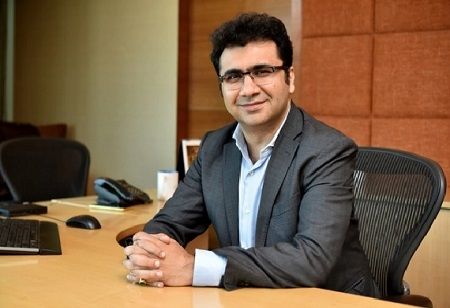 Vikram Rai, the CEO of GE Aerospace in South Asia, recently hailed the Indian government's 'Ude Desh ka Aam Nagrik' UDAN initiative at the NDTV World Summit, saying that the aerospace industry could end up being the most pivotal or enabling industry to deliver safe, sustainable flight solutions between cities and towns in India. His statement underscored how large this industry was on the growth trajectory for the country and how it could help India catch up with more massive markets, more than China or the US.
The good part is we have seen great growth in India's aviation landscape", said Rai, adding, "The government has been pushing the infrastructure very strongly, and the number of airports in the country has gone from about 100 ten years ago to over 200 now". "We will touch about 220 airports this decade", he added, reinforcing industry commitment to realizing the Prime Minister Modi's vision of UDAN.
The growing Indian middle class is soaring into the skies, according to noted benefits from the fast-growing ease of air travel. India currently has around 800 aircraft, with 1,500 more on order set to be delivered over the next decade. Two of the world's largest aircraft orders have come from Indian carriers, he explained, showcasing the burgeoning demand for air travel in the country.
Still, Rai added that the vast potential lies in the aviation sector. He drew comparisons between India's present aviation metrics and the metrics in the case of other nations. "India has 0.20 seats per capita, while China and the US have 7 and 4 seats per capita, respectively. Less than 5 percent of Indians have ever flown, and 85 percent of domestic traffic is concentrated in metro areas, indicating enormous room for expansion", he elaborated.
On sustainable aviation, Rai said Indian airlines began test flying on sustainable aviation fuel. "We have designed new engines at GE Aerospace, which are 10-15 percent more fuel-efficient, and we are hard at work on designs to create 25 percent greater efficiency", he said, "Sustainable aviation is critical to the future of air travel, and we're committed to leading this change".
Rai also mentioned that GE Aerospace has been a partner for over 40 years to the aviation ecosystem of India. He said that company has a factory in Pune established in 2015 that is producing engine components used globally. This year, we announced a $30 million investment to expand this facility that has trained over 5,000 polytechnic graduates in precision manufacturing, he said in a reflection of the commitment on skill development in the country.
The CEO announced an investment of $2.3 million in skills development worldwide with special emphasis on Indian polytechnics. "Our engineers in Bengaluru are working on next generation technologies, laying the groundwork for a robust supply chain ecosystem", he added, indicating GE Aerospace's role in fostering local talent and innovation.
Rai pointed to the joint venture GE has with Hindustan Aeronautics Limited or HAL, assemblers of LM2500 marine propulsion engines for the Indian Navy. He announced later this year, F414 military engines would start production in India at HAL, a new testament to its effort in improving indigenous production capabilities.
This sector is creating high-skill jobs and attracting valuable investments, and accordingly, it is in line with our local manufacturing ambitions, Rai added, pointing out that major progress has been made in the manufacture of aircraft parts for commercial as well as Defence intent.
At a time when over 900,000 people are flying on GE Aerospace technology at a particular point in time, Rai said, "This is a great responsibility, and we take it seriously". This further affirmation points to the accountability of GE Aerospace globally and dedication towards the advancement of India's aviation sector.