

Government Reduces Minimum Export Price on Basmati Rice
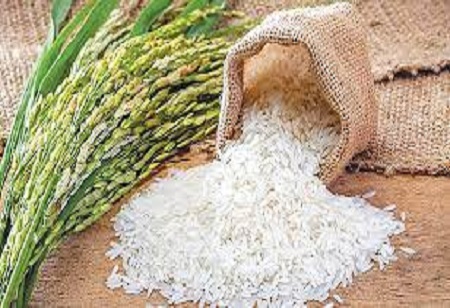 The government has agreed to reduce the minimum export price (MEP) of basmati rice from $1200 per tonne to $950 per tonne, which will provide much relief to exporters who were concerned about losing their share of global exports to Pakistan, which also produces the aromatic long grain. The government's action came after the All India Rice Exporters Association (AIREA) repeatedly requested that the MEP be reduced to commerce and industry minister Piyush Goyal. "We had a meeting with the minister late Oct 23 evening, and he agreed to reduce the MEP to $950 per tonne." He did, however, tell us that farmers should be paid fairly for their crops. He also stated that he would review the situation on a regular basis," said Vijay Setia
The government had imposed a floor price of $1200 a tonne for overseas shipments on August 25 to cool domestic prices.
"The government's decision to reduce the MEP of basmati rice from $1200 to $950 per tonne is a welcome development because it will restore Indian basmati rice shipments' competitiveness in global markets." Exporters are now working hard to reclaim lost ground. As a result, the buying cycle appears to be regaining momentum. "All key supply chain stakeholders will benefit from the decision to reduce the MEP," said Atul Garg, managing director of GRM Overseas, a basmati rice exporting firm.
He added that the lower MEP will make Indian premium quality basmati rice more appealing to global buyers. After the Indian government announced an increase in MEP, India has already lost 45 days of exports to Pakistan, which had reduced the MEP to $1050 per tonne.