

Government Sharpens Focus on Steel Output, Raw Material Security
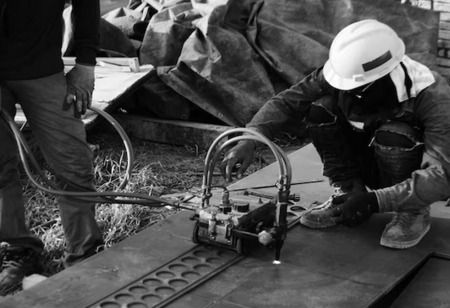
In the upcoming year, the government plans to focus on increasing steel production and ensuring raw material security as India works towards reaching a steelmaking capacity of 300 million tonnes by 2030.
According to an official from the steel ministry, in addition to increasing capacity, there will be a focus on implementing environmentally friendly technologies and creating green steel capacity.
Special attention will also be given to producing high-quality steel grades to meet the changing demands of both domestic industries and export markets.
Also Read: PNB Housing Finance Names Mukesh Agarwal as Chief Sales Officer
At present, India is the second-largest producer of crude steel globally and the demand for steel remains strong due to significant infrastructure investments, housing projects, railway developments, automobile industry, defense manufacturing, and capital goods as part of government programs like PM Gati Shakti, National Infrastructure Pipeline, and Make in India.
The sector is preparing for ongoing difficulties in 2025, such as increasing imports, fluctuating raw material costs, and uncertainties in global trade. Despite existing safeguard and anti-dumping measures, the continued influx of imports from Asian markets is still a worry for local manufacturers. The National Steel Policy (NSP) was introduced by the government in May 2017, with a goal of increasing steelmaking capacity by more than 200 MT through investments totaling approximately Rs.10 lakh crore.
The policy also aims to achieve a steel production of 250 million metric tons and a per capita steel consumption of 160 kilograms by the year 2030-31.
Also Read: Navdeep Singh Suri Takes Over as MobiKwik Chairperson
India's steel production capacity increased from 97 million metric tons in 2012-13 to 138 million metric tons in 2017-18, as per information from the steel ministry.
Subsequently, there has been a consistent growth in capacity with notable investments in both brownfield and greenfield projects by public and private sector companies.
According to the data research company BigMint, India had an installed steel production capacity of 235 MT as of November 2025, and it is expected to remain at similar levels by FY26. The projected production is 167 MT, compared to the current 110 MT. By March 2026, the estimated per capita steel consumption is 107 kg, up from the current 105 kg.
According to these calculations, the nation must increase its capacity by 65 MT in the next five years to meet the NSP targets. An official from the steel ministry stated that the government has implemented various measures to support the local industry, such as imposing safeguard and anti-dumping duties on flat steel products imported from nations like China and Vietnam.
Also Read: SBI Appoints Ravi Ranjan as Managing Director
The ministry has introduced the Production Linked Incentive (PLI) scheme to encourage the production of high-end and speciality steel for industries including defense, power transmission, renewable energy, automotive, and aviation. The government is also concentrating on enhancing the availability of raw materials. Auctions for iron ore have already started, and steel companies are being urged to take part.
The government is also pushing for the processing and conversion of low-quality iron ore to increase the efficiency of resources. Industry leaders are emphasizing the need to speed up momentum as there are only five years left to reach NSP targets. Naveen Jindal, who is the President of the Indian Steel Association (ISA), stated that India has achieved significant advancements, but there is a need for quicker implementation.