

IIT Madras Commissions the World's First Remotely Operatable Local Electrode Atom Probe - LEAP
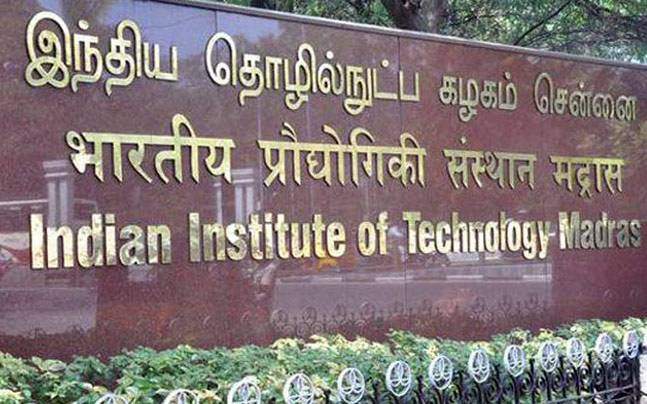
CEO Insights Team
Spearheaded by IIT Madras, the project witnessed an unparalleled, collaborated effort of eight top research-institutions in the country namely, IIT Bombay, IIT Delhi, IIT Kanpur, IIT Kharagpur and IIT Ropar, along with the International Advanced Research Centre for Powder Metallurgy & New Materials (ARCI) who jointly established this platform at a cost of nearly 40 crores. Each of these institutes made a contribution of Rs.2 crores, while the Board of Research in Nuclear Sciences (BRNS) pooled in Rs. 3 crores, the remaining funds were sourced in from the DST's ‘Nano-mission’ headed by Prof C.N.R Rao.
This model where several institutes come together to fund expensive research equipment is a useful one and can be replicated in institutions across the country. Commercial users paying a fee to use such equipment for their industrial research also make such equipment economically viable
Speaking on the occasion, Prof. Ashutosh Sharma, Secretary, Department of Science & Technology (DST), Government of India says, “We’re going to announce two polices on maintenance and sharing of science infrastructure, such as LEAP, across the country so that it can be used by a large number of people. Secondly, Scientific Social Responsibility is also a priority. Under this, science institutions must take their resources and knowledge to other stakeholders in the society”.
The inaugural function of LEAP was graced by the presence of Dr. Thomas F. Kelly, Inventor of Local Electrode Atom Probe (LEAP), and Guest of Honour, along with the esteemed presence of Prof. Ashutosh, who was also the chief guest of the event. Other prominent personalities like Dr. K.G. Pradeep, Department of Metallurgical and Materials Engineering, IIT Madras, Prof. S. Ganesh Sundara Raman, Head, Department of Metallurgical and Materials Engineering, IIT Madras, Dr. G. Padmanabham, Director, ARCI Hyderabad and Milind Palsule, Managing Director (India and Middle East), AMETEK were also present at the inauguration of the auspicious event.
The session commenced emphasizing on the importance of the technology, addressed by Dr. Thomas F. Kelly who later delivered a First Lecture of National Facility of Atom Probe Tomography (NFAPT) Lecture Series on Topic ‘Atomic-Scale Characterization with Atom Probe Tomography?.' along with other significant aspects addressed in the day.
With an intention to expand and promote the usage of the facility, Prof. Bhaskar Ramamurthi, Director, IIT Madras says, “This model where several institutes come together to fund expensive research equipment is a useful one and can be replicated in institutions across the country. Commercial users paying a fee to use such equipment for their industrial research also make such equipment economically viable”.
Although, the Atom Probe Tomography (APT) has been in existence for over 50 years, but the Local Electrode APT has been on the surface approximately for 15 years. The modern LEAP instrument, by the virtue of having Laser pulsing methods, enables the investigation of a wide range of materials from metals, ceramics to semi-conductors and even insulators with a very high acquisition rate of five million ions per hour..
The inaugural function of LEAP was graced by the presence of Dr. Thomas F. Kelly, Inventor of Local Electrode Atom Probe (LEAP), and Guest of Honour, along with the esteemed presence of Prof. Ashutosh, who was also the chief guest of the event. Other prominent personalities like Dr. K.G. Pradeep, Department of Metallurgical and Materials Engineering, IIT Madras, Prof. S. Ganesh Sundara Raman, Head, Department of Metallurgical and Materials Engineering, IIT Madras, Dr. G. Padmanabham, Director, ARCI Hyderabad and Milind Palsule, Managing Director (India and Middle East), AMETEK were also present at the inauguration of the auspicious event.
The session commenced emphasizing on the importance of the technology, addressed by Dr. Thomas F. Kelly who later delivered a First Lecture of National Facility of Atom Probe Tomography (NFAPT) Lecture Series on Topic ‘Atomic-Scale Characterization with Atom Probe Tomography?.' along with other significant aspects addressed in the day.
With an intention to expand and promote the usage of the facility, Prof. Bhaskar Ramamurthi, Director, IIT Madras says, “This model where several institutes come together to fund expensive research equipment is a useful one and can be replicated in institutions across the country. Commercial users paying a fee to use such equipment for their industrial research also make such equipment economically viable”.
Although, the Atom Probe Tomography (APT) has been in existence for over 50 years, but the Local Electrode APT has been on the surface approximately for 15 years. The modern LEAP instrument, by the virtue of having Laser pulsing methods, enables the investigation of a wide range of materials from metals, ceramics to semi-conductors and even insulators with a very high acquisition rate of five million ions per hour..