

Tata Sons Weighs Leadership Reset at Air India during Turnaround
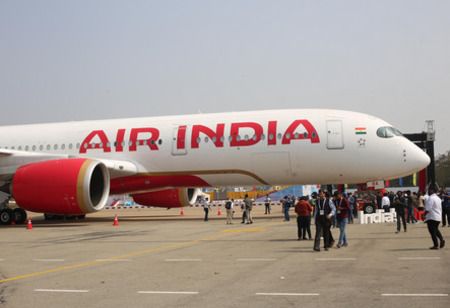
Tata Sons, the proprietor of Air India, has commenced investigating a possible change in leadership within its aviation enterprises, as the conglomerate evaluates the progress of the airline's restructuring almost three years since it returned to Tata ownership.
N. Chandrasekaran, the current chairman of Tata Sons and Air India, has engaged in initial talks with high-ranking officials from leading global airlines, including those headquartered in the UK and US, according to reports.
Also Read: Canara Bank Appoints Former PNB CGM Sunil Kumar Chugh as ED
These dialogues are believed to form a component of preliminary succession strategies and may result in a shift in Air India's leadership prior to the conclusion of the current chief executive's tenure in 2027.
Individuals with knowledge of the situation informed the publication that Chandrasekaran is becoming more apprehensive about the pace of implementation and noticeable enhancements at the airline.
Despite Campbell Wilson, Air India's CEO, being under contract until June 2027, the exact timing of any potential changeover is undecided. According to the reports, evaluations of a similar nature are being conducted at Air India Express, where Chief Executive Aloke Singh's term is also scheduled to end in 2027.
In recent months, Chandrasekaran has conducted routine performance evaluations with Wilson, as relayed by informed individuals. Reports indicated his active involvement in succession planning and disclosed his decision not to extend his tenure beyond 2027.
Also Read: Sharad Malhotra Named Managing Director of Nippon Paint India
However, group representatives contested this assertion, asserting that no discussions at the board level had transpired and that all transition preparations were under the direct purview of the group chairman.
Wilson, a native of New Zealand who assumed leadership of Air India in July of 2022, implemented a strategic plan spanning five years with the goal of revitalizing the airline's reputation on the global stage and enhancing its financial viability. The outcomes of his tenure have been varied. The integration of Vistara into Air India was carried out smoothly, causing minimal disturbance, and the airline successfully increased its capacity on crucial domestic routes, occasionally surpassing IndiGo as the leading carrier in certain metropolitan markets.
However, advancements in the overall transformation have been impeded by disruptions in the global supply chain. The slow pace of aircraft deliveries and the refurbishment of older planes have had a negative impact on the quality of service and punctuality, especially on long-distance flights to Europe and North America. Continuous technical challenges with wide-body aircraft have added additional strain to operations.
Also Read: ISRO Targets Seven Missions, Eyes Unmanned Gaganyaan Launch
The airline has come under greater scrutiny as a result of the tragic incident in Ahmedabad last year, which claimed the lives of 260 individuals. Although an initial inquiry did not uncover any issues with the plane or Air India's maintenance procedures, high-ranking government authorities opted to interact directly with Tata Group executives instead of with Wilson following the disaster. This occurrence has had a detrimental effect on his reputation, as indicated in the report.