

7 Proven Leadership Habits That Set High-Performing Business Leaders Apart

When people think about exceptional leadership, they often picture defining moments: a breakthrough innovation, a bold strategic decision, or a company-defining turnaround. Yet, the world's most successful business leaders are rarely remembered for a single action. More often, they are distinguished by the habits they practise consistently over the years.
Consider Steve Jobs, whose relentless focus on simplicity shaped everything from product design to decision-making. By constantly asking what could be removed rather than what could be added, he built Apple’s culture that prioritised clarity and impact. Similarly, Satya Nadella transformed Microsoft not through one dramatic move, but by embedding a growth mindset, empathy, and continuous learning into the organisation's culture. His leadership demonstrated that lasting transformation often begins with daily behaviours rather than grand gestures.
The importance of leadership habits has never been greater. According to Gallup's State of the Global Workplace 2026 report, global employee engagement fell to 20 percent in 2025, its lowest level since 2020, while declining manager engagement was identified as a major contributor to the downturn. Gallup estimates that disengagement cost the global economy approximately $10 trillion in lost productivity last year alone.
These findings reinforce a simple truth: leadership is no longer defined solely by authority, expertise, or operational excellence. It is increasingly measured by a leader's ability to create impact, develop people, navigate change, and build resilient organisations. While industries and technologies continue to evolve, certain leadership habits consistently separate high performers from the rest.
Drawing insights from accomplished business leaders across sectors, the CEOInsights India Team highlights seven leadership habits that distinguish exceptional business leaders and enable them to create lasting impact in an increasingly complex world.
1. High-Performing Leaders Measure Impact, Not Activity
Many leaders fall into the trap of equating being busy with progress. They focus on the number of meetings held, tasks completed, or projects delivered. However, high-performing leaders look beyond activity and concentrate on the actual value created.
Measuring impact means evaluating whether actions have generated meaningful outcomes for customers, employees, stakeholders, or the wider organisation. It shifts the conversation from effort to effectiveness and encourages teams to focus on results that truly matter.
Leaders who prioritise impact establish clear objectives linked to business outcomes rather than simply monitoring output. They regularly assess whether initiatives are solving real problems, improving experiences, or creating measurable improvements. This mindset encourages accountability and ensures that resources are directed towards activities that generate genuine value.
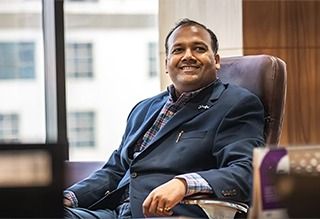 As Abhishek Agarwal, President – Judge India & Global Delivery, The Judge Group, explains, "What we measure is not what we shipped — it is what shifted for the client." As a cross-functional leader with over 25 years of experience, Abhishek speaks about building an outcome-driven ecosystem at The Judge Group. “The intent was never just to place people or deploy solutions. It was to make things work for clients.”
This perspective reflects a crucial leadership lesson: success is defined not by what an organisation delivers, but by the positive change it creates. Leaders who adopt this habit inspire teams to think more strategically and focus on outcomes that drive long-term success.
Also Read: Outcome Over Output: The New Playbook for Global Tech Leadership
2. High-Performing Leaders Think Long-Term, Not Just Fast
In today's fast-moving business environment, speed is often celebrated. While agility remains important, successful leaders understand that sustainable growth requires balancing immediate action with long-term thinking.
Leaders who think long-term avoid making decisions solely for quick wins. Instead, they evaluate how their choices will affect future growth, organisational culture, customer relationships, and overall resilience. They are willing to make investments today that may not deliver instant rewards but create lasting value over time.
This habit also helps leaders remain focused during periods of uncertainty. Rather than reacting impulsively to short-term pressures, they maintain clarity around their broader vision and strategic objectives.
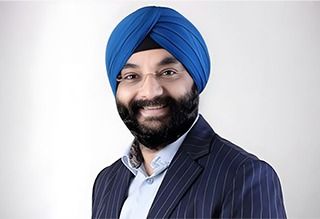 Gurjeet Singh, Founder of integrated technology solutions provider, Global IT Business Solution, captures this approach perfectly, "Every business has its own identity, but the overall vision remains aligned. I focus on understanding the long-term impact of decisions instead of chasing short-term gains."
Leaders who embrace long-term thinking build stronger organisations by prioritising sustainability over short-term success. Their decisions are guided by purpose, ensuring that growth remains consistent and meaningful.
3. High-Performing Leaders Put People at the Centre of Every Decision
Technology, processes, and performance metrics are essential for organisational success, but people remain the foundation of every thriving enterprise. High-performing leaders recognise that lasting success depends on understanding and supporting the individuals who contribute to it.
People-centric leadership involves creating environments where employees feel valued, heard, and empowered. It requires leaders to understand evolving workforce expectations and adapt accordingly. Teams that feel respected and supported are often more engaged, innovative, and committed to organisational goals.
Leaders who place people at the centre actively seek feedback, encourage collaboration, and create workplaces that foster both productivity and wellbeing. They understand that strong cultures are built through trust, empathy, and meaningful human connections.
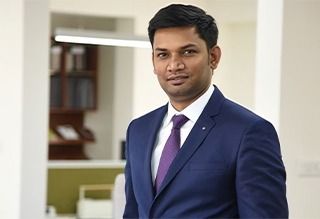 Vamsidharr Setty, Managing Director India, The Senator Group, highlights this shift in workplace expectations, "As technology enables work from almost anywhere, the office must justify its relevance. Increasingly, employees want workplaces that feel less institutional and more human."
This insight underscores the importance of designing experiences that prioritise people rather than processes alone. Leaders who adopt this habit create environments where individuals can thrive, resulting in stronger organisational performance.
4. High-Performing Leaders Build Systems That Outlast the Leader
Exceptional leaders understand that true leadership is not measured by personal influence alone. It is reflected in the systems, processes, and cultures that continue to succeed even when the leader steps away.
Building sustainable systems requires leaders to document knowledge, develop future leaders, and create structures that enable consistent performance. Rather than becoming the centre of every decision, they empower others to take ownership and contribute meaningfully.
This habit reduces dependency on individual personalities and strengthens organisational resilience. Teams become more capable, decision-making becomes more distributed, and growth becomes more scalable.
 Rohith Reji, CEO, Neokred, a fintech company, offers a powerful perspective: "The highest expression of leadership, in my view, is building systems and cultures that are greater than any single person's contribution, including the leader's."
Leaders who focus on creating enduring systems leave behind a legacy of stability and growth. Their impact continues long after their direct involvement ends, ensuring sustained organisational success.
Also Read: India’s Fintech Future in the Age of Invisible Finance
5. High-Performing Leaders Lead with Empathy and Cultural Intelligence
Modern leadership increasingly requires the ability to navigate diverse teams, global markets, and varied cultural perspectives. High-performing leaders understand that empathy and cultural intelligence are essential for building trust and fostering inclusion.
Empathy allows leaders to understand different viewpoints, recognise challenges, and respond thoughtfully. Cultural intelligence helps them adapt their leadership style to different contexts while maintaining fairness and consistency.
Together, these capabilities strengthen collaboration, improve communication, and create environments where people feel respected regardless of their background. Leaders who possess these qualities are better equipped to manage complexity and drive performance across diverse teams.
 Rolf Bezemer, General Manager – International, First Advantage, explains, "Success begins with establishing clear global policies that uphold shared values such as fairness, inclusion, and transparency. At the same time, it is essential to accommodate localised practices that respect regional norms, legal frameworks, and cultural sensitivities."
This balanced approach demonstrates how empathy and cultural awareness can coexist with strong organisational standards. Leaders who embrace both are better positioned to unite teams and drive collective success.
6. High-Performing Leaders are Changemakers, Not Just Managers
Management focuses on maintaining processes and ensuring operational efficiency. Leadership, however, requires creating momentum, inspiring innovation, and driving transformation.
High-performing leaders do not simply oversee existing systems; they challenge assumptions, identify opportunities, and encourage new ways of thinking. They recognise that change is inevitable and view it as an opportunity rather than a threat.
Being a changemaker requires curiosity, adaptability, and courage. These leaders continuously seek improvement and encourage their teams to experiment, learn, and evolve. They create cultures where innovation becomes part of everyday work rather than an occasional initiative.
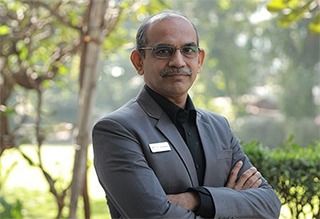
Biren Parekh, Director, CRISIL, highlights the importance of this mindset, "By embracing the power skills, they (leaders) can think differently, change the game, and drive the change that our VUCA world demands."
In an increasingly volatile and unpredictable environment, leaders who champion change help organisations remain relevant and competitive. Their ability to inspire transformation often becomes a key differentiator.
Also Read: Power Skills for Leaders
7. High-Performing Leaders Stay Connected Confidently and Responsibly
The modern leadership landscape is characterised by constant connectivity. Information flows continuously, decisions happen rapidly, and leaders are expected to remain accessible across multiple channels.
However, effective leadership is not about being connected to everything at all times. Instead, it involves maintaining meaningful connections while exercising judgement, discipline, and responsibility.
High-performing leaders know how to balance engagement with focus. They stay informed without becoming overwhelmed, communicate transparently, and ensure that their actions reflect organisational values. This habit helps them make better decisions and build stronger relationships with stakeholders.
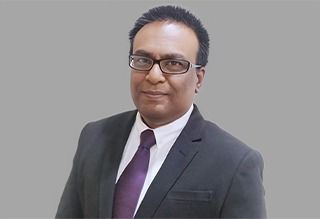 Entrepreneur, Cheruku Srikanth, Founder & CEO, Digital CFO, captures this principle succinctly, "In the end, it isn't about being connected to everything. It is about staying connected, confidently and responsibly."
Leaders who master this balance maintain clarity in complex environments. They foster trust by communicating effectively and demonstrating accountability through consistent actions.
Leadership Excellence Is Built Through Daily Habits
The difference between average and exceptional leadership rarely comes down to talent alone. More often, it is the result of consistent habits practised over time. Measuring impact, thinking long-term, prioritising people, building enduring systems, leading with empathy, driving change, and staying responsibly connected are habits that create lasting influence and sustainable success.
As organisations continue to navigate evolving challenges and opportunities, leaders who cultivate these behaviours will be better equipped to inspire teams, deliver meaningful outcomes, and create value that endures. Ultimately, leadership excellence is not defined by a single achievement but by the daily choices and habits that shape a leader's impact over time.