

Outcome Over Output: The New Playbook for Global Tech Leadership
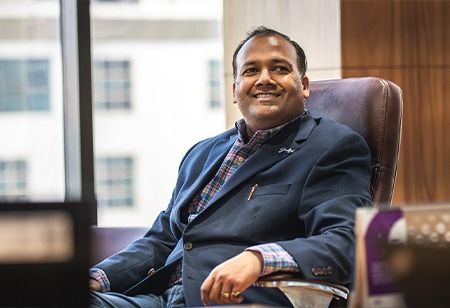
Abhishek Agarwal is a seasoned leader in global technology and talent ecosystems, known for driving digital transformation and scaling innovation-led teams across the United States, Europe, and India, enabling enterprise solutions across AI, cloud, and automation.
In a thought-provoking interaction with CEO Insights magazine, Abhishek shares his views on building outcome-driven global ecosystems, aligning technology with business impact, embedding AI and cloud into operations, fostering customer-centric cultures, rethinking scale, and guiding leaders to create sustainable, high-impact organizations.
As President of Judge India & Global Delivery, how do you define an outcome-driven global technology and talent ecosystem, and why is it critical today?
An outcome-driven ecosystem is one where technology, talent, and business objectives are woven together from day one — not assembled later and hoped to align. The Judge Group was built on exactly this foundation. The intent was never just to place people or deploy solutions. It was to make things work for clients. That purpose has carried through to what we do in India today. Organisations are operating in genuinely complex environments, and the bar has moved from implementation to accountability. What we measure is not what we shipped -- it is what shifted for the client.
Also Read: Biocon Names insider Shreehas Tambe as MD & CEO
Having built and scaled GCCs and profit centres, what key principles guide you in aligning technology capabilities with measurable business outcomes across global markets?
The first principle, and I would say the most important one, is to start with the business problem rather than the technology. It sounds straightforward, but it is remarkable how often that discipline breaks down under the pressure to demonstrate technical capability.
At Judge India Solutions, whether we are working on Cloud, AI, or managed services, the conversation always begins with what the client is trying to solve. Scalability is the second principle -- solutions that work beautifully in one context and collapse under growth are not solutions; they are proof of concepts that overstayed their welcome. Governance and clear performance metrics tie it all together. Teams that understand both the technical execution and the business context in which it sits deliver outcomes that hold.
With experience across AI, cloud, and automation, how do you ensure these technologies translate into tangible client value rather than remaining as isolated innovation initiatives?
We have moved firmly past the experimentation phase. That is both a market reality and a deliberate choice. AI, cloud, and automation create meaningful value only when they are embedded in core operations -- not sitting in a lab alongside the main business. The way we work with clients is to identify specific, real use cases: improving operational efficiency in manufacturing, enabling better customer engagement in financial services, and supporting faster decision-making in supply chain. We deploy, we measure, we refine. AI is horizontal; it cuts across ServiceNow, SAP, semiconductors, and everything else we do. The integration is the work. The results are what get clients to the next conversation.
Leading diverse global teams, what strategies have helped you create a culture that balances execution excellence, innovation, and strong customer-centricity across geographies?
Trust and clarity of purpose are where it starts. If teams do not understand why their work matters -- not just operationally but in terms of client impact, you end up with people executing tasks rather than solving problems. That is a different quality of output, and everyone in the room can tell the difference.
Also Read: EAM Jaishankar, Canadian FM Anand Discuss Deepening Ties
What has worked for us across our offices in Noida, Bengaluru, and Hyderabad is giving teams genuine ownership within a structured framework. Autonomy without structure produces chaos; structure without autonomy produces bureaucracy. The balance is what drives innovation. Customer-centricity must live in everyday decisions, not in a separate function that gets consulted occasionally.
In your journey of building global delivery ecosystems, what is one belief about scaling technology or talent that you have completely rethought over time?
I used to believe that scaling was fundamentally about expansion -- more people, more locations, more capabilities, faster. That thinking is not wrong, but it is incomplete in a way that costs us real learning. Scale without alignment creates complexity, and complexity is the enemy of delivery quality.
What I have come to understand is that a smaller team that is deeply aligned on purpose, technically excellent, and genuinely close to the client will consistently outperform a larger team that is not.
Almost a decade that we have spent in India has reinforced this repeatedly. Growth in the right direction, at the right pace, with the right people, that is the model that holds.
Also Read: Relaxo Footwears Elevates Gaurav Dua, Ritesh Dua as Co-CEOs
From your journey as a leader, mentor, and builder, what advice would you share with leaders aiming to create sustainable, outcome-focused global organisations?
Stay focused on outcomes rather than activities. It sounds simple, and it is genuinely hard to maintain under pressure, because activities are visible and measurable in ways that outcomes often are not until much later. The second thing is to invest seriously in your people's capacity to adapt. Technology will keep moving -- what stays constant is the human ability to think critically, collaborate effectively, and stay connected to what the client needs. Judge India Solutions has been built on the conviction that long-term relationships, built on consistent delivery and honest communication, are worth more than any individual engagement. That is the kind of organisation worth working to build.