

9 Indian CEOs With Surprising Career Origins
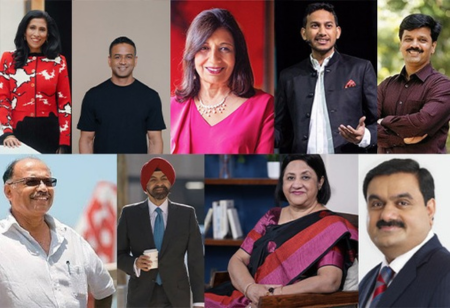 A career does not always announce which direction it is headed in. Sometimes, the road to the corner office begins on a factory floor, behind a call-centre desk, inside a military camp or even at a small repair shop. For some of India’s most recognised CEOs, the first chapter of their professional lives looked nothing like the businesses they would eventually build or lead.
A young brewmaster who was denied a job owing to her gender went on to build one of India’s biggest biopharmaceutical companies. A management trainee who spent his early years selling Maggi noodles eventually became the first person of Indian origin to lead the World Bank. An Army captain who experimented with farming, poultry, and a motorcycle dealership before entering aviation went on to make air travel affordable for millions of Indians.
These stories challenge the conventional idea that successful leaders must follow a carefully mapped career path.
Also Read: 11 Highest-Paid CEOs in India: Biggest CEO Compensation Packages
Evolving Skills & Career Pivots: The Mark of Successful Business Leaders
Education, industry, and job titles may shape a career, but adaptability often determines how far one can go. The World Economic Forum’s Future of Jobs Report 2025 highlights that nearly 40% of workers’ core skills are expected to change by 2030, underlining how important continuous learning and the ability to navigate change have become. LinkedIn’s Work Change Report 2025 also estimates that 70% of the skills used in most jobs will change by 2030, reflecting the increasingly fluid nature of modern careers.
India’s corporate landscape offers compelling examples of this shift. Leaders who began in HR, banking, diamond trading, consumer goods, electronics repair, military service and call centres have gone on to shape businesses spanning luxury, biotechnology, technology, financial services, cybersecurity, hospitality and aviation. Their unconventional beginnings were not necessarily disadvantages; in many cases, they became sources of resilience, customer understanding, operational discipline and fresh perspectives.
What makes these journeys remarkable is not simply that these leaders changed careers. It is that they transformed experiences from one world into advantages in another, proving that a non-linear beginning can become a powerful leadership asset.
The CEO Insights India team profiles nine Indian CEOs whose professional journeys took unexpected turns before they reached the top. Read all about top Indian CEOs’ successful career pivots that led to their rise in the industry.
Gautam Adani: From Diamond Trading to Building a Global Conglomerate
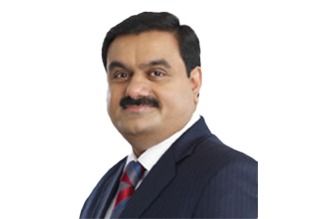 Before becoming one of Asia's richest industrialists, Gautam Adani dropped out of his commerce degree as a teenager and moved to Mumbai to sort diamonds for a trading firm, starting at ground level in an unrelated trade. After a few successful years there, he returned to Gujarat to help run his brother's plastics business, which exposed him to commodities trading and import-export.
He founded Adani Enterprises in 1988, and over the following three decades expanded into ports, power, airports, cement and renewable energy. As founder and chairman, Adani has built one of India's largest business conglomerates, though the journey hasn't been without turbulence; the group faced a major stock rout and allegations from a US short seller in 2023, which it has strongly denied and largely weathered. His net worth is estimated between $89.2 billion and $92.6 billion, and the diamond-sorting job remains one of the more improbable origin stories in Indian business.
Leena Nair: From HR Leadership to Global Luxury CEO
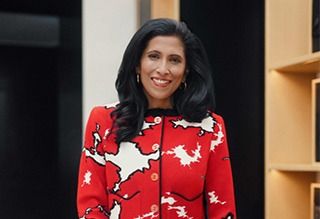 Leena Nair's first degree was in Electronics and Telecommunications Engineering from Walchand College of Engineering, about as far from haute couture as it gets. She joined Unilever in 1992 as a management trainee straight out of an MBA at XLRI, working her way up from the factory floor through HR roles and eventually becoming Unilever's youngest-ever, first female, and first Asian Chief Human Resources Officer in 2016, overseeing a workforce of 150,000 people across 190 countries.
In January 2022, after three decades in consumer goods and HR, Chanel handed her its global CEO role, making her the first CEO of Indian origin at a major luxury fashion house, and the first to reach that seat via HR rather than merchandising or finance.
Nair had never worked in fashion, retail or luxury before taking the job. Under her, Chanel scaled the annual funding of its philanthropic arm, Fondation CHANEL, to roughly $100 million to support women- and girl-focused programmes globally. Revenue climbed to a record $19.7 billion in 2023 before a tougher year; 2024 revenue dipped 4.3% to $18.7 billion amid a broader luxury slowdown, which Nair has publicly framed as an "ebb" within a long-term strategy. Now in her fifth year running Chanel, she has focused on embedding the "human-centred leadership" philosophy she built at Unilever into a 100-year-old maison famous for guarding its traditions fiercely, proof that an outsider's playbook can work even in the most insular industries, even in a harder market.
Kiran Mazumdar-Shaw: From Brewing Aspirations to Biopharma Super Entrepreneurship
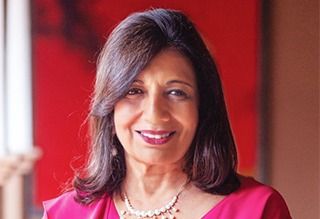 Kiran Mazumdar-Shaw didn't set out to build a pharmaceutical empire; she set out to be a brewer, like her father, who was head brewmaster at United Breweries. She trained as a master brewer at Ballarat College in Australia (now Federation University Australia), topping her class as the only woman in it and graduating in 1975. Returning to India, she found no brewery would hire a woman for a technical role.
That rejection redirected her entirely. In 1978, with ₹10,000 in capital, she launched Biocon India from her garage in Bengaluru, initially producing industrial enzymes. She has led the company for nearly five decades, first as managing director and now as executive chairperson, steering it through a pivot from enzymes to biosimilars, insulin and oncology drugs now sold in over 120 countries. Along the way, she battled scepticism from banks and vendors who refused to deal with a woman-run business. Biocon today is India's largest listed biopharmaceutical company by revenue, with FY25 revenue of roughly ₹16,470 crore, a company built almost entirely on the professional rejection that redirected its founder's path.
Ajay Banga: From Selling Consumer Goods to Leading Global Finance
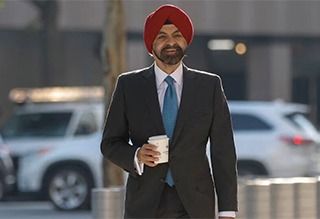 Ajay Banga's career began nowhere near a boardroom; he joined Nestlé India in 1981 as a management trainee, spending 13 years selling consumer goods including Maggi noodles and helping launch Pizza Hut in India, before a stint at PepsiCo. He moved into finance only in 1996, joining Citigroup and eventually running its Asia-Pacific business.
He became President and CEO of Mastercard in July 2010, a role he held for over a decade. Under his leadership, Mastercard's revenue roughly tripled, and its market capitalisation grew from under $30 billion to more than $360 billion, while the company connected hundreds of millions of previously unbanked people to formal financial systems. In 2023, Banga pivoted again, nominated by the Biden administration and elected President of the World Bank, becoming the first person of Indian origin to lead the institution, currently serving a five-year term that began in June 2023. From noodles to global development finance, it's one of the more unlikely full-circle career arcs in the business world.
Arundhati Bhattacharya: From English Literature to Banking and Enterprise Technology
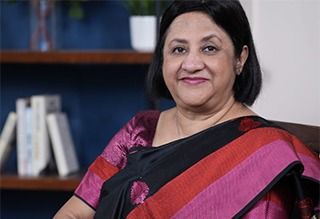 Arundhati Bhattacharya studied English Literature at Jadavpur University and once dreamed of becoming a print journalist. On a whim, she sat the State Bank of India's probationary officer exam alongside college friends in 1977 and cleared it, launching a 40-year banking career she hadn't planned for.
Also Read: 10 Rarely Spoken About Leadership Challenges & How to Overcome Them
She rose to become SBI's first-ever woman chairperson in 2013, a role she held for four years, digitising India's largest bank and pushing through reforms in a famously conservative institution. After retiring in 2017, she assumed she was done with full-time leadership, until Salesforce came calling in 2020 with an offer to run its India operations, a pivot she has described as "never planned," moving from public-sector banking to American enterprise tech in her sixties. Under her leadership, Salesforce's South Asia team has grown more than sixfold, from around 2,500 to over 18,000 people, in one of the company's fastest-growing markets globally.
Kailash Katkar: From Repairing Calculators to Building a Cybersecurity Company
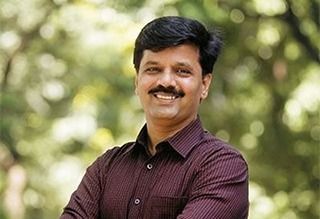 Kailash Katkar dropped out of school after his family hit financial difficulty and took a job repairing radios and calculators in Pune for ₹400 a month. In 1990–91, with ₹15,000 in savings, he opened his own repair shop, a business that, on paper, had nothing to do with software.
As personal computers spread through India in the 1990s, Katkar and his brother Sanjay noticed how often machines came in with virus problems and pivoted the repair shop into antivirus software development. They launched their first Quick Heal product in 1995. Katkar has led the company as MD and CEO ever since, taking it public in 2016 with a ₹250-crore IPO. Quick Heal is now one of India's leading cybersecurity firms, with operations across Japan, the US, Africa and the Middle East, a company literally built by a school dropout who once fixed calculators for a living.
Nithin Kamath: From Call-Centre Night Shifts to Fintech Entrepreneurship
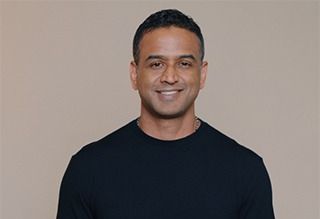 Long before he became one of India’s most recognisable fintech entrepreneurs, Nithin Kamath was a teenager struggling to make sense of the stock market. He began trading at 17, managing his father’s account and experimenting with penny stocks while studying engineering at the Bangalore Institute of Technology. The early years were unforgiving. After the 2001 market crash, Kamath accumulated significant trading losses and debts.
To rebuild his finances, he spent more than three years working night shifts as a telesales executive at a call centre, while trading during the day. Once he cleared his debts, he became a proprietary trader and, in 2006, a franchisee for Reliance Money through his own firm, Kamath & Associates.
His experience in traditional brokerage exposed what he saw as an outdated, commission-heavy system. In 2010, Kamath and his younger brother, Nikhil Kamath, launched Zerodha, introducing flat-fee discount broking when percentage-based commissions still dominated the market.
Over the next 15 years, Kamath transformed Zerodha into one of India’s largest brokerages. The company had around 7.5 million active clients in 2024 and reported ₹9,372 crore in consolidated FY24 revenue. Built without external venture capital, Zerodha became a landmark in India’s bootstrapped startup story, powered by a founder who once worked nights to pay off his trading debts.
Ritesh Agarwal: From Selling SIM Cards to Transforming Global Hospitality
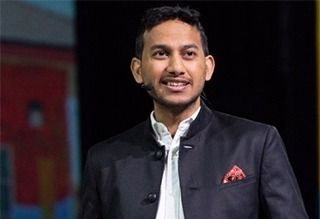 Ritesh Agarwal's early hustle was selling SIM cards in small Odisha shops as a teenager, alongside stints exploring India's budget travel and hospitality scene as a college dropout in his late teens, a journey that also earned him a Peter Thiel Fellowship. What he found on those trips- wildly inconsistent quality in budget accommodation- became the problem he set out to solve.
He founded OYO Rooms in 2013 at just 19 years old and has served as its founder and CEO for over a decade, scaling it from a single-city listing service into a global hospitality network. OYO's valuation peaked at around $10 billion in 2019 before a sharp correction during the pandemic years, forcing Agarwal to steer the company through a painful, closely watched restructuring. The turnaround since has been striking: the parent company, now rebranded PRISM, reported a 50% jump in operational revenue to ₹9,358 crore for FY26, with net profit up roughly 4x to ₹994.2 crore, driven in large part by its acquisition of US-based G6 Hospitality (Motel 6). PRISM is now actively pursuing a public listing, with a fresh IPO issue of up to ₹6,650 crore, a sharp reversal of fortune for a company that was, only a few years ago, fighting for survival.
Captain G.R. Gopinath: From Army Service and Farming to Affordable Aviation
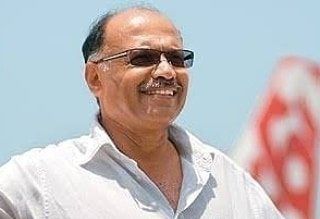 Before he gave India its cheapest-ever air ticket, G.R. Gopinath was an Indian Army officer, trained at the National Defence Academy. After leaving the forces, he tried his hand at an unusually wide range of trades: dairy farming, sericulture, poultry farming, running a hotel, even an Enfield motorcycle dealership, before finding his way into aviation almost by accident, first through a helicopter charter service in 1997.
In August 2003, Gopinath launched Air Deccan, India's first low-cost airline, with a single daily flight between Bengaluru and Hubli. Within four years, it was flying 380 flights a day from 67 airports and had put an estimated 3 million Indians on a plane for the first time at fares as low as ₹1. Rising fuel costs and mounting losses eventually forced him to sell the airline to Vijay Mallya's Kingfisher in 2007, a bittersweet ending to a venture that had permanently changed how India flies, paving the way for the low-cost carriers that dominate the skies today.
When Career Pivots Become Leadership Strengths
The journeys of these nine leaders show that there is no single blueprint for reaching the top. Their early careers ranged from HR and banking to diamond trading, electronics repair, military service and call-centre work, yet each eventually found a way to turn those experiences into leadership advantages.
What connects their stories is not a perfectly planned career trajectory, but the ability to recognise opportunities, learn from setbacks and adapt when circumstances changed. For some, rejection forced a new direction; for others, financial hardship or curiosity opened the door to an entirely different industry. Their transitions also demonstrate how skills gained in one profession can become valuable in another, whether it is operational discipline, customer understanding, people management, financial acumen or the confidence to challenge established systems.
As industries continue to evolve and the skills required for leadership change with them, these stories offer an important lesson for professionals at every stage of their careers. A first job does not have to define a final destination. Sometimes, the most unexpected career detours can become the experiences that shape the most effective leaders.