

AI, Traceability, and the Future of Food Supply Chains
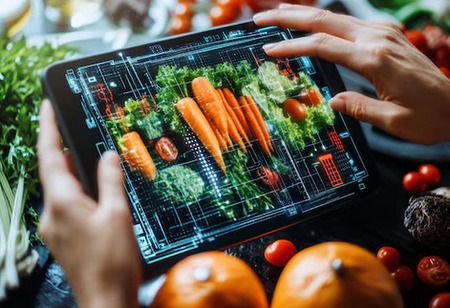
Food safety is becoming a strategic priority in today's interconnected supply chains. The article examines how digital technologies, supplier management, traceability systems, and organizational culture are helping businesses enhance food safety, address emerging risks, and meet growing consumer expectations for transparency and accountability.
Food supply chains are experiencing a significant transformation driven by changing global market needs, technological progress, and growing sustainability issues. The sector is experiencing increasing pressures due to escalating expenses, supply chain interruptions, and changes in regulations. Consequently, companies need to reevaluate their strategies for food logistics and distribution to stay competitive and robust.
Mapping the Journey from Farm to Fork
The food supply chain includes every phase that food items traverse as they travel from producers to customers and consumers. Currently, food supply chains are experiencing significant growth. Although this might first appear advantageous for food production processes, it ultimately results in the chains becoming more fragmented. This complicates the ability for consumers to easily trace the origins of their food, as it is often transported from various parts of the globe over extended periods.
Certain critical phases exist in the food supply chain, including:
- Production: This is the stage in which the food supply originates at a production level, and where the food is obtained. Regardless of whether it is cultivated or processed, the food will adhere to local and global standards to ensure safety and quality.
- Handling and Storage: This pertains to the processes and final actions that food experiences after the product has been collected. This action will take place prior to food being sent for processing.
- Processing and Packaging: This stage involves transforming food, sourced from either plants or animals, into a consumable format. It is particularly crucial that the food complies with all food safety standards prior to being packaged for sale and distribution.
- Distribution: This is the stage where, after the food is ready to eat, it is transported and delivered to the required retailer or supplier.
- Retailing: This refers to the method of transferring products from suppliers to consumers, encompassing all steps from sourcing the food to its sale.
- Consumption: This occurs after the customer buys food from a retailer.
The Link Between Supply Chains and Food Safety
 Supply chain management significantly influences food safety by including all activities and processes required for the proper handling and storage of food. Effective supply chain management can guarantee that food reaches the consumer safely and hygienically while ensuring that food safety is upheld throughout the supply chain. On the other hand, inadequate supply chain management may result in food safety problems, including contamination, spoilage, and foodborne diseases.
Also Read: FSSAI Mandates 'Vegan' Logo on Approved Food Packages from 2027
According to Amit Goyal, CEO & Director, Amar Pure Gold, one of the biggest food safety challenges today stems from the increasing complexity of global supply chains. He notes that as businesses expand into new markets, maintaining consistent quality, safety, and accountability across every stage of the value chain becomes increasingly difficult.
"Food safety is no longer just a compliance requirement. It is central to consumer trust," he says, adding that consumers today want greater visibility into sourcing, manufacturing processes, and product integrity.
Harnessing Technology for Safer Food Supply Chains
For years, hazard analysis and critical control point (HACCP) management has served as the cornerstone of food safety oversight, but numerous companies continue to depend on obsolete, paper-driven methods despite the availability of smarter digital solutions.
The upcoming advancement in food safety performance will be propelled by digital technology that transitions the data model from 'momentary captures' to an ongoing flow of accuracy. Digital HACCP is essential. Through leveraging real-time data and AI-powered insights, businesses can predict risks prior to their intensification, facilitating proactive hazard management and quicker decision-making.
Growing regulatory demands emphasize the changes that food companies need to address. Starting in January, US food companies are required by Section 204 of the federal Food Safety Modernization Act to improve end-to-end traceability and documentation for high-risk foods. In Europe, regulations require digital labeling and Digital Product Passports in the food and beverage sector to improve traceability, transparency, and consumer awareness. With supply chains growing more intricate, technology and innovation will play a crucial role in enhancing food safety.
From Reactive to Predictive Food Safety
Food safety can no longer be a responsive effort – it must be anticipatory, swift and exact. At the Global Food Safety Initiative (GFSI), we hold that every individual is entitled to safe food access – and we acknowledge the vital role that innovation plays in achieving this.
During the forthcoming GFSI Conference in Vancouver, we will examine how AI-enhanced food safety can aid the industry, spanning from detection to prevention, as we acknowledge the progress in technology related to food safety.
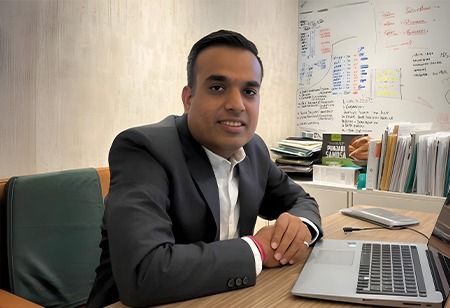 AI is shifting the emphasis from reacting to foodborne illness outbreaks to proactively anticipating them. Machine learning models are capable of assessing data throughout production processes to predict risks like contamination or equipment malfunctions before they arise.
At the same time, real-time observations and Internet of Things (IoT) sensors are substituting manual inspections, offering constant, instant data on essential factors like temperature and humidity in cold chain logistics – an essential aspect of food safety.
In other locations, within seconds instead of days, whole genome sequencing is evolving into an essential tool for supply chain transparency, allowing businesses to trace the DNA of bacteria back to the specific farm or factory of origin, while blockchain can track the digital journey of a product through the supply chain, thus minimizing the extent and expenses of recalls.
Amit believes technology has fundamentally transformed food safety management from a reactive process into a predictive one. He points to the growing adoption of IoT-enabled manufacturing systems and digital traceability platforms that allow businesses to monitor production parameters in real time, reduce variability, and identify potential risks before they escalate. He adds that technology is increasingly becoming a trust-building tool, enabling manufacturers to strengthen transparency and respond more effectively to quality concerns.
Also Read: How Arulsujanesh Turned Failures to Success Flavors: The Annapoorna Mithai Story
Building a Reliable Supplier Network
Recognizing and tackling any possible problems in your supply chain that may lead to food contamination, spoilage, or other food safety concerns is critically important. It is vital for you to maintain an unblemished reputation, and even more crucial for the well-being and safety of your customers. When selecting suppliers to collaborate with or assessing current ones, specific criteria must be considered.
A supplier approval system consolidates research and risk evaluations for each supplier, enabling ongoing performance monitoring, important data collection, and the establishment of regular audit reminders. Keeping an authorized list of suppliers for obtaining your raw materials will become more than just a ‘tick box task’. Additionally, from a business perspective, streamlining your intricate, manual supplier approval processes will significantly cut down the time dedicated to risk evaluations while also lowering the chances of a significant weakness being overlooked in a congested Excel sheet.
Following thorough evaluation in selecting your supplier, it is advised that you perform a third-party audit. Evaluating a prospective supplier based on their own criteria is the most effective method to guarantee food safety, enabling you to identify problems that may have been missed or concealed. While audits can generate significant stress, this stress is essential when the alternative involves tracking— or rather trying to track— supplier performance by hand.
In the absence of clear data identifying suppliers that present a food safety risk, it is not possible to effectively differentiate between reliable suppliers and those that may jeopardize your food safety. This is particularly accurate in a bigger or more complex supply chain. Supplier approval SOP software is crucial for ensuring food safety from production to consumption. It enables you to monitor supplier performance and utilize data-driven dashboards to notify you proactively if a supplier's effectiveness starts to wane.
Tracking Food from Source to Consumer
Monitoring the path of food from its origin to the moment it is consumed is crucial. In the event of a foodborne illness outbreak, it's crucial to identify the source promptly and ensure containment of the spread. The ability to trace food in the supply chain offers an effective method to pinpoint and withdraw any contaminated products.
A digital food management system needs to be established to guarantee the traceability of finished products back to their original raw materials. This system must log the batch codes of every ingredient in the production records. Moreover, transit packaging and labeling for all intermediate goods must feature product details, time/shift/date, and codes. What is the advantage of a digital system? Sophisticated analytics can recognize any developing problems in a specific product or lot, uncovering issues much earlier than a manual system could.
Building a Culture of Food Safety
Amit argues that food safety cannot be delegated solely to quality assurance teams; it must be embedded across sourcing, manufacturing, logistics, and customer-facing operations. According to him, leadership plays a crucial role in setting standards and ensuring that quality is never compromised for short-term gains.
This may be among the greatest hurdles in the food manufacturing sector, particularly in larger companies with a complex supply chain. Tracking the required training for every department is a huge task, especially with the various requirements and regulations across different business sectors that create potential learning gaps.
Incorporating a document and knowledge management system not only simplifies the dissemination of updated protocols or recalls but also promotes communication among supply chain stakeholders, ensuring that changes in food safety standards are swiftly communicated and enforced. Additionally, with automatic version numbering, the distribution of obsolete processes is no longer an issue. It's no surprise that investing in technology is essential and, as some might contend, the sole path ahead. Technology undoubtedly plays a vital role in enhancing food safety and ensuring your staff stays updated on current regulations.
Also Read: Thippeswamy Papareddy: Driving Quality Culture In The Food Industry
While technology is becoming indispensable, experts emphasize that food safety ultimately depends on organizational culture.
Emerging Risks and Future Challenges
The supply chain for food is extremely intricate, mainly because of its extensive nature. As the number of stages and areas increases, the probability of disruptions grows. The size of the chain itself complicates monitoring and management. The increase in processes results in heightened interference and challenges. In light of this context, we can envision numerous interruptions in the food supply chain.
- Health emergencies: Throughout the Covid-19 pandemic, food plants contributed to several localized virus outbreaks, resulting in temporary closures of factories and/or diminished operations. Facilities stayed closed and could only resume operations once conditions improved and safety measures were in place.
- Geopolitical tensions: The international food supply chain has grown increasingly intricate, with nations depending on one another for particular goods. Conflicts can interrupt the flow of raw materials, affecting quality and raising costs.
- Energy and environmental challenges: Severe weather occurrences such as droughts and wildfires can harm soil, complicating agriculture. Overuse of pesticides and depletion of resources can raise expenses and hazards. A lack of resources can also interfere with the supply chain.
Internal Operational Risks
While external factors such as pandemics, geopolitical tensions, and environmental challenges can disrupt food supply chains, organizations must also contend with internal operational risks. These often stem from inadequate quality procedures and inefficiencies across manufacturing, processing, and distribution activities. Common challenges include:
- Human error.
- Utilization of old and ineffective tools and technologies.
- Absence of uniformity and automation in procedures.
- Hazardous workplace conditions.
These are merely a few instances of internal challenges that can influence the entire food supply chain, with the absence of technology being especially worrisome. If the remainder of the chain is modernizing and digitizing, those who fail to invest not only lag behind; they also impede the advancement of the entire following process. This may lead to delays and even possible contamination along with more serious concerns.
The Road Ahead: Trust, Transparency, and Technology
Looking ahead, Amit expects food safety to evolve from a compliance-driven function into a strategic business differentiator. Technologies such as AI-powered analytics, real-time monitoring systems, and digital traceability platforms are expected to become standard industry practices, while growing consumer demand for transparency will push companies toward greater farm-to-fork visibility. "The future of food safety will be defined by trust," Amit says, noting that brands that consistently demonstrate transparency, reliability, and accountability will be best positioned to succeed.
Safe Food for All: A Shared Responsibility
Safe food is not a matter of chance. This is accomplished through the joint efforts of all food safety participants throughout the full value chain from farm to table. Ensuring food safety universally is crucial for safeguarding public health and fostering economic growth. Food safety must be ensured in all locations, including traditional markets where millions obtain their daily meals. Let us act by enhancing food safety practices, backing traditional markets, investing in hygiene and education, and collaborating to ensure safe food is available to all, everywhere.
The moment has come to ensure food safety is genuinely inclusive, encompassing all aspects of the food system, including traditional markets, street vendors, small producers, transporters, and households. Conventional markets serve as the foundation for food distribution for countless individuals. They need increased focus, specialized investment, hands-on training, and suitable infrastructure to guarantee safe food for everyone.