

An Eye for AI in the Blood Streamline of Modern Medicine
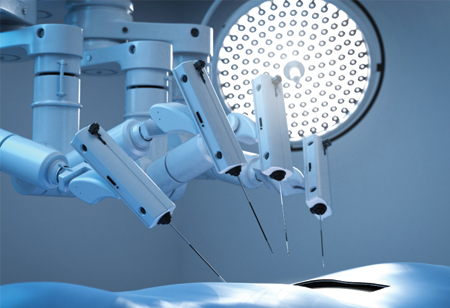
Health Informatics and Digital Health may arrive sooner than anticipated, with patients able to consult a computer before seeing a medical professional. Advancements in AI in medicine are making it almost impossible for the days to misdiagnose while also helping to treat ailments with precision medicine, robotic surgery, and immunotherapy. The steady accumulation of information generated in medical facilities and stored in electronic medical records through routine diagnostic and imaging procedures opens the door to further applications of AI and high-performance, data-driven medicine.
CEO Insights recently interacted with Sachin Jadhav, Director, Hematology and BMT, Gemcare Hospitals. He says, “The healthcare industry will certainly continue to be impacted by how we use AI to improve the accuracy of the diagnosis. AI will free us from a lot of ambiguities and help us get better clinical outcomes, help us spend more time with the patients because AI will take care of a lot of the things in the industry.”
Recent Applications of AI in Medicine
The advancements in computational power and the colossal amount of information generated in healthcare systems make numerous clinical issues ideal candidates for artificial intelligence applications. The following are two recent examples of precise and clinically relevant algorithms that can benefit both patients and healthcare professionals by simplifying medical evaluations.
Recent developments in imaging-based algorithms have demonstrated a similar capacity to enhance healthcare provider precision. In short, these algorithms can be employed by medical professionals to aid them in confirming their diagnoses and interpreting patient data faster without sacrificing precision. In the long run, however, the government-approved algorithms may be able to function independently in the clinic, allowing medical professionals to focus on issues that computers are incapable of resolving.
The advancement of AI-powered medical technologies is rapidly transforming them into practical applications for medical practice. The power of deep learning can be harnessed to handle the escalating volumes of data generated by gadgets, mobile devices, and other mobile health monitoring devices in diverse medical fields. Only very specific situations in clinical practice currently benefit from the application of AI, such as the detection of atrial fibrillation, epilepsy seizures, and hypoglycemia, or the identification of illness based on histopathological examination or medical imaging. Patients eagerly anticipate the introduction of enhanced medicine, as it allows for greater autonomy and a more individualized approach, but doctors are resistant, as they are not prepared for such a radical shift in clinical practice. Ethical considerations of the ongoing connected monitoring and the validation of these modern tools with traditional clinical trials are created by this phenomenon.
The emergence of AI has witnessed a remarkable transformation in the field of hematology. Artificial intelligence is the advancement of computer systems capable of executing tasks that typically require human intelligence. Algorithms and machine learning methods allow AI to analyze massive amounts of information and make predictions or decisions based on recurring patterns and trends. Hematology has seen the rise of artificial intelligence as a potent tool for analyzing and interpreting blood samples. It's useful for spotting oddities, identifying blood disorders, and predicting outcomes of treatment. Utilizing artificial intelligence, blood specialists can boost the precision and efficacy of their assessments, resulting in enhanced patient care.
The incorporation of artificial intelligence into hematology has led to a more precise and individualized approach to blood research. The technology has the potential to transform the medical realm by facilitating earlier detection of ailments, more precise treatments, and a deeper comprehension of disease mechanisms. As a result, there is a growing curiosity regarding the potential uses of artificial intelligence in the fields of hematology and blood research.
The Role of AI in Blood Studies
Artificial intelligence plays an important part in blood research by assisting blood specialists with various tasks. Analyzing the cellular components present in the blood can help identify and classify blood disorders, such as leukemia, anemia, and thrombocytopenia. Artificial intelligence algorithms are capable of spotting subtle flaws that would be missed by human eyes, resulting in earlier detection and intervention.
Furthermore, artificial intelligence systems are capable of predicting medical outcomes and delivering individualized guidance based on individual patient information. Analyzing a patient's medical background, genetic information, and response to previous treatments, artificial intelligence systems can aid hematologists in making educated choices about the best treatment options for each patient.
The incorporation of artificial intelligence into blood studies confers numerous advantages over conventional approaches. First of all, artificial intelligence algorithms are capable of handling and evaluating massive amounts of information in a fraction of the time it would take a human expert. This enables a quicker and more effective diagnosis, enabling prompt intervention and treatment.
Second, artificial intelligence systems are immune to subjective influences that could affect our perception. They consistently employ pre-defined algorithms to analyze blood samples, minimizing the chance of human blunders and skewed outcomes. This results in greater precision and dependability when making medical diagnoses.
Furthermore, artificial intelligence holds the potential to uncover fresh hints and connections in blood studies that would otherwise be overlooked by human observers. Analyzing massive amounts of data, artificial intelligence algorithms can uncover elusive patterns and connections that can aid in a deeper comprehension of disease mechanisms and therapeutic effectiveness.
Artificial intelligence has revolutionized the discipline of blood chemistry. Its ability to process vast amounts of data, identify abnormalities, predict outcomes, and provide personalized recommendations has transformed the way we approach blood analysis. The following section will examine the current uses of artificial intelligence in the field of blood disorders and the potential it holds for further advancements.