

Budget 2026: Investing in Growth, Resilience & Digital Growth

The presentation of the Union Budget for 2026-27 on February 1 will be unique as it falls on a Sunday this time. Finance Minister Nirmala Sitharaman is set to deliver the budget speech. Expectations from industry experts revolve around the effective distribution of resources in projects that can enhance productivity, foster digital innovation, and deliver value to customers.
The key emphasis is on making investments that support growth, resilience, and preparedness for the future, especially in areas like upgrading technology, developing talent, enhancing cybersecurity, and promoting sustainability. Furthermore, there is a push for streamlining costs, enhancing operational efficiency, and ensuring accountability to maximize returns on investments.
Here are the budget expectations from industry leaders:
Budget expectations Education Sector:
Prof. Debabrata Das, Director, IIIT Bangalore:
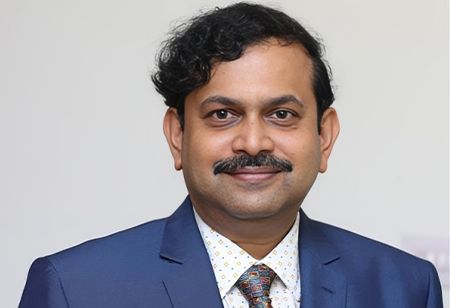 “The Union Budget 2025–26 reflects a moderate but targeted increase in higher education spending, with Rs.50,077.95 crore allocated to the Department of Higher Education—a 7.74percent rise over the previous year. While this constitutes only about 1percent of total Union expenditure, the emphasis on advanced technical education and research signals a strategic shift aligned with the Viksit Bharat 2047 vision. As an academician, the expectation is not merely higher allocations, but meaningful structural reforms.”
“This year, the funding must increasingly support innovation rather than only infrastructure, particularly through the effective operationalization of the Anusandhan National Research Foundation and the proposed Rs.1 lakh crore R&D corpus. Second, sustained investment in faculty development is essential, including filling vacancies and strengthening the National Mission on Teachers and Teaching to enhance institutional autonomy and global competitiveness. Third, digital public infrastructure—such as AI labs, high-speed connectivity, and platforms like the Academic Bank of Credits—should be treated as core educational infrastructure. Finally, expanding scholarships and interest support, rather than relying on loans alone, is crucial to ensure equitable access and protect India’s demographic dividend.”
Usha Iyer, Founder & Director, The Green School Bangalore & The Bangalore School
 “As we approach the Union Budget on 1st February 2026, there is strong hope that education will receive focused and future-ready support. The education sector requires enhanced budgetary allocation to strengthen foundational learning, teacher training, and infrastructure—especially for affordable private schools that play a critical role in last-mile education delivery.”
“Key expectations include increased funding for early childhood education, special incentives for green and sustainable school campuses, and greater support for inclusive education covering children with special needs. Rationalization of GST on educational services and learning materials would significantly ease financial pressure on schools and parents alike.”
“There is also a need for policy-backed investment in skill-based learning, digital infrastructure, and teacher upskilling aligned with NEP 2020. Encouraging public–private partnerships, offering tax incentives for education-driven CSR initiatives, and simplifying compliance frameworks would empower schools to focus on learning outcomes rather than administrative burdens.”
Oil and Energy Sector:
Baroruchi Mishra, Group CEO - Nauvata Energy Transition (NET) Enterprise
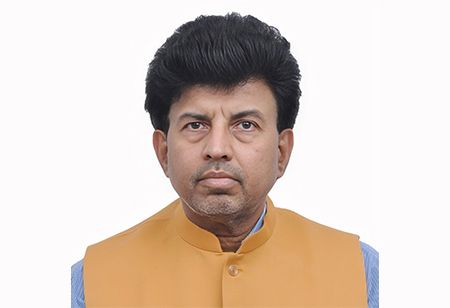 “India needs to make a very concerted effort to move towards a gas economy - increase production of methane and hydrogen from all sources (fossil based, biogenic and coal gasification), while managing the CO2 intensity of producing them through CCUS (Carbon Capture, Utilization and Storage). For one, it would help us lower the carbon intensity by 30-50percent compared to fossil fuel use, and for two, the biogenic and coal gasification sources are in abundance in India! This compensates for the limitations in our geological reserves of fossil fuels and/or the green energy requirements for Green Hydrogen.”
Also Read: 5 Management Consulting Firms in India Driving Business Growth
Hospitality & Tourism (India) Sector:
Prathima Manohar, Chair of Think- Tank The Urban Vision and Co-Founder of AI based Travel Technology platform GoodPass
“Tourism is one of India’s most underleveraged growth and job-creation engines. While tourism contributes 9–10percent of global GDP, India - despite its cultural and geographic depth attracts just 11 million foreign visitors annually. By comparison, Barcelona alone receives over 15 million inbound tourists a year. This gap reflects not a lack of demand, but a persistent failure of policy prioritisation and destination development.”
 “First, India needs a single-window clearance system for tourism and hospitality projects. Today, fragmented approvals across land, environment, local bodies, and utilities delay projects by 24–36 months, raising capital costs in a sector where margins are already low.”
“Second, tourism jobs are among the strongest bottom-of-the-pyramid employment multipliers. The sector already supports over 40 million jobs, many of them local, dignified, and inclusive; absorbing women, youth, and informal workers into the formal economy at scale.”
“Third, capital-intensive hospitality projects require renewed investment incentives. Restoring GST input tax credits and offering targeted income-tax rebates, particularly for rural and Tier 2/3 destinations, would unlock long-term capital and accelerate supply beyond metros.”
“Finally, public investment in destination infrastructure and placemaking is not discretionary, it is economic strategy. If India seeks inclusive growth, tourism must be treated not as consumption, but as nation-building infrastructure.”
Vinod Sah, CTO and co-founder at CoTrav
 "With the Union imminent, organizations operating in the corporate travel/events space are eagerly awaiting a simpler system of GST Input Credits. At present, it often happens that GST payments made to hotels, transportation partners, and various other service providers tend to get withheld for a considerably long period of time due to certain bottlenecks in processes.
There is also a need to acknowledge and support businesses that follow proper GST and TDS compliance, maintain transparent invoicing, and run audit-ready financial systems. These companies should be encouraged through process-level incentives instead of being burdened with additional complexity.”
Also Read: Vision Ahead: Startup & Tech Leaders Share Expectations for 2026
“Clear and consistent guidelines around bundled services and multi-vendor billing, which are core to corporate travel and events, would go a long way in reducing confusion and creating a smoother, more compliance-friendly environment for the sector."
Computer and Network Security:
Diwakar Dayal, Managing Director & Area Vice President, SentinelOne India & SAARC
 “As India’s digital economy accelerates across banking, healthcare, and e-commerce, cybersecurity must be treated as national digital infrastructure, not an afterthought. India’s economic growth is now inseparable from its digital systems, and any large-scale cyberattack can directly impact GDP, investor confidence, and productivity.”
“The Union Budget has an opportunity to strengthen cyber resilience through targeted tax incentives for AI-powered security adoption, focused cyber-hygiene support for MSMEs, and sustained investment in cyber skills and local innovation ensuring India’s digital transformation continues securely and at scale.”
Also Read: National Startup Day: How Founders View India’s Innovation Rise
“Investments in cyber-skilling programs support for local innovation, and public-private collaboration will also play an important role."
"With rising data volumes and AI-powered attacks, India will benefit from a stronger and more coordinated cyber-resilience strategy that protects national digital assets, builds trust among consumers, and ensures that organizations large and small can grow securely in today’s connected economy.”
Chemical Manufacturing:
Nishant Kanodia, Chairman, Matix Fertilisers & Chemicals Ltd.
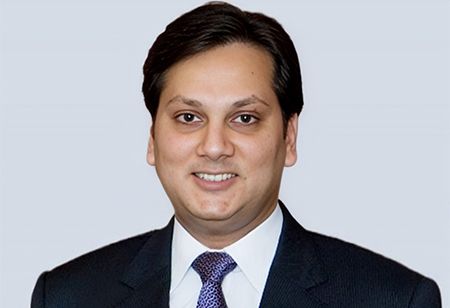 “India’s agricultural momentum has been strongly supported by the government’s sustained focus on fertiliser availability, affordability and domestic capacity creation. As urea demand continues to grow with higher cropping intensity, a balanced approach that combines assured supply with progressive strengthening of domestic manufacturing remains important.
“Continued policy support for timely capacity addition, predictable access to key inputs and investment friendly frameworks will help deepen self-reliance over time, reduce external vulnerabilities and support farmer productivity. At Matix Fertilisers and Chemicals, we are aligned with the government’s vision of Viksit Bharat, and remain committed to efficient production, responsible nutrient use and dependable supply to farmers, particularly across eastern and north eastern India.”