

Fuel Supply to LPG: PM Modi Addresses LS Amid West Asia Conflict
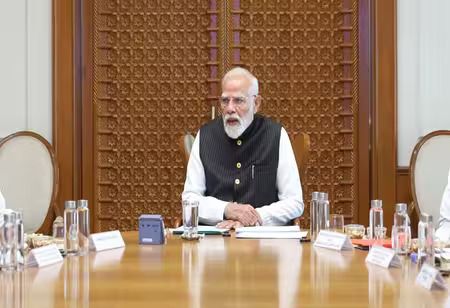
“The government is alert, empathetic and eager to extend all help,” said Prime Minister Narendra Modi while addressing the Lok Sabha at 2 pm on Monday during the current Budget Session of Parliament, highlighting essential points of the intensifying conflict in West Asia and India's stance on the matter, which continued for about 20 minutes.
The situation in West Asia has escalated as tensions between Iran and the United States grow, heightening worries about global energy resources and regional security. US President Donald Trump cautioned that the United States would “destroy” Iran’s power facilities if Tehran does not completely reopen the Strait of Hormuz within 48 hours. In reply, Iran warned that any such assault would lead to strikes on US and Israeli energy and infrastructure targets.
Simultaneously, Iranian missiles hit two towns in southern Israel late Saturday, causing damage to structures and injuring many individuals near Israel’s primary nuclear research facility. The toll of fatalities from the conflict has surpassed 1,500 in Iran and over 1,000 in Lebanon, with 15 reported casualties in Israel and 13 US military members killed. Numerous civilians have also lost their lives in events on land and at sea in the Gulf area, as millions in Lebanon and Iran have been forced to flee due to the violence.
Measures Taken by Indian Government
Amidst the escalation going on between US/Israel and Iran, the PM addressed the Lok Sabha, in turn sending a much-required message to the Indian people as well.
An impending energy crisis has been one of the key causes of concern. Referring to previous actions that are proving useful now during the West Asia crisis, PM Modi stated, “The electrification of railways is yielding substantial advantages. In the absence of this electrification, around 1.8 billion litres of diesel would be used each year. In the same way, we have broadened the metro rail system. In 2014, the nation's metro system was under 250 km, but it has now expanded to nearly 1,100 km.
He highlighted that his administration has focused on electric mobility as well. The central government has supplied 15,000 electric buses to the states for use. The extent of efforts towards alternative fuels being undertaken today will better ensure India's future.
Also Read: 5 Notable Indian CHRO Appointments in February 2026
“Energy is recognized as the foundation of the current economy, and West Asia serves as a significant provider of global energy requirements. Undoubtedly, the ongoing crisis is influencing the worldwide economy, and sustained attempts are underway to reduce its effects on India. The government is implementing a plan to tackle all these short-term, medium-term, and long-term effects,” he added.
Past Initiatives to Diversify Energy Imports Coming in Handy Now
PM Narendra Modi highlighted the energy security measures implemented by his government in the last ten years that, according to him, “are now more significant than ever.”
“India has varied its energy imports over the last 11 years.” In the past, energy requirements were met by importing crude oil, LNG, and LPG from 27 different countries. “Currently, India sources energy from 41 nations,” he pointed out.
“During the last ten years, India has focused on crude oil storage for emergencies. Currently, India possesses strategic petroleum reserves exceeding 5.3 million metric tons and is aiming to establish reserves surpassing 6.5 million metric tons. The reserves maintained by our oil companies are distinct. "Our refining capability has also expanded considerably over the last 11 years," he mentioned.
He stated that the government maintains regular communication with suppliers from different nations. “Steps are being taken to make sure that oil and gas supplies keep flowing from every possible source.” The Indian Government is continuously overseeing the Gulf and nearby shipping lanes. We strive to guarantee that vessels transporting vital commodities, whether it’s oil, gas, or fertilizer, arrive in India securely. He mentioned that, as a result of these efforts, “numerous ships of ours stuck in the Strait of Hormuz have recently come back to India.”
Actions Implemented Regarding LPG and Petrol Supply
PM Modi also mentioned that significant volumes of crude oil, gas, fertilizers, and various vital goods reach India via the Strait of Hormuz passage. “Since the conflict started, navigating ships through the Strait of Hormuz has become quite difficult.”
“Nonetheless, our government has taken measures to guarantee that the availability of petrol, diesel, and gas remains stable. It is widely recognized that the nation relies on imports for 60% of its LPG needs. Because of supply uncertainty, the government has given priority to domestic LPG users. Concurrently, the domestic output of LPG is also being augmented. Ongoing efforts have been made to guarantee that the distribution of petrol and diesel nationwide remains uninterrupted,” he stated.
Also Read: Policy to Progress: India’s Semiconductor Ecosystem Taking Shape
Emphasis on Safeguarding Indians
"Since the start of this war, every Indian in the impacted nations has received essential support. I have engaged in two sets of phone discussions with the leaders of nearly all West Asian nations. Everyone has thoroughly guaranteed the safety of Indians. Regrettably, a number of individuals have sadly lost their lives while others have sustained injuries during this time. In these challenging times, essential support is being offered to their families," says PM.
PM Modi informed the Lok Sabha that those who are hurt are being provided with the finest possible care.
"All our operations in impacted nations are constantly focused on supporting Indians. All possible assistance is being provided to both Indians working there and visiting tourists. Our missions consistently release advisories; 24/7 control centers and emergency hotlines have been set up in India and other impacted nations. By means of these, timely information is being given to all impacted individuals," PM stated.
"During crises, ensuring the safety of Indians both domestically and internationally has consistently been our highest priority." Since the onset of the war, over 375,000 Indians have returned home to India safely. Almost 1,000 Indians have safely come back from Iran. Over 700 of these individuals are medical students who are in their youth. A large number of students attend Indian schools in Gulf nations. The CBSE has annulled the planned Class 10 and 12 exams in all these Indian schools. The CBSE is implementing suitable measures to guarantee that these children's learning remains uninterrupted. “This indicates that the government is attentive, alert, and prepared to offer any support,” states the PM.
Unprecedented Challenges for India
“In the last two to three weeks, (foreign minister) S Jaishankar and (oil minister) Hardeep Singh Puri have shared crucial insights with the House regarding this topic (of West Asia war).” This crisis has been continuing for over three weeks now. It is significantly affecting the worldwide economy and individuals' lives. Consequently, the whole world is calling on all involved to settle this crisis promptly,” PM Modi stated in the Lok Sabha.
Also Read: 6 Enterprising IIM Alumni Leaders Powering India’s Green Future
“This conflict has also presented unparalleled difficulties for India. These obstacles pertain to economic, national security, and humanitarian issues. India maintains broad trade connections with nations involved in the war and impacted by the turmoil. The area where the conflict is occurring is also a crucial path for our commerce with other nations globally. This area, especially, fulfills a significant part of our requirements for crude oil and gas. This area holds significance for us for an additional reason: Almost 10 million Indians reside and are employed in the Gulf nations. Commercial vessels operating in that region also employ a notable number of Indian crew members. As a result of these various elements, India's worries are understandably significant. Thus, it's crucial for the Indian Parliament to convey a unanimous and united message to the world concerning this crisis," added PM Modi.