

National Technology Day: Tech Leaders on AI, Connectivity & More
 On National Technology Day 2026, Indian tech leaders discuss about the challenges and responsibilities of becoming an AI-first, digitally connected nation.
Sir M. Visvesvaraya, a pioneering Indian engineer and nation-builder once emphasized, “We require science, technology, and innovation to transform our country and improve the lives of our people. We cannot hope to succeed if we continue to work with antiquated tools and follow old fashion business methods. The greatest drawback in education is the omission to give practical training in the use of machine tools needed for industrialization.”
India’s technology sector grew by 5.1 percent in fiscal year 2025E, adding $13.8 billion in revenue and taking the industry’s total earnings, including hardware, to more than $282.6 billion, according to NASSCOM’s Annual Strategic Review 2025. While overall AI adoption continues at a measured pace, more than 55 percent of AI initiatives by Indian technology services companies are focused on building long-term co-creation partnerships aimed at developing scalable, future-ready AI solutions. Notably, over 90 percent of the top 20 IT services firms are integrating AI, Cloud, Data, and GenAI into their operations, with nearly 10-15 percent of enterprise GenAI proof-of-concepts now progressing to full-scale production.
To honor indigenous technological progress, including the inaugural flight of the Hansa-3 aircraft, National Technology Day 2026 is celebrated on Monday, May 11, highlighting the contributions of scientists, engineers, and innovators to the nation's development. This day marks the anniversary of the events on May 11, 1998, when India carried out three nuclear tests at Pokhran as part of Operation Shakti, showcasing a level of technological and strategic capability that garnered international attention. On May 13, 1998, two additional tests were conducted, further solidifying the country's advancements in science and its pursuit of self-reliance.
Significance of National Technology Day
Over the years, the significance of National Technology Day has evolved far beyond the historic events at Pokhran. In 2026, the observance reflects India’s growing focus on critical and emerging technologies that are shaping the country’s future. Initiatives such as the National Quantum Mission, semiconductor policy, IndiaAI Mission, space-sector reforms, digital public infrastructure, and defence indigenisation demonstrate how technology has become central to economic growth, governance, innovation, and national security.
A particularly important theme this year is quantum technology. Under the National Quantum Mission, 23 academic institutions have already been approved for quantum teaching facilities and laboratories, while more than 100 additional proposals are currently under consideration. This expanding ecosystem highlights India’s ambition to build capabilities in next-generation technologies through research, talent development, and innovation.
National Technology Day is therefore no longer only a remembrance of the 1998 nuclear tests. It has become an annual reflection of India’s ability to transform scientific research into practical innovation, move prototypes into large-scale application, and create technology that delivers real public value.
Industry Leaders expressing their views on National Technology Day 2026:
Thoughtful Innovation in Connectivity Helping Businesses Overcome Real-World Challenges: Sachin Arora, Head IoT & Connectivity, Giesecke+Devrient (G+D) India
 With almost two decades of experience in both telecommunications and finance, Sachin is dedicated to generating value for clients and helping them reach their digital transformation objectives.
“India’s digital growth is increasingly being shaped by how easily devices and networks can stay connected across industries. From transport and logistics to utilities and everyday consumer services, reliable connectivity is becoming essential to deliver smooth and consistent experiences. As more devices come online, businesses are looking for simpler and more flexible ways to manage connectivity at scale.
Solutions like eSIM and iSIM are helping address this need by removing the dependency on physical SIM cards and enabling digital activation (via remote SIM provisioning (RSP)). This becomes especially important in a world where supply chain disruptions and chip availability can impact device rollout timelines. By reducing reliance on physical components, these technologies help businesses stay agile and avoid delays.
At the same time, advancements in 5G and wider network coverage are creating new opportunities to improve access and efficiency, even in underserved areas. The focus now is on building connectivity that is not just fast, but also secure-by-design, dependable, and easy to manage over time.
On National Technology Day, it is important to recognize how thoughtful innovation in connectivity is helping businesses overcome real-world challenges while building a more connected, resilient, trusted and inclusive digital ecosystem.”
Organisations Must Move Towards AI-Driven, Self-Healing Systems: Nalin Agrawal, Director – Solutions Engineering, Dynatrace
 Nalin works as an Application Performance Specialist, possessing analytical abilities to address intricate technical problems and capable of conveying solutions in clear, concise language tailored for various audiences.
"National Technology Day serves as a powerful reminder that India’s digital ambition is built on the resilience, reliability, and intelligence of the technology systems that power everyday life. From high-volume financial transactions and citizen-centric digital services to cloud-driven enterprise operations, organisations are navigating increasingly complex hybrid and multi-cloud environments, while expectations around uptime, security, and seamless digital experiences continue to rise.
At the same time, we are entering a new bi-modal world of technology operations, spanning traditional human-led models, where nearly 80% of operations are driven by teams supported by AI, and emerging agent-led, AI-first systems where autonomous systems can handle up to 80% of operations, enabling intelligent automation.
This shift is accelerating autonomous operations in India. With digital adoption at scale, driven by UPI-level volumes, digital public infrastructure, and cloud-first strategies, manual approaches can no longer keep pace. Organisations must move towards AI-driven, self-healing systems that detect, diagnose, and resolve issues in real time.
In this environment, observability has become a business-critical control plane. At Dynatrace, we see AI-powered observability enabling organisations to innovate with confidence, strengthen resilience, and scale securely forming the foundation India needs for its digital future."
Focus Must Be on Building Innovative, Secure & Resilient Tech Ecosystems: Diwakar Dayal, Managing Director & Area Vice President - India & SAARC, SentinelOne
 With more than 27 years in cybersecurity, Diwakar has played a key role in shaping the industry through leadership positions at Cisco, Juniper Networks, Tenable, Qualys, and SentinelOne.
"On National Technology Day, as India reflects on its journey from Pokhran to becoming a digital-first economy, the focus now must be on building technology ecosystems that are not only innovative, but also secure and resilient. In cybersecurity, the challenge is becoming more complex as AI accelerates both innovation and the sophistication of modern threats. Attackers today are able to move faster, scale operations more efficiently, and exploit gaps across endpoints, cloud environments, and identity systems.
This is why cybersecurity can no longer be treated as an afterthought; it must be embedded into digital transformation from the outset. At SentinelOne, we believe autonomous security helps organisations stay ahead by enabling faster detection, intelligent response, and reduced operational complexity while maintaining visibility and control. As India advances towards an AI-first future, resilience and trust will be just as important as innovation itself."
Next Phase of Innovation Will Depend on the Strength of Infrastructure Behind It: Srinivas Shekar, CEO and Founder, Pantherun Technologies
 Srinivas pioneers patent-pending real-time data encryption technology designed to make breaches significantly harder, targeting sectors like industrial IoT, defense, and automotive.
“National Technology Day 2026 is a reminder that India’s next phase of innovation will depend on the strength of the infrastructure behind it. This year’s theme also reinforces the need to build technologies that are resilient, scalable, and ready for real-world use. Sectors such as logistics, manufacturing, mobility, and urban infrastructure already depend on connected systems that must deliver speed, uptime, interoperability, and security at scale.
Rising data traffic and increased dependence on digital systems are putting greater pressure on infrastructure. Persistent challenges around latency, fragmented networks, and energy demand will shape how technology gets deployed across industries. The focus has to be on infrastructure that performs consistently under real operating conditions and supports long-term growth.
India’s progress in technology is already visible across sectors, driven by strong engineering capability and large-scale deployments. Sustaining this momentum will require infrastructure to be treated as a core part of innovation, not an afterthought. The next chapter of growth will come from systems that are secure, adaptable, efficient, and built to work together at scale.”
Also Read: Earth Day: Experts on Rethinking Our Relationship with the Planet
Opportunity To Build Governance into The Foundation as Enterprises Adopt AI: Nitin Varma, SVP & Managing Director - India & SAARC, Saviynt
 Nitin brings over 25 years of experience leading global teams across sales, operations, and strategy, with expertise in enterprise technology, cybersecurity, identity security, and business transformation.
“The real conversation today is not just about how quickly we adopt AI, but how responsibly we scale it. As enterprises embed AI deeper into decision-making, the focus is shifting from traditional security concerns to questions of bias, explainability, and accountability.
We are moving toward a world where a significant share of enterprise workflows will be driven by autonomous agents. In fact, for every one human identity today, there are already dozens of non-human identities, machines, applications, and AI agents, interacting across systems. That fundamentally changes how organizations need to think about access, control, and trust.
If AI systems are initiating decisions, enterprises must be able to clearly answer who or what took that action, what data was used, and who is ultimately accountable. AI has not introduced entirely new risks; it has amplified existing ones around identity and data.
The opportunity now is to build governance into the foundation. Organizations that can balance innovation with strong identity controls, data governance, and accountability will not only move faster, but do so with confidence and trust.”
Also Read: Labour Day 2026: Reimagining Work, Skills & Leadership
Cut Through AI Hype & Ask Honest Questions: AJ Sunder, CPO/CIO & Co-founder, Responsive
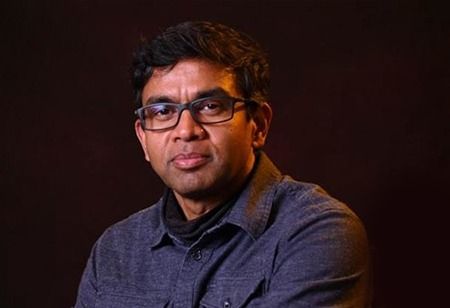 As Chief Information and Product Officer at Responsive, AJ Sunder leads product, engineering, design, and UX teams driving the company’s Strategic Response Management SaaS platform.
“National Technology Day is the perfect time to cut through the AI hype and ask an honest question: where are we really?
The companies making genuine progress aren’t the fastest movers. They’re the smartest. They’ve understood that strong governance and real speed are not enemies — they’re partners. When every AI output is traceable, human oversight sits at the right moments in the process, and the knowledge behind the AI is constantly monitored for accuracy, you can finally move fast with confidence.
At Responsive, this is the philosophy we’ve built into our core. Our TRACE Score gives organisations a real-time view of how trustworthy, relevant, accurate, and complete their AI outputs really are. It’s not just a compliance checkbox — it’s the foundation that lets teams confidently scale AI in revenue-critical workflows. When people trust the system, adoption happens naturally.
As AI evolves from generating responses to autonomously driving decisions, this foundation becomes essential. The winners won’t be the companies with the most AI — they’ll be the ones with the most governed, trusted, and actionable knowledge. That’s the real competitive advantage.”
Digitizing Grassroot Sports Infra a Big Opportunity: Sourjyendu Medda, Co-Founder, Sports For Life
 Sourjyendu Medda, an IIM Mumbai gold medalist and former co-founder of DealShare, is leveraging AI-driven technology and structured academy systems to nurture young talent and strengthen the sports ecosystem.
“At the elite level, progress is visible. National federations are investing in biomechanics, performance analytics, and recovery tech. At the grassroots level, where the actual pipeline begins, adoption is close to negligible.
Most youth academies in India still run without any structured data layer. Attendance is tracked on paper or WhatsApp. Performance is assessed by memory. Progress is communicated to parents through informal conversations. There is no system. And without a system, technology has nothing to plug into.
India’s grassroots sports infrastructure is largely pre-digital. The opportunity is enormous, but only if we build the operating system first and layer technology on top.”
Visibility and Trust Are Key to Responsible AI Innovation: Ganesh Narasimhadevara, Director of Solutions Consulting, New Relic India
Ganesh brings 18+ years of experience building scalable, resilient architectures with deep expertise in Identity & Access Management (IDAM), governance, and observability.
“National Tech Day is a powerful reminder of what India is capable of when ambition meets engineering excellence. This year’s theme, ‘Responsible Innovation for Inclusive Growth,’ sets an important benchmark that the true measure of tech progress isn’t speed of innovation alone, but the breadth of lives it improves and the trust it earns.
 India is powering everything from fintech to agritech, from smart cities to satellite-grade connectivity. Responsible innovation begins with visibility. When you can see exactly how your AI models behave in production, how your applications perform under the stress of millions of users, including first-time internet users in Tier 2 and Tier 3 cities, the guessing stops and guaranteeing inclusive growth begins. That is the difference between technology that serves a few and technology that truly scales for all.
The country is writing the playbook for inclusive digital growth that the world will study for decades. We are honoured to be part of the ecosystem that keeps those systems observable, resilient and trustworthy because growth that can't be measured can’t be sustained, and innovation that can’t be trusted can’t truly be responsible.”
Also Read: IIMA Effect: 5 Alumni Leaders Driving Impact Across Industries
India's 2026 Technology Context
The context of National Technology Day in 2026 is vastly different from that of 1998. At the time of the Pokhran tests, the focus was largely on nuclear capability and India’s determination to advance technologically despite global sanctions and external pressure. Today, however, the challenge is far broader. The world is witnessing intense competition across multiple strategic technologies, and India is striving to strengthen its position in several critical domains that will shape the future economy, security architecture, and geopolitical influence.
India is now investing heavily in quantum technologies through initiatives such as the National Quantum Mission, with emphasis on quantum communication, sensing, computing, and advanced materials. In semiconductors, the country is working to build capabilities across fabrication, packaging, chip design, and electronics manufacturing to reduce import dependence and strengthen supply chains. Artificial intelligence has emerged as another major priority, reflected in the IndiaAI Mission, the creation of public compute infrastructure, and efforts to promote responsible AI and AI-driven governance.
Simultaneously, India is expanding its ambitions in space technology through private-sector participation enabled by IN-SPACe and NSIL, alongside projects such as Gaganyaan, small satellite launches, and downstream space applications. Defence technology is also undergoing rapid modernization, with focus areas including missiles, drones, cyber systems, electronic warfare, AI-enabled surveillance, and hypersonic systems. In clean energy, India is pushing forward with green hydrogen, battery storage, solar manufacturing, nuclear energy, and power-grid modernization to support sustainable growth.
Equally significant is India’s leadership in digital public infrastructure through platforms such as Aadhaar, UPI, DigiLocker, ONDC, and the Account Aggregator framework, all of which are reshaping governance, finance, and service delivery at scale.
National Technology Day therefore serves as an important reminder that technology is not merely about hardware or scientific achievement in isolation. It influences national security, economic growth, welfare delivery, and India’s global strategic standing. The day provides a powerful framework to understand how technological capability has become central to India’s development vision and its role in an increasingly competitive world order.