

How AI Is Transforming Finance Leadership and Retail Investing
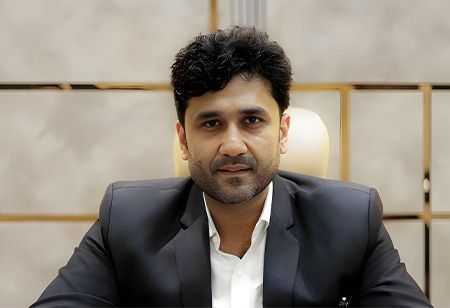 Before artificial intelligence began transforming investing, market leadership was largely defined by access to information, research, and execution capabilities. Today, as AI democratizes intelligence and algorithmic systems increasingly influence capital flows, the competitive edge has shifted from simply processing data to applying sound judgment, building investor trust, and creating technology that simplifies complexity.
In an exclusive interview with CEO Insights India Magazine, Navy Vijay Ramavat, Managing Director, Indira Securities, shares how he is leading the evolution of a legacy broking institution into an AI-powered, technology-first investment platform while staying anchored in decades of market experience.
Navy Ramavat is a trader, investor, entrepreneur, and AI enthusiast with 17 years of experience in capital markets. From redefining retail investor engagement and advancing algorithmic trading to fostering financial awareness and anticipating the next wave of technological disruption, he discusses why the future belongs to leaders who combine intelligent systems with human insight. The conversation offers a thoughtful perspective on building resilient trading ecosystems, empowering self-directed investors, and shaping the next chapter of India's capital markets.
For deeper insights, read the full interview below.
Q. As a leader blending deep trading expertise with AI-driven innovation, how do you define market leadership in an era where algorithms increasingly shape capital flows?
A. If you see the journey, when the internet came, it democratized access to information. Suddenly, anyone with a phone could learn, research, and explore. But the real problem then became how do I find the right information?
Now with AI, we’ve moved one step ahead. AI is democratizing intelligence. It can summarize, suggest, and even guide decisions. But the challenge now is, am I asking the right question?
So in today’s markets, access is no longer the edge. The real differentiator is building systems that cut through noise and surface what actually matters.
AI can process everything, but judgment still comes from experience. And I strongly believe the future of capital flows will be shaped by those who combine both AI’s processing power and human-grade judgment.
That combination is rare. And rare is what leads markets
Q. In transforming a legacy broking institution into a technology-led platform, how do you position leadership as a catalyst for redefining retail investor engagement?
A. A legacy name isn’t just history; it’s trust. And honestly, trust makes everything easier when you’re trying to build something new. When people already believe in you, they’re more open to adopting change.
For me, the direction has always been simple: technology should feel easy, not intimidating. A lot of platforms today are either too complex or too transactional. We wanted to change that.
So the focus has been on building something that simplifies decision-making, reduces clutter, and brings more clarity. Whether it’s how information is presented or how quickly someone can act on it, everything should help the investor feel more confident.
We are building a simple platform, and on top of that, adding an intelligent layer that can give a clear, direct verdict: whether to buy or sell. No one is really doing this in a clean, usable way today, and this is something we will be bringing very soon.
That’s how I see leadership here, not just building technology, but making investing feel more accessible and usable for everyone.
Q. With your work in algorithmic trading innovation, how do you see leadership evolving from interpreting markets to actively influencing and structuring next-generation trading ecosystems?
A. I think markets are going through a shift. Earlier, leadership was only about interpreting markets better than others. Today, it’s about building systems that help people participate better.
There’s a growing segment of investors who want high exposure, without emotions involved. That’s where algorithmic trading becomes powerful. It brings structure, discipline, and speed into execution.
With something like Stockk Algo that we’re building, the idea is to give users access to well-tested, rule-based strategies where decisions are not emotional but data-driven.
But one thing I’ve learned is that no strategy works forever. Every strategy goes through phases. It performs well, then it goes through drawdowns, and it needs continuous adaptation and improvement. The challenge is, you never know in advance when that shift will happen. Most retail investors exit a strategy the moment they see losses, but that’s part of the cycle. Leadership here is also about helping people understand the adoption, patience, and evolution of strategies, not just performance.
So leadership now is not just about reading markets, but about creating ecosystems where decisions are more structured, risks are clearer, and trust is built through consistency, not claims.
Q. As you enable wider access to sophisticated trading tools, how do you approach leadership responsibility in shaping financially aware, self-directed, and future-ready investors?
A. I think this is a very important responsibility. When you give people access to powerful tools, you also have to make sure you’re not overwhelming them.
I’ve always believed that more information doesn’t mean better decisions. In fact, too much information, especially if it’s not structured well, creates confusion.
In India, a lot of people still stay away from markets because they find it complicated or risky. So for us, the focus is very clear: keep things simple, remove jargon, and present information in a way that people can actually act on.
At the same time, our responsibility is also to build financially aware investors, not just active participants. One size does not fit all in markets, which is why we are building a bouquet of tools for different kinds of investors and traders. This comes from the experience of running a 38-year-old legacy firm, where we’ve seen different types of market participants over decades.
Also, unlike many brokers who stay away from deep research because of the cost and the risk of being wrong, we believe it is our responsibility to provide structured, experience-backed research. It may not always perform in every phase especially during sharp market corrections but giving the right direction and a clear path to retail investors matters more.
The idea is not just that people trade better or faster, but they think better. When that shift happens, they automatically become more confident and more responsible investors.
Q. At the intersection of AI, big data, and capital markets, how do you craft a leadership identity that stays relevant while anticipating technological and market shifts?
A. The biggest change I’ve seen over the years is the speed at which things evolve. Markets change fast, but technology is changing even faster.
So for me, leadership is not about being the first to jump into every new trend, but you definitely cannot afford to be late. You have to anticipate where things are going and prepare for them.
A lot of it comes down to mindset, both yours and your team’s. I always say this, just like in Atomic Habits, you are what your environment is.
At the same time, we have built a strong in-house R&D division where we continuously explore new technologies, sometimes AI-led, sometimes beyond AI, depending on what actually adds value to markets and investors.
At the same time, I strongly believe in building things in-house, keeping them scalable, and avoiding unnecessary complexity. Because in the long run, simple and well-built systems always win.
Five Leadership Lessons for the Future of Finance
- Lead with judgment, not just AI. Competitive advantage comes from combining intelligent automation with human expertise.
- Build on trust. Digital transformation succeeds when technology simplifies investing and strengthens investor confidence.
- Create resilient ecosystems. Structured, data-driven systems outperform emotion-led market decisions over time.
- Simplify to empower. Clear insights and accessible research help investors make informed, independent decisions.
- Stay ahead through continuous innovation. Anticipating technological change and building scalable solutions is key to long-term market leadership.
CLOSING THOUGHTS: Looking back on your journey, what core principles would you advise emerging leaders to adopt for building lasting influence and success in any industry?
I don’t know about long-lasting influence or success in any industry, but I can say a few things that have helped me create a difference in people’s lives around me.
To start with, I have always believed in an abundance mindset, and I think every leader should. I’ve never seen competition as a threat. In fact, competition expands the market, creates more awareness, more participation, and more opportunities for everyone. In fact, I feel we do better when there is strong competition, it keeps us sharp and relevant.
Second, I strongly believe in learning before entering anything. I spent years understanding markets before actively guiding others. That foundation makes a big difference.
And then, sharing what you’ve learned. When you teach, your own clarity improves. It helps you simplify and understand things better.
One more thing I strongly follow is build, test, and if it doesn’t work, fail fast and reinvent. The speed of learning and adapting matters a lot.
I also believe in growing with people around you, whether it’s helping traders become better or even encouraging underprivileged people around me, like my maid or driver, to start SIPs for their future. That, honestly, gives me more satisfaction than anything else.
So these few principles, abundance mindset, learning deeply before entering, sharing knowledge, and helping others grow, are what have made a real difference for me.